Your abs and obliques: what they actually do
"Abs" usually means the six pack muscle, but your midsection is a set of layers that work together. Knowing which part does what makes it easier to pick exercises, because each one has a different job.
| Muscle | Where it sits | Main job | Trained by |
|---|---|---|---|
| Rectus abdominis | Front, from ribs to pubic bone | Curls the spine forward, tilts the pelvis back | Crunch, reverse crunch, hanging knee raise |
| Transversus abdominis | Deep layer, wraps around like a belt | Braces the trunk and raises pressure in the abdomen | Plank, dead bug, heavy compound lifts |
| External obliques | Sides, outer layer | Rotate and side bend the trunk, resist both | Side plank, Pallof press, suitcase carry |
| Internal obliques | Sides, under the external obliques | Work with the opposite external oblique to rotate | Pallof press, cable chop, side plank |
The rectus abdominis is one long muscle, so there is no separate "lower ab" muscle. You can still bias the lower part with moves that start from the pelvis, which is what the lower ab workout further down is built on.
All ab and oblique exercises
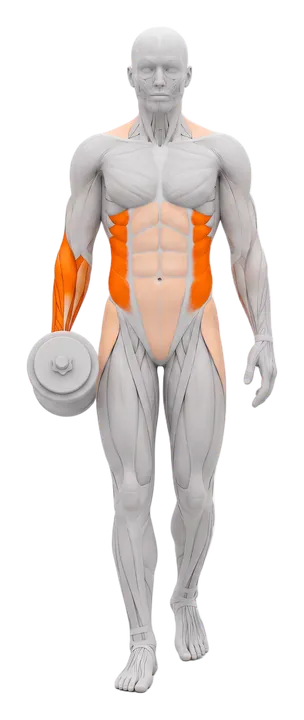 Suitcase carryObliques and forearms
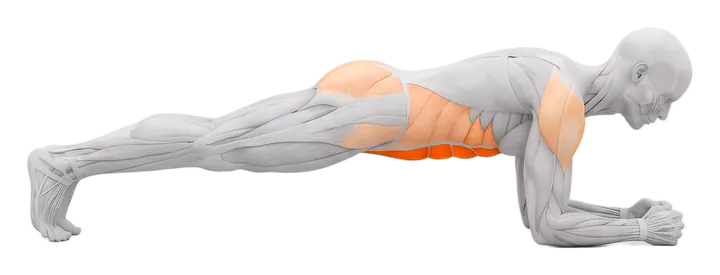 Front plankAbs
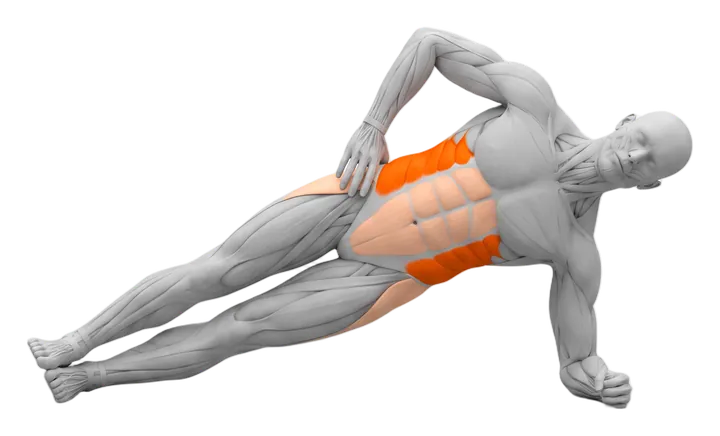 Side plankObliques
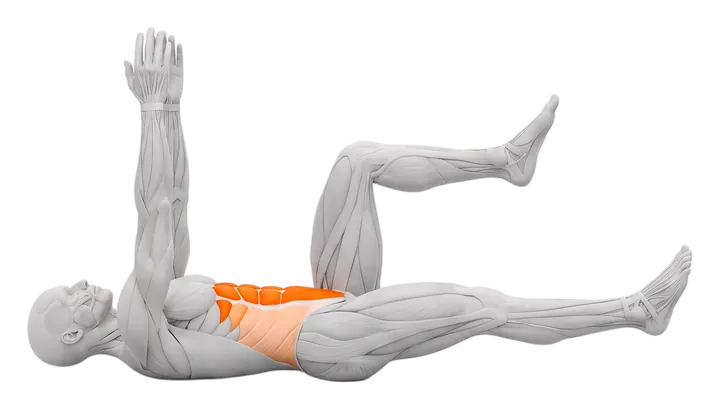 Dead bugAbs
 Pallof pressObliques and abs
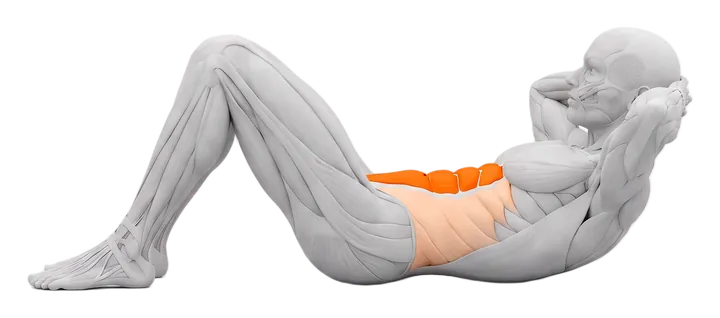 CrunchAbs
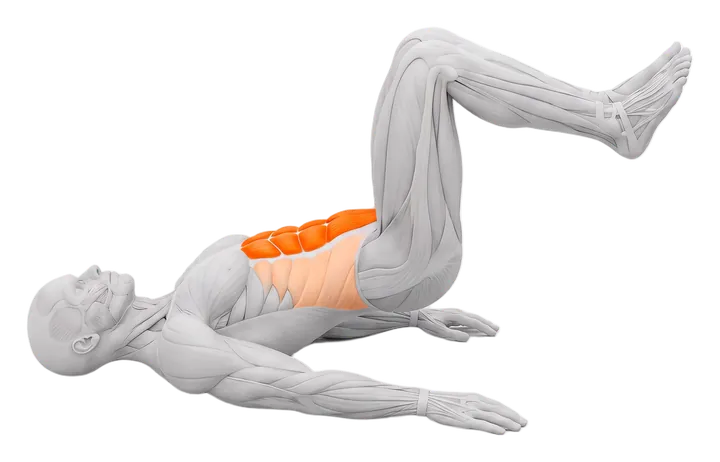 Reverse crunchAbs
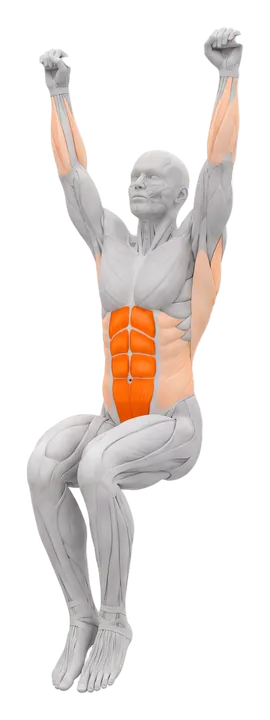 Hanging knee raiseAbs
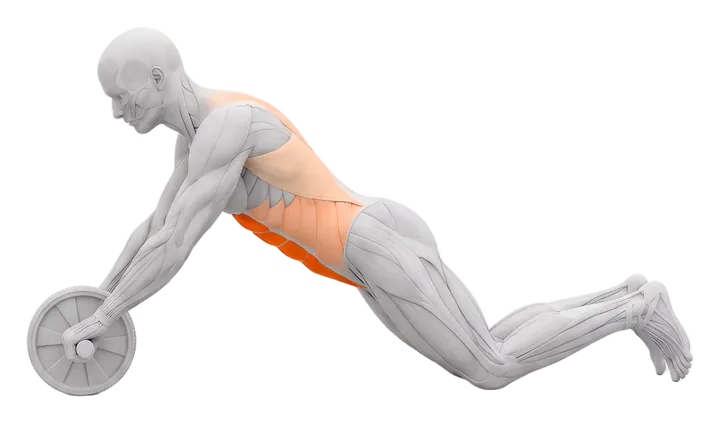 Ab wheel rolloutAbs
Best ab exercises, ranked
This ranking favours exercises you can progress for years, either by adding weight or by moving to a harder version. Exercises that only get longer, like a 5 minute plank, drop down the list.
- Hanging knee raise: curls the pelvis up against gravity and is the best lower ab exercise for most people. Progress from bent knees to straight legs, then to toes to bar. It also builds the grip you need for pull-ups.
- Cable or weighted crunch: the simplest way to load the abs heavy. Kneel at a cable stack with a rope behind your head and curl your ribs towards your hips. Easy to add 2.5 kg (5 lb) at a time.
- Ab wheel rollout: trains the abs while they resist your lower back arching. Start from the knees and roll only as far as you can without the hips sagging.
- Reverse crunch: the floor version of the knee raise, ideal for an ab workout at home. Roll your hips off the floor instead of swinging your legs.
- Pallof press: a band or cable pulls you sideways and your obliques stop the twist. The best anti-rotation drill and easy on the back.
- Side plank: loads the obliques and the deep side muscles. Lift the top leg or hold a plate on the hip once 45 seconds feels easy.
- Dead bug: teaches you to keep the lower back down while arms and legs move. A great first ab exercise and a useful warm up before squats.
- Suitcase carry: walk with one heavy dumbbell in one hand. Your obliques keep you upright. It doubles as grip training.
Heavy compound lifts also train your trunk. Bracing under a heavy deadlift or squat works the deep abs hard, though it rarely replaces direct ab work if a stronger, more visible six pack is the goal.
Gym ab workout (20 minutes)
Do this at the end of an upper or lower day, two or three times a week. Pick a weight where the last two reps of each set are hard but clean.
| Exercise | Sets x reps | Rest | How to progress |
|---|---|---|---|
| Hanging knee raise | 3 x 8 to 15 | 60 to 90 s | Straighten the legs, then add an ankle weight |
| Cable crunch | 3 x 10 to 15 | 60 s | Add one plate when you reach 15 in every set |
| Ab wheel rollout (from knees) | 3 x 6 to 12 | 60 to 90 s | Roll further, then try from the feet against a wall |
| Pallof press | 2 x 10 to 12 per side | 45 s | Step further from the anchor or use a heavier band |
If you train on a push pull legs split, put this gym ab workout after pull and leg days. On a full body workout, pick two of the exercises each session and rotate them.
Lower ab workout
Lower ab exercises start the movement from the bottom: your pelvis rolls up towards your ribs. The key is a small backward tilt of the pelvis at the top of every rep. If your legs just swing while your lower back stays arched, the hip flexors do most of the work.
| Exercise | Reps | Cue |
|---|---|---|
| Reverse crunch | 10 to 15 | Roll the hips off the floor, lower slowly over 3 seconds |
| Hanging knee raise | 8 to 12 | Knees to chest, then curl the hips up a little more |
| Dead bug | 8 per side | Lower back stays pressed into the floor |
| Lying leg raise with hands under hips | 8 to 12 | Stop before the lower back lifts off the floor |
Ab workout at home
You need a floor and a mat. Add a pair of dumbbells or a resistance band if you have them. Do the circuit 3 times with 60 seconds rest between rounds.
| Exercise | Reps or time | Make it harder |
|---|---|---|
| Reverse crunch | 12 to 15 | Slow 4 second lowering |
| Crunch | 12 to 20 | Hold a dumbbell or a water bottle on your chest |
| Side plank | 20 to 45 s per side | Lift the top leg |
| Dead bug | 8 to 10 per side | Hold a light dumbbell in each hand |
| Front plank | 30 to 60 s | Reach one arm forward at a time |
Ab workout with dumbbells
One dumbbell turns a bodyweight routine into an ab workout with weights: weighted crunches holding it on your chest, suitcase carries or a hold down the hallway, weighted dead bugs and a dumbbell side bend for the obliques. Keep the reps in the 8 to 15 range so the load, not boredom, ends the set.
Standing ab workout
If getting down on the floor is not an option, stay on your feet: suitcase carries, Pallof presses with a band around a door handle, standing cable crunches, and slow marching with the ribs pulled down. These train the abs the way you use them when lifting and carrying.
How many sets per week, and how often
| Level | Ab sessions per week | Hard sets per week | Reps |
|---|---|---|---|
| Beginner | 2 | 4 to 6 | 8 to 15, or 20 to 40 s holds |
| Intermediate | 2 to 3 | 6 to 10 | 8 to 15 with added load |
| Advanced | 3 to 4 | 10 to 15 | 6 to 15, heavier cable and hanging work |
These are rule of thumb ranges, not hard limits. Abs recover fairly fast, so training them every day is not dangerous, but it is rarely more effective than three good sessions. Treat them like any other muscle: a set counts when you finish within one to three reps of failure, and you add reps, then load. The progressive overload guide explains how to plan those steps.
Gripp tracks your ab exercises like your big lifts
Gripp is coming to iPhone. Log your cable crunches, hanging raises and planks set by set, and Gripp tells you what to aim for next session: one more rep, a longer hold or the next weight. It rates your core against people of your age and bodyweight next to your other muscle groups.
Join the waitlistAb workout mistakes
- Pulling on the neck in crunches. Keep your hands at your temples or across your chest and move the ribs, not the head.
- Swinging on knee raises. Start each rep from a dead hang. If you swing, the momentum does the work.
- Only planks. Long holds build endurance, but once you can hold 60 seconds, a harder version teaches you more than a longer one.
- Hundreds of reps with no load. Abs respond to hard sets like other muscles. If you can do 50 crunches, add weight.
- Expecting abs to show from training alone. Visible abs need lower body fat. Training builds the muscle, food reveals it.
- Pushing through back pain. If an exercise hurts your lower back, swap it for a dead bug or a Pallof press. Ongoing pain is a reason to see a physiotherapist.
Strong lower back muscles balance strong abs. The back exercises guide covers back extensions and bird dogs, and every movement in this article sits in the exercise library with a muscle map.