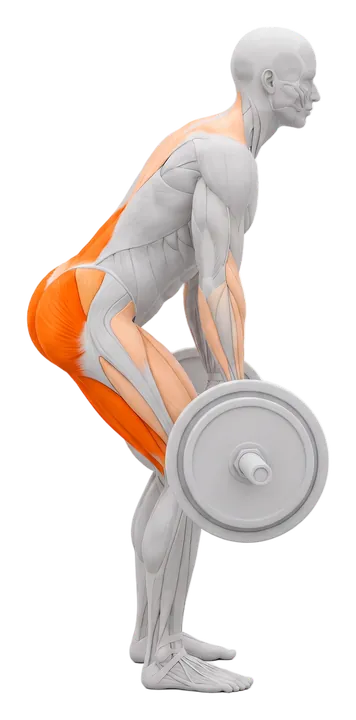
What muscles does the deadlift work?
| Muscle | Role | How much |
|---|---|---|
| Gluteus maximus | Extends the hip, finishes the lockout | Primary |
| Hamstrings | Extend the hip and hold the knee angle | Primary |
| Lower back (spinal erectors) | Hold the spine neutral under load | Primary |
| Quadriceps | Push the floor away off the floor | Secondary |
| Lats and upper back | Keep the bar close and the chest up | Secondary |
| Traps | Hold the shoulders in place under heavy weight | Secondary |
| Forearms and grip | Hold the bar | Secondary |
| Adductors | Help extend the hip, more in sumo | Secondary |
Few exercises load as many muscles at once, which is why the deadlift sits in most strength programs and on our list of back exercises. The erectors work isometrically: their job is to stop the spine from moving, not to bend and straighten it.
How to deadlift: step by step
- Bar over midfootStand with your feet about hip width apart, toes slightly out. The bar should be above the middle of your foot, roughly 2 to 3 cm (1 in) from your shins when you look down.
- Grip the barHinge down and grab the bar just outside your legs, arms straight. Use a double overhand grip as long as you can hold it; switch to a mixed grip or straps for your heaviest sets.
- Shins to the barBend your knees until your shins touch the bar. Do not move the bar. Your hips end up higher than your knees and lower than your shoulders.
- Brace and set the backTake a big breath into your belly and brace hard. Pull your chest up and think about squeezing your armpits, so your lats lock the bar against your legs. Pull the slack out of the bar until you hear the plates click.
- Push the floor awayDrive your feet into the ground. Hips and shoulders rise at the same speed, and the bar stays in contact with your shins and thighs the whole way up.
- Lock outOnce the bar passes your knees, drive your hips forward into the bar and stand tall with your glutes squeezed. Do not lean back at the top.
- Lower itPush your hips back first, keep the bar close, and bend your knees once it passes them. Reset your breath and brace before each rep.
Deadlift form cues
- "Bar path is a straight line." Seen from the side, the bar should travel straight up over the midfoot. Every centimetre it drifts forward makes it heavier.
- "Protect your armpits." Engaging the lats keeps the bar close and the upper back tight.
- "Leg press the floor." The first part of the pull is a push with the legs, not a yank with the back.
- "Chest and hips up together." If the hips rise first, the lift turns into a stiff legged pull and the lower back takes over.
- "Stand tall, don't lean back." Lockout is a straight body with the glutes tight, not an arched back.
Common deadlift mistakes
- Bar too far from the shins. It swings out as you lift and pulls you forward. Start with the bar over the midfoot.
- Squatting the deadlift. Hips too low means the knees are in the way of the bar. Let the hips start higher.
- Jerking the bar off the floor. Pull the slack out first, then push. A jerk usually loosens your back position.
- Rounding under load. Some upper back rounding happens in heavy pulls, but a lower back that clearly rounds is a sign the weight is too heavy for your current technique.
- Hyperextending at the top. Leaning back does not add anything and compresses the lower back.
- Grinding out every set. Most training sets should end with one or two reps left in the tank.
Deadlift and back safety
The deadlift is not bad for your back when the load fits your technique and you build it up gradually. Most problems come from too much weight too soon, sloppy reps late in a set, or ignoring pain. Keep these simple rules:
- Brace before every rep, including the first one after a pause.
- Add weight in small steps: 2.5 to 5 kg (5 to 10 lb) per session for beginners, smaller steps later.
- Use a belt for heavy sets if you like, but learn to brace without one first.
- Warm up with a few lighter sets, for example the empty bar, then 40, 60 and 80 percent of your work weight.
Deadlift variations: sumo and trap bar
| Variation | Setup | Good for |
|---|---|---|
| Conventional deadlift | Feet hip width, hands outside the legs | The standard lift; most back and hamstring work |
| Sumo deadlift | Wide stance, toes out, hands inside the legs | More upright torso, more quads and adductors, shorter bar path |
| Trap bar (hex bar) deadlift | Stand inside a hexagon bar, neutral grip | Beginners, sore backs, athletes; a mix of squat and deadlift |
| Dumbbell deadlift | Two dumbbells at your sides or in front | Home gyms, learning the hinge |
| Kettlebell deadlift | One bell between the feet | Teaching the movement, light warm ups |
| Deficit deadlift | Stand on a 2 to 5 cm (1 to 2 in) plate | Strength off the floor |
Sumo deadlift
Take a wide stance with your toes turned out and grip the bar inside your knees. The torso is more upright, so the lower back works a bit less and the quads and adductors a bit more. Neither style is safer for everyone; pick the one that fits your build and feels strongest after a few weeks of practice.
Trap bar deadlift
With a trap bar (also called a hex bar), the weight sits at your sides instead of in front of your shins. That lets you keep a more upright torso and bend the knees more, so it feels between a squat and a deadlift. Many coaches use it as the first deadlift for beginners, and the raised handles make it easier to learn the setup.
Deadlift vs Romanian deadlift
The conventional deadlift starts from the floor and uses a lot of knee bend. The Romanian deadlift starts standing, keeps the knees softly bent and lowers the bar only until your hamstrings stop you, usually just below the knees. A stiff legged or straight leg deadlift sits in between: it starts from the floor with only slightly bent knees.
| Deadlift | Romanian deadlift | |
|---|---|---|
| Starts from | The floor, dead stop | Standing, from the top |
| Knee bend | Large at the start | Small and fixed |
| Main focus | Whole back side, heavy strength | Hamstrings and glutes in the stretch |
| Typical loads | Heaviest of the two | Often 60 to 80 percent of your deadlift |
| Typical reps | 3 to 6 | 6 to 12 |
Many programs use both: deadlifts for strength on one day and RDLs for hamstring volume on another.
Deadlift sets and reps
| Goal | Sets x reps | Rest | Notes |
|---|---|---|---|
| Max strength | 3 to 5 x 2 to 5 | 3 to 5 min | Reset each rep from the floor |
| Strength and size | 3 to 4 x 5 to 8 | 2 to 3 min | 1 to 2 reps short of failure |
| Beginner | 1 to 3 x 5 | 3 min | Add a little weight each session |
| Technique practice | 4 to 6 x 2 to 3 | 2 min | Moderate weight, perfect reps |
One heavy deadlift session a week is enough for most people, because it is tiring for the whole body. Starting Strength runs one hard set of 5 and alternates the deadlift with power cleans as the program goes on. To set work weights from a recent heavy set, use the 1RM calculator, and see how your number compares in the deadlift strength standards.
Gripp plans your next deadlift session
Gripp is coming to iPhone. Log each set and Gripp tells you what to lift next time, for example "last time 5 reps at 120 kg, today go for 122.5 kg". It tracks your estimated deadlift max on a progress chart and rates your back and leg strength against people of your age and bodyweight.
Join the waitlistDeadlift alternatives
- Trap bar deadlift: the easiest swap if the barbell bothers your back.
- Romanian deadlift: hamstring focused hinge with lighter loads.
- Hip thrust: heavy glute work with almost no load on the spine.
- Rack pull: a deadlift from blocks or pins above the knee, to train the lockout.
- Back extension: lower back and glutes with bodyweight or a plate.
- Kettlebell swing: a fast, light hinge for conditioning.
Similar exercises
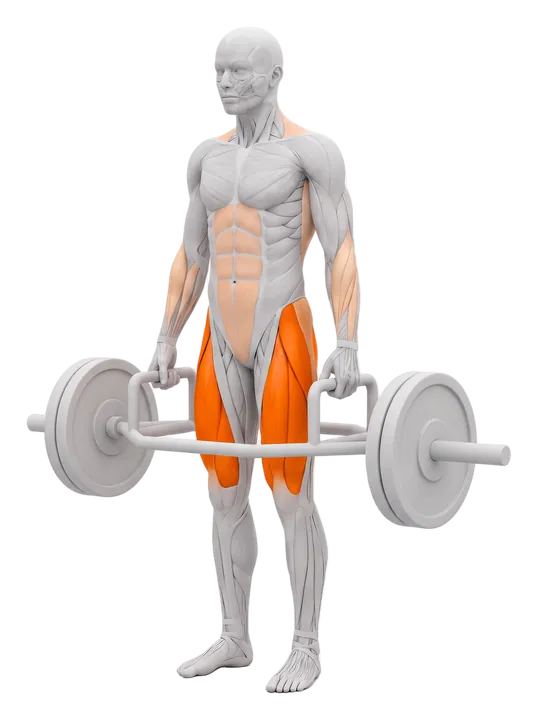 Trap bar deadliftGlutes and quads
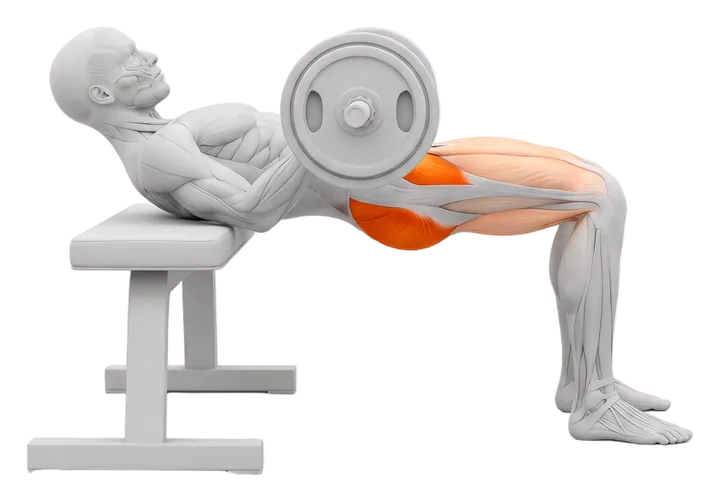 Barbell hip thrustGlutesGuide
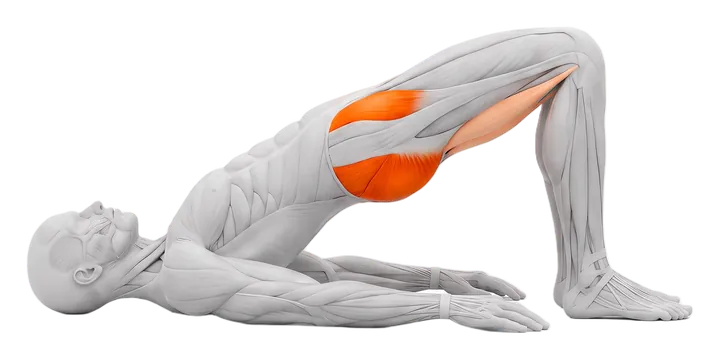 Glute bridgeGlutes
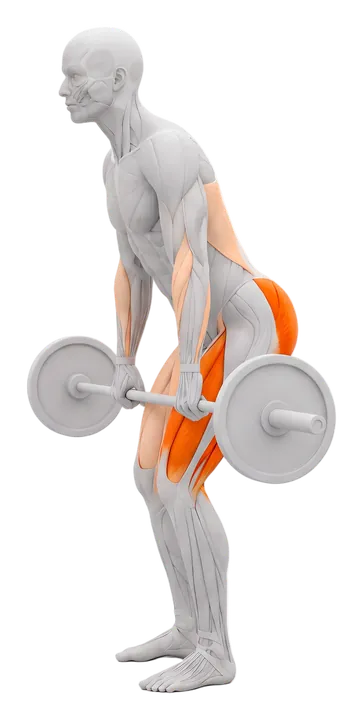 Romanian deadliftHamstrings and glutesGuide
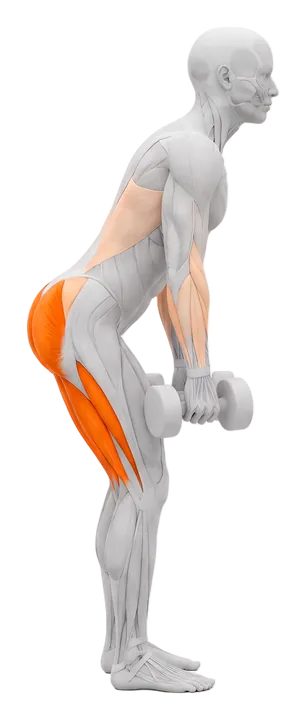 Dumbbell Romanian deadliftHamstrings and glutes
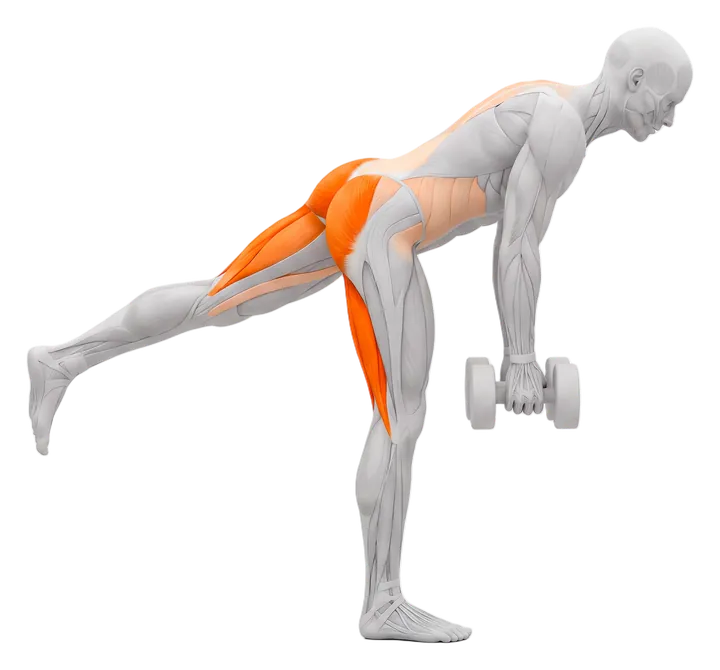 Single-leg Romanian deadliftHamstrings and glutes