What is Starting Strength?
Starting Strength is both a book and a program. The book, Starting Strength: Basic Barbell Training by Mark Rippetoe, first appeared in 2005, co-written with Lon Kilgore, and has been revised in later editions. Most of it is a detailed technique manual for five lifts: the squat, press, deadlift, bench press and power clean. The novice program is a short part of it, and it is what most people mean when they say they are "running Starting Strength".
The idea behind it is simple. A true beginner can get stronger from one workout to the next, so the program adds weight every session and keeps everything else minimal: few exercises, few sets, the heaviest weights you can handle with good form. Rippetoe calls the period this works the novice phase. It usually lasts a few months.
The Starting Strength workout: A and B
All work sets are done "across": after warming up, every work set of a lift uses the same weight.
| Workout A | Workout B |
|---|---|
| Squat, 3 x 5 | Squat, 3 x 5 |
| Press (standing overhead press), 3 x 5 | Bench press, 3 x 5 |
| Deadlift, 1 x 5 | Deadlift, 1 x 5 |
After the first few weeks, once the deadlift is clearly heavier than the squat, the power clean is introduced on workout B in place of the deadlift, usually as 5 sets of 3. Later in the novice phase, many lifters also add chin-ups. The program then looks like this:
| Workout A | Workout B |
|---|---|
| Squat, 3 x 5 | Squat, 3 x 5 |
| Press, 3 x 5 | Bench press, 3 x 5 |
| Deadlift, 1 x 5 | Power clean, 5 x 3 |
| Chin-ups, 3 sets (optional) |
The weekly schedule
| Week | Monday | Wednesday | Friday |
|---|---|---|---|
| 1 | A | B | A |
| 2 | B | A | B |
| 3 | A | B | A |
| 4 | B | A | B |
Any three non-consecutive days work. Sessions take about an hour, mostly because heavy sets of five need long rests: 3 to 5 minutes, or more on the hardest squat sets.
The lifts, and how to do them
- Squat: Rippetoe teaches a low-bar back squat to below parallel, with the bar resting on the back of the shoulders and the hips driving out of the bottom. You squat every session, so it improves fastest.
- Press: a standing barbell press from the front of the shoulders to overhead lockout. It is the slowest lift to progress. See the overhead press guide for setup and bar path.
- Bench press: alternates with the press, so each gets trained every other session. The bench press guide covers grip and setup.
- Deadlift: a single heavy set of 5, because it is so taxing and the daily squats already train the legs and back. The deadlift guide breaks down the pull.
- Power clean: an explosive pull of the bar from the floor to the front of the shoulders. It trains speed and power, and with sets of 3 it adds pulling work without the fatigue of more deadlifts.
Can you not do power cleans safely without coaching? Many lifters swap them for barbell rows, which is a common and sensible change, but it is a change to the original program.
Starting weights and linear progression
In the first session, you work up on each lift in small jumps until the bar speed slows noticeably on a set of 5. That weight, or a bit below, is your starting point. Better to start light and move fast than to start too heavy and stall in week two.
Then the weight goes up every single workout. That is linear progression, the simplest form of progressive overload.
| Lift | Early on | Later in the novice phase |
|---|---|---|
| Squat | 5 kg (10 lb) | 2.5 kg (5 lb) |
| Deadlift | 5 to 10 kg (10 to 20 lb) | 2.5 to 5 kg (5 to 10 lb) |
| Press and bench press | 2.5 kg (5 lb) | 1 to 1.25 kg (2 to 2.5 lb), using small plates |
| Power clean | 2.5 kg (5 lb) | 1 to 2.5 kg (2 to 5 lb) |
Squatting three times a week gives you 36 chances to add weight in 12 weeks. Even if half of those sessions are repeats or resets, a lifter who starts at 60 kg (135 lb) and adds 2.5 kg at a time ends up around 105 kg (230 lb). How far you get depends on your starting point, sleep, food and age, so do not treat that as a promise.
Rippetoe is known for stressing that underweight novices need to eat a lot to keep the weights climbing. You do not have to follow his more extreme advice, but under-eating is one of the most common reasons novices stall early.
When you stall
- Miss onceRepeat the same weight next time. Bad days happen.
- Miss againCheck sleep, food and technique first. Then reduce the weight by about 10 % and work back up in the same steps. You usually pass the old sticking point.
- Stall after resetsWhen resets no longer get you past the old weight, the novice phase is over. Rippetoe's next step is a weekly cycle such as the Texas Method, described in his book Practical Programming for Strength Training. Programs like Wendler 5/3/1 or an upper lower split are other common choices.
Log Starting Strength in Gripp
Gripp is coming to iPhone. It logs every set, tells you what to lift next session, and keeps an estimated 1RM per lift on a progress chart, so you can see the moment your squat stops climbing and it is time for a reset.
Join the waitlistStarting Strength vs StrongLifts 5x5
These are the two best known novice barbell programs, and they are close relatives: both alternate an A and a B workout three times a week, squat every session and add weight every workout.
| Starting Strength | StrongLifts 5x5 | |
|---|---|---|
| Created by | Mark Rippetoe | Mehdi Hadim |
| Sets x reps | 3 x 5 (deadlift 1 x 5) | 5 x 5 (deadlift 1 x 5) |
| Upper body lifts | Press, bench press, later chin-ups | Bench press, overhead press, barbell row |
| Explosive lift | Power clean | None |
| Volume | Lower: fewer sets, heavier jumps early | Higher: five work sets per lift |
| Main source | A book with detailed technique coaching | Website and app |
Starting Strength has less volume, so you can usually make bigger jumps at the start and spend more energy on each set. StrongLifts 5x5 is more volume per session, has rows instead of power cleans and is easier to follow without coaching. Either is a good first program. Choose the one you will actually stick to.
Who Starting Strength suits
- Good fit: true beginners and people returning after a long break who want to get strong on the barbell lifts as fast as possible.
- Good fit: lifters with access to a squat rack, a barbell and small plates, training three days a week.
- Less ideal: people whose main goal is muscle size or appearance. The program has little isolation work, and a split with more volume, such as push pull legs, fits better after the first months.
- Less ideal: anyone with an injury that rules out heavy squats or deadlifts. Talk to a physiotherapist or doctor first.
The exercises
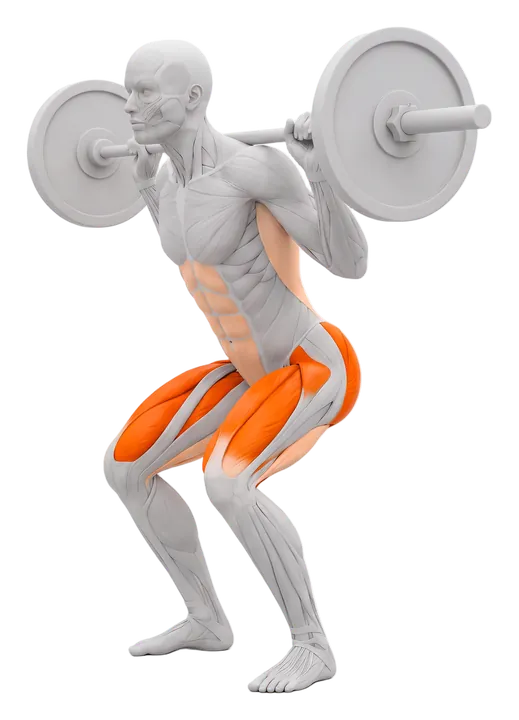 Barbell back squatQuads and glutes
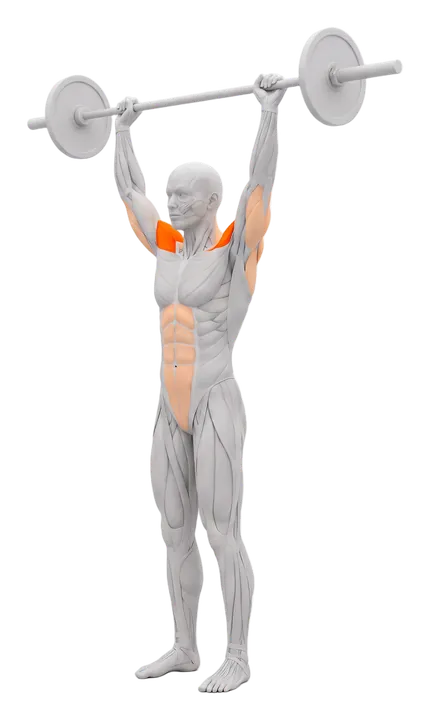 Barbell overhead pressFront deltsGuide
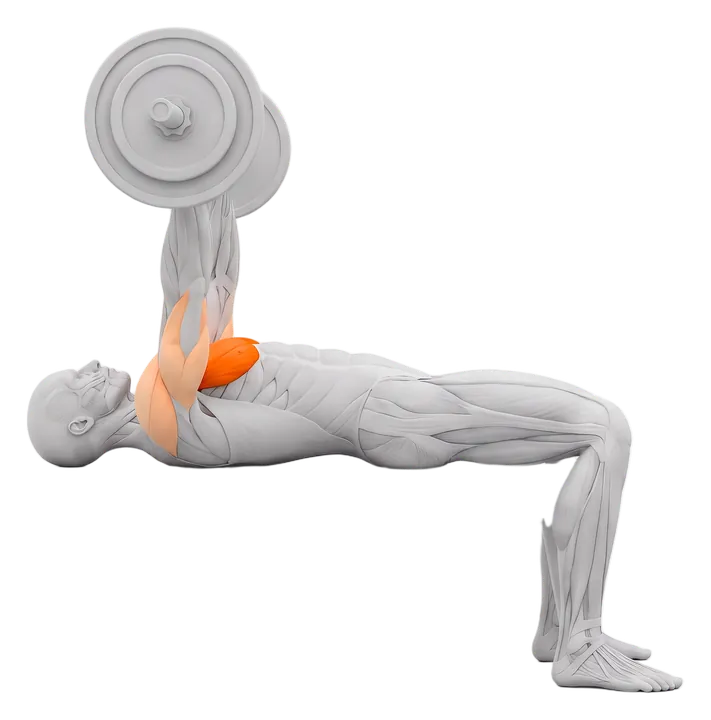 Barbell bench pressChestGuide
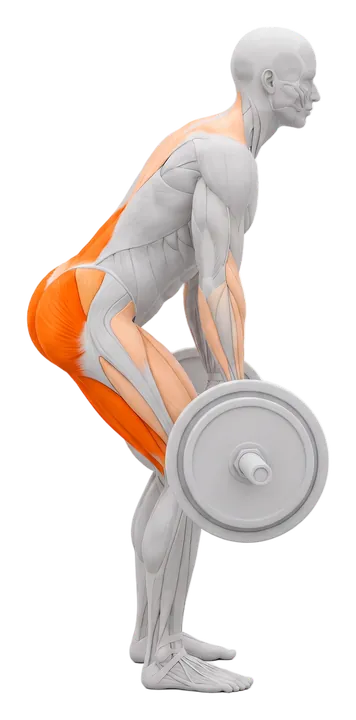 Barbell deadliftGlutes and hamstringsGuide
 Chin-upLats and biceps