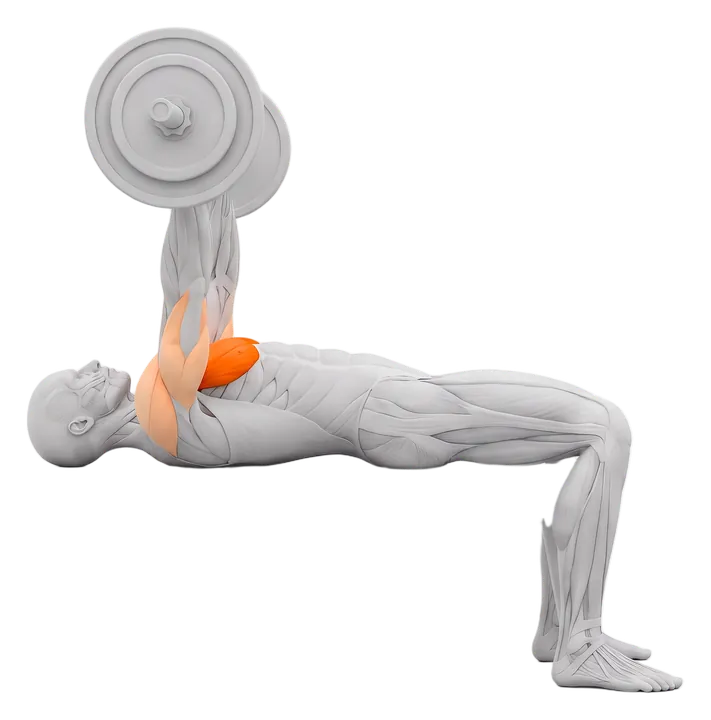
What muscles does the bench press work?
| Muscle | Role | How much |
|---|---|---|
| Chest (pectoralis major) | Brings the arms forward and in, hardest near the chest | Primary |
| Front delts | Help push the arms forward | Secondary |
| Triceps | Straighten the elbows, hardest in the top half | Secondary |
| Lats and upper back | Control the lowering and hold the shoulder blades in place | Stabiliser |
| Legs and glutes | Leg drive pushes you into the bench | Stabiliser |
The bench press is the main heavy lift for the chest, which is why it heads most lists of chest exercises. A medium to wide grip keeps the chest as the main mover; a narrower grip moves work to the triceps.
Bench press setup, step by step
- Eyes under the barLie on the bench with your eyes directly under the bar. Too far back and you hit the hooks on every rep; too far forward and the unrack becomes a long, unstable reach.
- Pull the shoulder blades back and downSqueeze the shoulder blades together and tuck them down towards your back pockets. This is the most important part of the setup: it gives you a stable base and protects the shoulders.
- Set the archKeep your butt on the bench and lift your chest towards the bar. The arch should come mostly from the upper back, with a natural curve in the lower back. It shortens the bar path a little and keeps the shoulders in a strong position.
- Plant your feetFeet flat on the floor, a bit wider than hip width, either under the knees or slightly behind them. Push the floor away so you feel pressure up through your hips into your upper back.
- Grip and unrackGrip the bar, squeeze it hard and unrack with straight arms. Bring the bar out until it is over your shoulders. Take a big breath and hold it before the first rep.
How to do the bench press
- Lower the barBend the elbows and lower the bar in a slight diagonal line towards your lower chest. Elbows tuck to roughly 45 to 70 degrees from your body, not flared straight out.
- Touch the chestTouch the bar to your lower chest, around the bottom of the breastbone or just below the nipples. Your forearms should be vertical, with the elbows under the bar.
- Drive up and backPress the bar up and slightly back towards your face, so it finishes over your shoulders. At the same time push through your feet; the hips stay on the bench.
- Lock outFinish with straight arms and the shoulder blades still pinned. Breathe at the top if needed, then reset your brace before the next rep.
Bench press grip and grip width
A common starting point is a grip where your index fingers are about 1.5 times shoulder width apart. On most Olympic bars that means the ring marks sit somewhere under your index or middle fingers. Check from the side and the front at the bottom of the rep: if your forearms are vertical, the grip suits you.
- Bar low in the palm. Over the wrist, not up in the fingers. The wrist stays nearly straight.
- Full grip, thumbs around the bar. The thumbless (suicide) grip is risky because the bar can roll out of your hands.
- Squeeze hard. A tight grip helps tension through the whole arm.
- Wider is not always stronger. A wide grip shortens the bar path but puts more stress on the shoulders. Very wide grips are not for beginners.
Bench press form cues
- "Bend the bar." Try to snap the bar in half by turning your hands outward. This engages the lats and keeps the elbows from flaring.
- "Pull the bar to you." On the way down, row the bar into your chest instead of letting it fall.
- "Push yourself away from the bar." Thinking of pushing your body into the bench keeps the shoulder blades back.
- "Legs drive, butt stays." Push through the floor without lifting the hips.
- "Same groove every rep." The bar should touch the same spot each time.
Leg drive and arch: how much is right?
Leg drive is pushing your feet into the floor to create tension that travels up through your hips into your upper back. It does not lift the bar; it keeps your body tight and stops you from sliding. The test: if your hips leave the bench, you are pushing up instead of back. Try pushing the floor away from you, towards the end of the bench.
The bench press arch is normal and safe for most people when it comes from a lifted chest and pinched shoulder blades. A big competition style arch, with the lower back very curved, shortens the range further and is allowed in powerlifting. For general strength and muscle, a moderate arch is enough. If your lower back cramps or hurts, reduce it.
Common bench press mistakes
- Shoulders rolling forward. If the shoulder blades lose position, the shoulders take more of the load. Reset them before every set and keep them pinned.
- Elbows flared to 90 degrees. The front of the shoulder often complains. Tuck the elbows a bit.
- Bouncing off the chest. A bounce makes the bar lose its path and can bruise the ribs. Touch, then press.
- Touching too high. Bringing the bar to the upper chest or neck with flared elbows is a hard position for the shoulders. Aim lower.
- Hips coming off the bench. Common when leg drive is too vertical. In a competition it means the lift does not count.
- Bent wrists. The bar sits too high in the hand. Move it lower in the palm.
- Partial reps. Stopping well above the chest makes the weight on the bar look better than it is. Touch every rep.
Close grip bench press
The close grip bench press uses a grip about shoulder width apart, usually with the hands just inside or on the edge of the knurling. The elbows stay closer to the body, the triceps do more of the work, and the bar touches slightly lower on the chest. It is one of the most common triceps exercises for heavy loads and a standard assistance lift to strengthen the lockout of the regular bench.
- Not too narrow. Hands touching or a few centimetres apart bends the wrists and strains the elbows. Shoulder width is close enough.
- Elbows tucked close to the sides, forearms still vertical at the bottom.
- Expect less weight than your regular bench, often 10 to 20 percent less, but it varies.
Bench press variations
| Variation | What changes | Good for |
|---|---|---|
| Close grip bench press | Grip about shoulder width | Triceps and lockout strength |
| Paused bench press | 1 to 2 s pause on the chest | Strength off the chest, consistent technique |
| Incline bench press | Bench at 15 to 45 degrees | Upper chest and front delts |
| Dumbbell bench press | A dumbbell in each hand | Deeper stretch, each side on its own, easier on the joints |
| Floor press | Lying on the floor, shorter range | Lockout, sore shoulders |
| Spoto press | Pause just above the chest | Control and bar path |
The incline dumbbell press is the most common second press after the bench. It hits the upper chest from a different angle with a free path for each arm.
Sets and reps for the bench press
| Goal | Sets x reps | Rest | Notes |
|---|---|---|---|
| Strength | 3 to 5 x 3 to 5 | 3 to 5 min | Heavy, every rep touches the chest |
| Strength and size | 3 to 4 x 6 to 8 | 2 to 3 min | 1 to 2 reps short of failure |
| Chest growth | 3 to 4 x 8 to 12 | 2 min | Controlled lowering |
| Beginner | 3 x 5 to 8 | 2 to 3 min | Empty bar first, small jumps |
Bench two times a week if you can. On a push pull legs split, it opens push day; on an upper lower split, it is the main lift on one upper day and the overhead press on the other. 5/3/1 builds a full week of percentages around it.
How to progress your bench press
Beginners can often add 2.5 kg (5 lb) per session for a while. When that stops working, move to weekly increases or add reps at the same weight first. The basics are in progressive overload. To estimate your max without testing it, put a recent hard set into the bench press calculator. To see how your number compares with other lifters of your bodyweight and age, check the bench press standards.
Gripp plans your next bench session
Gripp is coming to iPhone. Log each set and Gripp tells you what to do next time: "last time 7 reps at 80 kg, today go for 8; hit your reps in every set and the weight goes up". It keeps an estimated 1RM for your bench on a progress chart and rates your chest strength against people of your age and bodyweight.
Join the waitlistBench press alternatives
- Dumbbell bench press: the same movement with more freedom for the shoulders.
- Machine chest press: easy to learn and safe to push close to failure without a spotter.
- Push-up: a bodyweight press you can load with a weight vest or band.
- Incline dumbbell press: more upper chest, less load.
- Floor press: a shorter range that is often kinder to sore shoulders.
Similar exercises
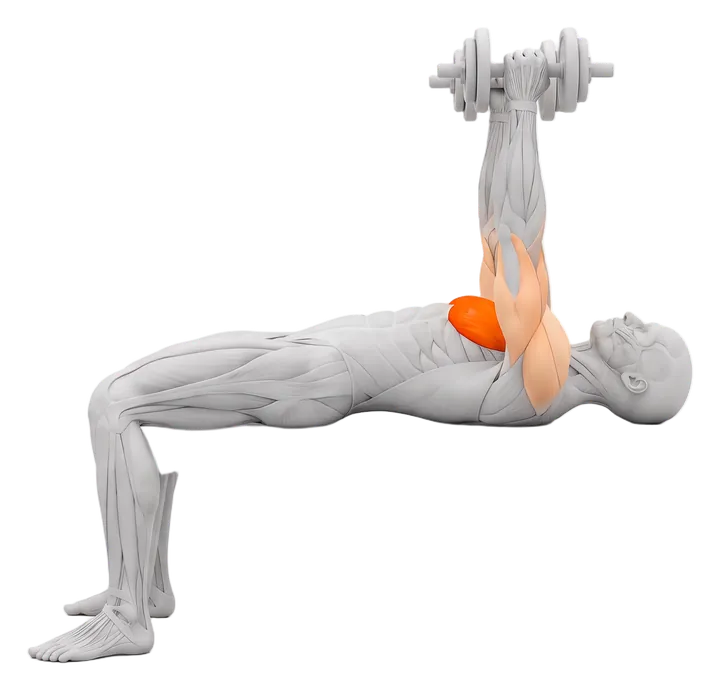 Dumbbell bench pressChest
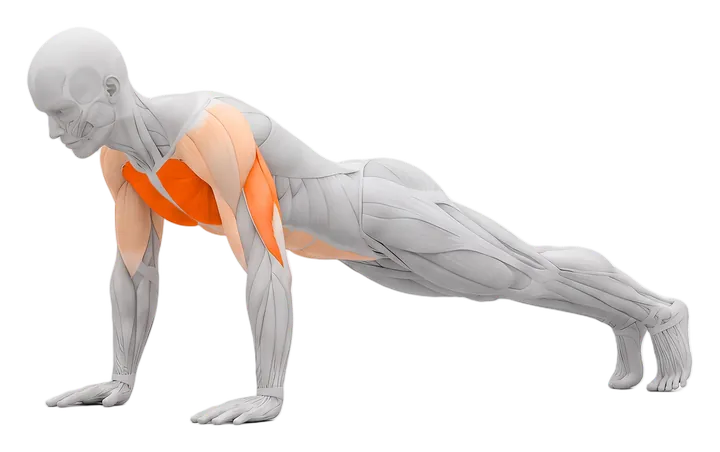 Push-upChest
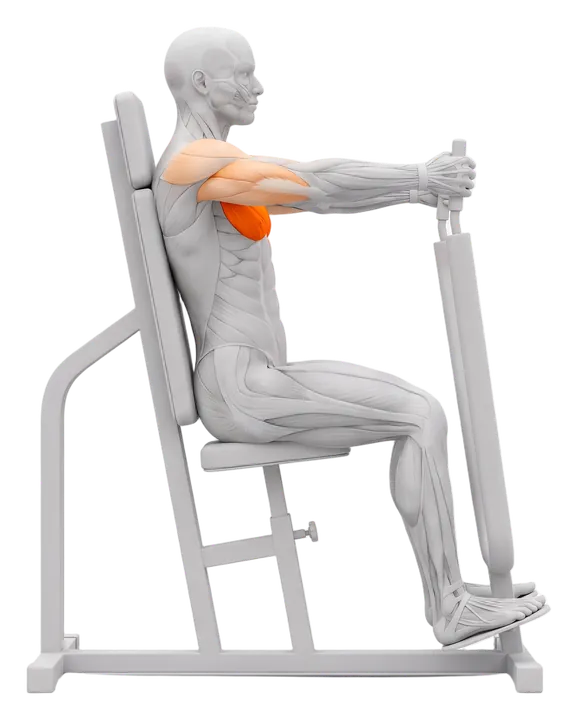 Machine chest pressChest
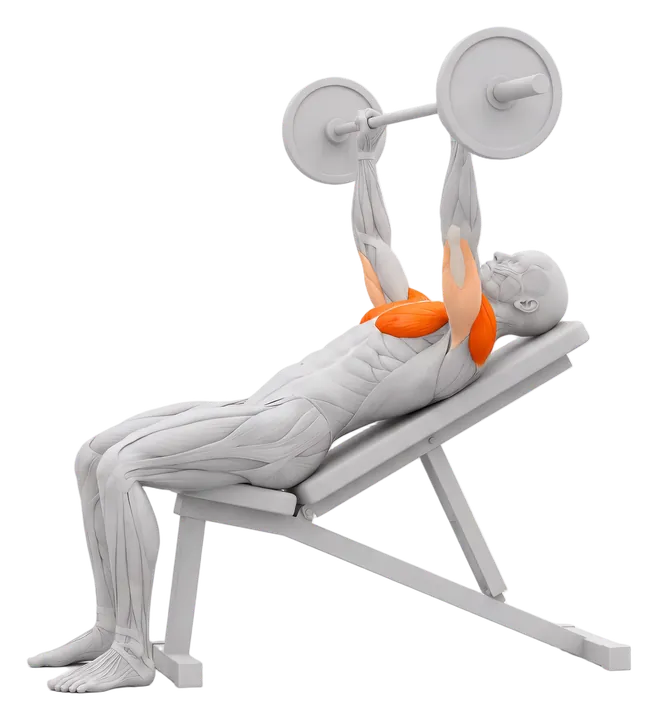 Incline barbell bench pressChest and front delts
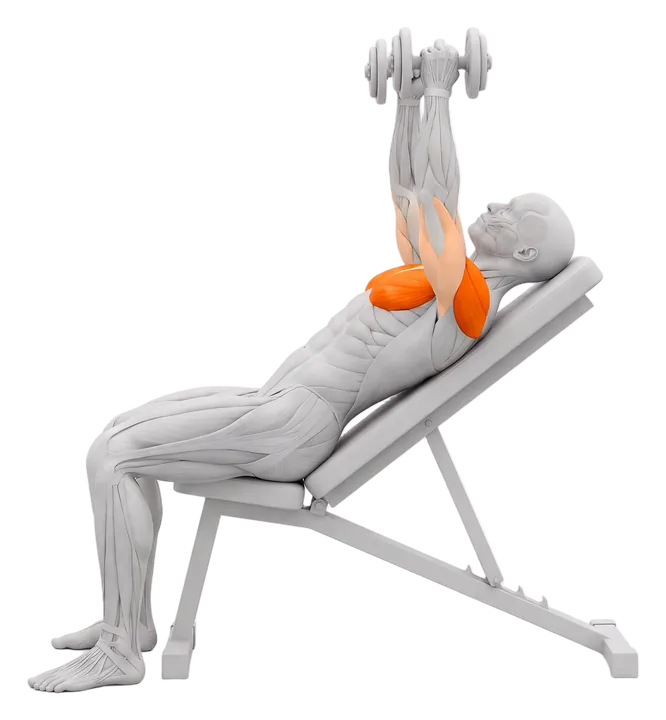 Incline dumbbell pressChest and front deltsGuide
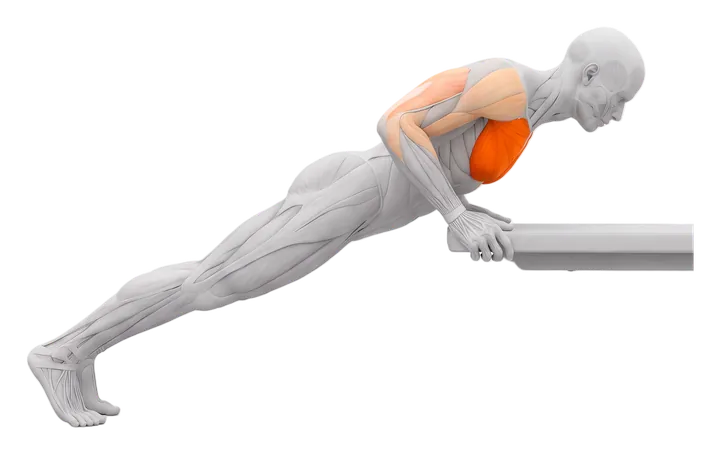 Incline push-upChest