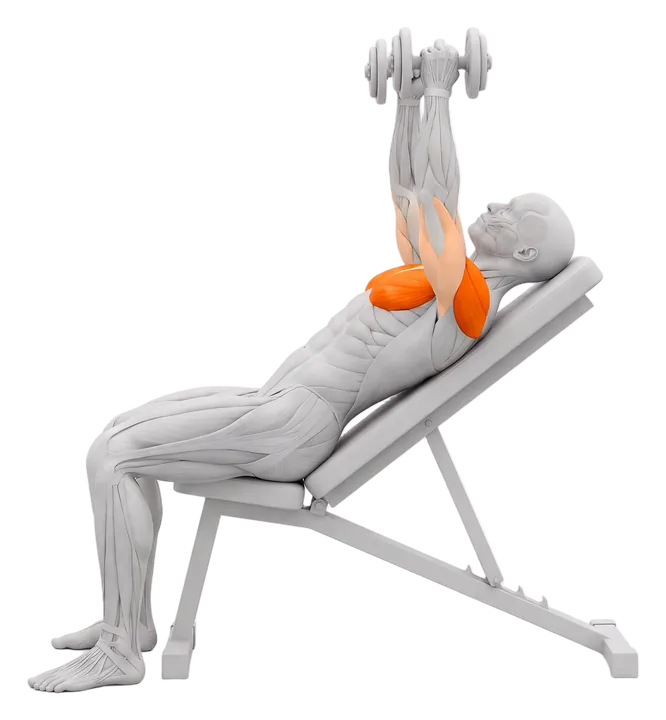
Incline dumbbell press muscles worked
| Muscle | Role | How much |
|---|---|---|
| Upper chest (clavicular head of the pecs) | Brings the arms up and across, hardest at the bottom | Primary |
| Lower and middle chest | Help, less than on a flat bench | Primary |
| Front delts | Help lift the arms, more as the bench gets steeper | Primary |
| Triceps | Straighten the elbows at the top | Secondary |
| Rotator cuff and serratus anterior | Keep the dumbbells and shoulder blades steady | Stabiliser |
The chest is one muscle, but its upper fibres run from the collarbone and pull the arm up as well as across. Raising the bench lines the press up with those fibres. That is the reason the incline press is on almost every list of chest exercises for the upper chest.
Incline dumbbell press bench angle: 15 to 45 degrees
| Bench angle | What it feels like | Who it suits |
|---|---|---|
| 15 degrees (low incline) | Close to a flat press, a little more upper chest | Lifters whose shoulders do not like steeper angles |
| 30 degrees | Clear upper chest focus with plenty of chest involved | Most people, a good default |
| 45 degrees | More front delts, less total weight | Lifters who want a mix of chest and shoulder work |
| 60 degrees and above | Mostly a shoulder press | Shoulder training, not chest |
A setting around 30 degrees is a sensible default: the upper chest gets more work and the front delts do not take over. Benches differ, and the first notch is often already 15 to 20 degrees, so count notches or check the angle once with a phone app and remember the setting.
How to do the incline dumbbell bench press
- Set the bench and sit downSet the bench to about 30 degrees. Sit with the dumbbells standing on your thighs, close to your knees.
- Kick the dumbbells upLie back and use your knees to push the dumbbells up one at a time as your back reaches the pad. Press them to straight arms above your upper chest.
- Set your shouldersPull your shoulder blades back and down into the bench, keep a small arch in your upper back and plant your feet flat on the floor.
- Lower to a deep stretchLower the dumbbells to the sides of your upper chest, elbows about 45 to 60 degrees from your body. Go as deep as your shoulders allow, usually with the dumbbells level with or slightly below the chest.
- Press up and inPress back up in a slight arc so the dumbbells end above your upper chest, close but not touching. Keep the shoulder blades pinned the whole time.
Incline dumbbell press form cues
- "Chest up to the dumbbells." Keep the upper chest high and the shoulder blades back, so the chest moves the weight instead of the shoulders.
- "Elbows under the wrists." Forearms stay vertical from every angle.
- "Elbows in a little." Tucked about 45 to 60 degrees, not flared to 90.
- "Butt on the bench." Lifting the hips flattens the angle and turns it into a flat press.
- "Control the bottom." Two seconds down, no bounce at the stretch.
Common incline dumbbell press mistakes
- Bench too steep. At 45 degrees and up, many people feel it mostly in the shoulders. Drop a notch.
- Shoulders rolling forward at the top. Pushing the dumbbells to the ceiling lifts the shoulder blades off the bench. Stop when the arms are straight.
- Short range. Stopping far above the chest skips the stretched part, which is where the incline press does a lot of its work.
- Elbows flared wide. Wide elbows tend to irritate the front of the shoulder.
- Unsafe getting in and out. Use the knee kick to get started, and at the end bring the dumbbells back to your thighs as you sit up, instead of dropping them out to the sides.
Incline vs flat dumbbell press
| Incline dumbbell press | Flat dumbbell press | |
|---|---|---|
| Main focus | Upper chest and front delts | Whole chest, especially the middle and lower part |
| Load | Usually lighter | Usually heavier |
| Shoulder demand | Higher | Lower |
| Typical role | First or second chest exercise | Main dumbbell chest exercise |
Both build the chest. If you already do a flat barbell bench press, the incline dumbbell press is a good second exercise: different angle, different tool, and a deeper stretch than the bar allows. Expect to use somewhat lighter dumbbells on the incline than on the flat bench.
Incline dumbbell press vs incline barbell press
The incline barbell press lets you load more weight and add it in smaller steps, which helps if you want to track pure strength. Dumbbells allow a deeper bottom position, let each arm find its own path and make it easy to see if one side is weaker. With dumbbells there is no bar to get stuck under, so you can train closer to failure without a spotter: if a rep fails, you lower the dumbbells to your chest and sit up with them.
For muscle growth, both work. Many lifters rotate between them every few months, or use the barbell for lower reps and dumbbells for higher reps.
Sets and reps for the incline dumbbell press
| Goal | Sets x reps | Rest | Notes |
|---|---|---|---|
| Strength | 3 to 4 x 5 to 8 | 2 to 3 min | Heavy, strict kick up |
| Upper chest growth | 3 to 4 x 8 to 12 | 90 s to 2 min | 1 to 2 reps short of failure |
| Second chest exercise | 2 to 3 x 10 to 15 | 90 s | After the bench press |
| Beginner | 2 to 3 x 10 to 12 | 90 s | Light, 30 degree bench |
On a push pull legs split, put it second on push day after the bench or the overhead press. On an upper lower split, use it as the main press on one upper day and the barbell bench on the other.
How to progress the incline dumbbell press
Dumbbells usually go up in 2 to 2.5 kg (5 lb) steps per hand, a jump of 4 to 5 kg (10 lb) in total. Use double progression: pick a rep range like 8 to 12, add reps until every set hits 12, then move up a pair and start again at 8. See progressive overload for the full approach.
Gripp tracks every pair of dumbbells
Gripp is coming to iPhone. Log your sets and Gripp tells you what to lift next session, so you know whether to add a rep or grab the next dumbbells. Your estimated max for the incline dumbbell press goes on a progress chart, and Gripp rates your chest strength against people of your age and bodyweight.
Join the waitlistIncline dumbbell press alternatives
- Incline barbell press: heavier loads and smaller weight steps.
- Low incline Smith machine press: fixed path, easy to set the angle and go hard.
- Incline machine press: good for beginners and for training close to failure.
- Low to high cable fly: an isolation exercise for the upper chest.
- Feet elevated push-up: raising the feet shifts work towards the upper chest, a bodyweight option at home.
- Flat dumbbell press: if the incline bothers your shoulders.
Similar exercises
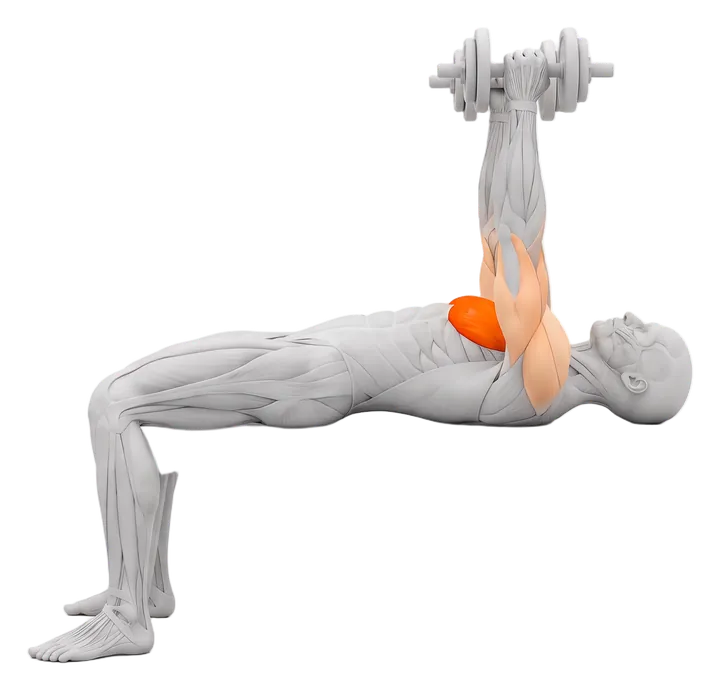 Dumbbell bench pressChest
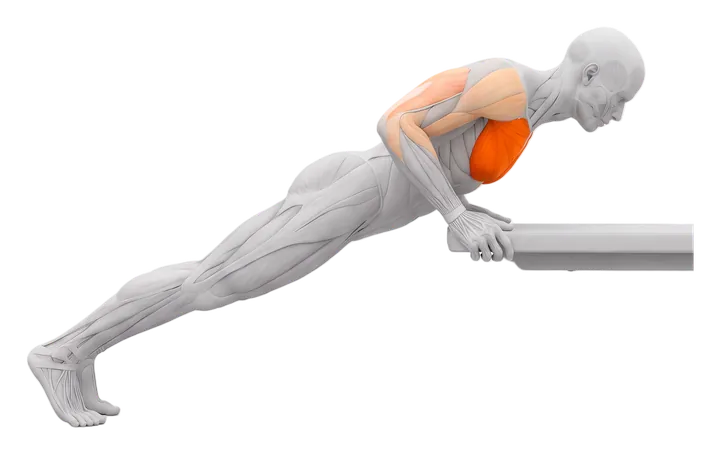 Incline push-upChest
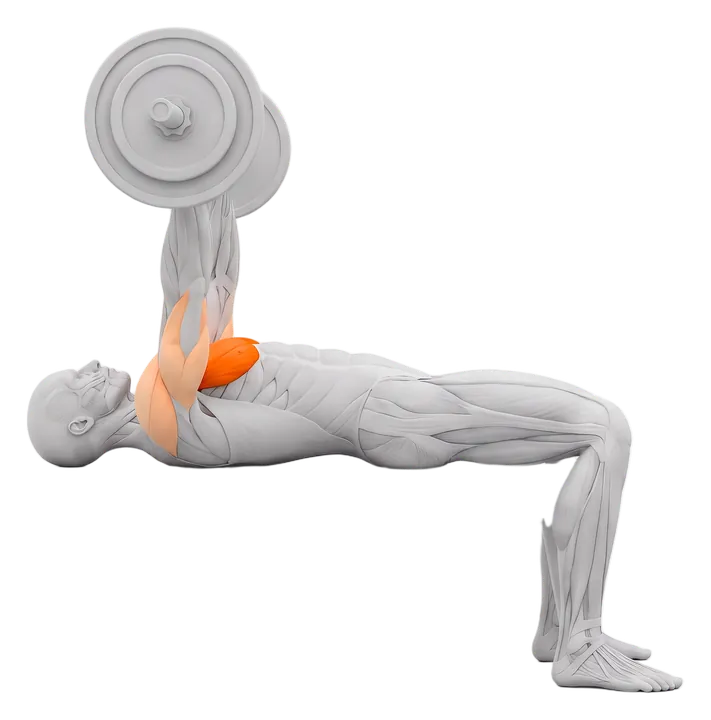 Barbell bench pressChestGuide
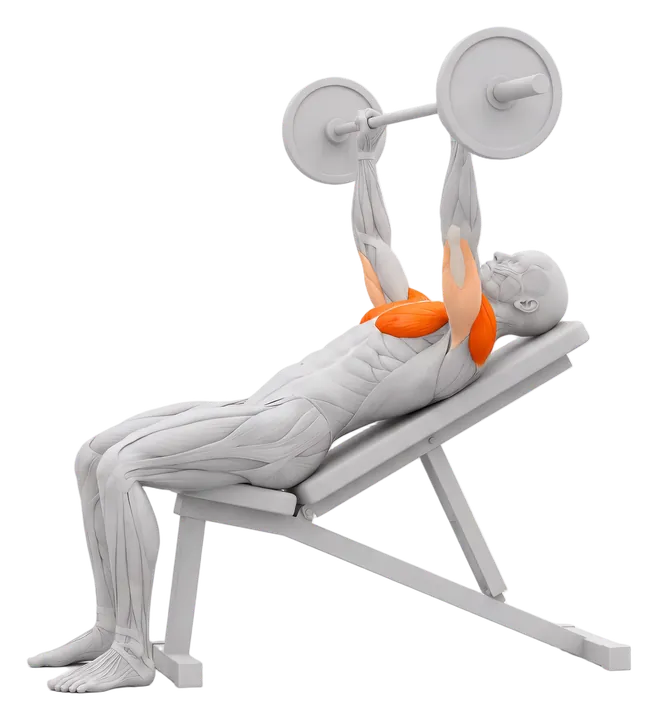 Incline barbell bench pressChest and front delts
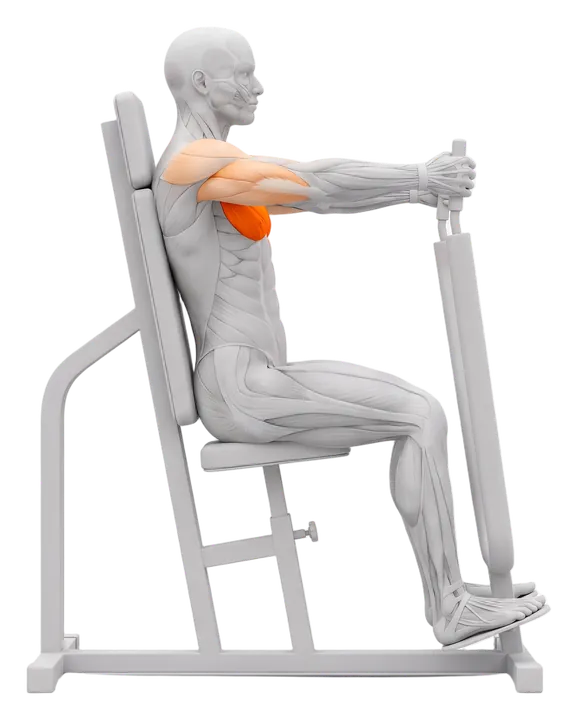 Machine chest pressChest
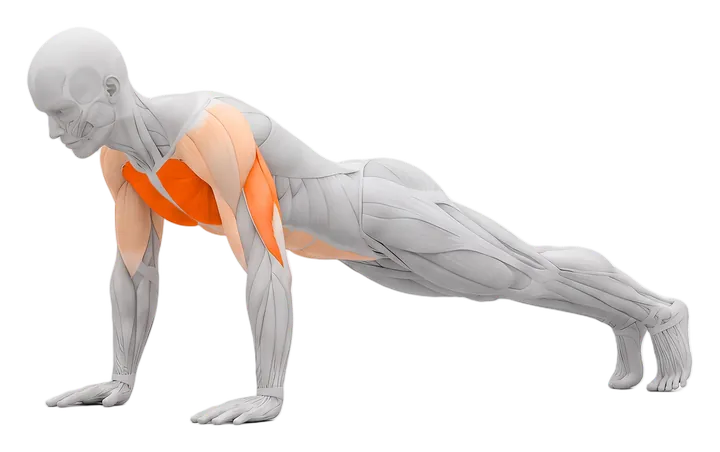 Push-upChest