What is an upper lower split?
The idea is as simple as a split can be. Upper days train everything above the waist, lower days train everything below it, and you alternate between them. With four sessions a week you get two upper and two lower days, so each muscle is hit twice with two or three days of rest in between.
Training a muscle twice a week is a good target for most people who want to build muscle and strength. It lets you spread your weekly sets over two sessions, so each one stays productive instead of turning into junk volume at the end of a long workout. An upper/lower body split gives you that frequency with only four gym days.
Who the upper lower split suits
- Lifters who can train 4 days a week. This is where the upper lower split is strongest, and four days fits most working weeks.
- Beginners moving on from full body. When three full body sessions start to feel long, splitting the body in two gives each lift more room.
- Intermediate lifters chasing strength and size together. Each half of the body gets a heavy day and a volume day.
- Not ideal for people who can only train 2 or 3 days. With fewer days a full body workout keeps every muscle on twice a week, and an upper lower split cannot.
The 4 day upper lower split workout plan
This template has two versions of each day. Upper A and Lower A lead with heavy barbell lifts in lower rep ranges for strength. Upper B and Lower B use moderate weights, more reps and different angles for muscle growth. The mix covers both goals without needing a separate program for each.
| # | Upper A (strength) | Upper B (volume) |
|---|---|---|
| 1 | Bench press, 4 x 4 to 6 | Incline dumbbell press, 3 x 8 to 12 |
| 2 | Barbell row, 4 x 6 to 8 | Pull-up or lat pulldown, 3 x 8 to 12 |
| 3 | Overhead press, 3 x 6 to 8 | Seated cable row, 3 x 10 to 12 |
| 4 | Pull-up (weighted if you can), 3 x 6 to 8 | Dips or machine chest press, 3 x 8 to 12 |
| 5 | Barbell curl, 2 x 8 to 10 | Lateral raise, 3 x 12 to 20 |
| 6 | Triceps pushdown, 2 x 10 to 12 | Incline dumbbell curl and overhead triceps extension, 2 x 10 to 15 each |
| # | Lower A (strength) | Lower B (volume) |
|---|---|---|
| 1 | Back squat, 4 x 4 to 6 | Deadlift or trap bar deadlift, 3 x 4 to 6 |
| 2 | Romanian deadlift, 3 x 6 to 8 | Front squat or hack squat, 3 x 8 to 10 |
| 3 | Leg press, 3 x 8 to 10 | Bulgarian split squat, 3 x 8 to 10 per leg |
| 4 | Lying leg curl, 3 x 8 to 12 | Hip thrust, 3 x 8 to 12 |
| 5 | Standing calf raise, 4 x 8 to 12 | Leg extension, 3 x 12 to 15 |
| 6 | Hanging leg raise, 3 x 10 to 15 | Seated leg curl and seated calf raise, 3 x 12 to 15 each |
Rest 2 to 3 minutes on the first two lifts of each day and 60 to 90 seconds on the rest. Stop most sets 1 to 3 reps short of failure. A whole session takes about 60 to 75 minutes including warm up sets.
Weekly schedules: 3, 4 and 5 days
Four days is the classic setup, but the same two workouts bend to fit other weeks.
| Days | Mon | Tue | Wed | Thu | Fri | Sat | Sun |
|---|---|---|---|---|---|---|---|
| 4 day (classic) | Upper A | Lower A | Rest | Upper B | Lower B | Rest | Rest |
| 4 day (spread) | Upper A | Rest | Lower A | Rest | Upper B | Lower B | Rest |
| 3 day (rotating) | Upper | Rest | Lower | Rest | Upper | Rest | Rest |
| 3 day (upper, lower, full body) | Upper | Rest | Lower | Rest | Full body | Rest | Rest |
| 5 day (upper lower + PPL) | Upper | Lower | Rest | Push | Pull | Legs | Rest |
4 day upper lower split
Monday, Tuesday, Thursday and Friday is the most common layout because it puts a rest day in the middle of the week and leaves the weekend free. If back to back days feel heavy, spread the sessions out as in the second row.
Upper lower full body 3 day split
With three days, either rotate upper and lower so the next week starts where the last one stopped, or run upper, lower and a lighter full body day. The second option keeps each muscle close to twice a week and is a good bridge for beginners.
Push pull legs upper lower 5 day split
For five days, pair two upper lower days with a push, pull and legs block. Every muscle still gets two sessions, and the extra day adds volume without a sixth trip to the gym. The push pull legs page has the templates for the PPL half.
How to progress on an upper lower split
The template gives you structure. Getting stronger comes from doing a little more over time, which is progressive overload. Double progression works for every exercise in the plan:
- Start at the bottom of the rangePick a weight you can lift for the low end of the rep range with 2 to 3 reps left. For example, squat 100 kg (220 lb) for 4 reps on Lower A.
- Add reps session by sessionKeep the weight and add a rep to one or more sets each time you repeat the workout.
- Add weight at the topWhen every set reaches the top of the range, add 2.5 kg (5 lb) on upper body lifts or 5 kg (10 lb) on lower body lifts and work back up.
For the heavy A day lifts, such as the bench press and overhead press, you can also set loads as a percentage of your max. Find yours with the 1RM calculator: sets of 4 to 6 reps usually land around 80 to 87 % of your estimated one rep max. If you want a structured percentage plan for the big lifts, Wendler 5/3/1 is often run on a 4 day upper lower split.
Run your upper lower split in Gripp
Put your four training days in Gripp's weekly schedule and log every set. Gripp tells you what to lift next session based on last time: hit your reps in every set and the weight goes up.
Join the waitlistUpper lower vs push pull legs vs full body
| Split | Best days per week | Frequency per muscle | Session length |
|---|---|---|---|
| Upper lower | 4 | 2x | 60 to 75 min |
| Push pull legs | 6 (or 3 to 5) | 2x on 6 days, 1x on 3 days | 60 to 75 min |
| Full body | 2 to 3 | 2 to 3x | 45 to 65 min |
Upper lower vs push/pull legs: the deciding factor is your number of training days. Four days suits upper lower perfectly, with two upper and two lower sessions. Push pull legs needs six days to train everything twice, so it fits people with more time. Neither is better in general.
Upper lower vs full body: full body is the better choice at two or three days a week and for brand new lifters who benefit from practising the main lifts often. Once full body sessions run long or the big lifts start to tire each other out, an upper lower split is the natural next step.
Recovery and deloads
- Avoid putting the two lower days back to back. Heavy squats followed by deadlifts the next day can leave your legs and lower back too tired to progress.
- If your lower back is the limiting factor, keep deadlifts on Lower B and use a lighter hinge, such as the Romanian deadlift, on Lower A.
- Every 6 to 10 weeks, or when several lifts stall at once, run a deload week with about half the sets at the same weights.
- Sore for days after the first week? That is normal while your body adapts. The DOMS guide explains what helps.
Common upper lower split mistakes
- Cramming in too much. An upper day has a lot of muscles to cover, so it is tempting to keep adding exercises. Stick to the template and push harder on the sets you have.
- Skimping on lower day effort. A lower day is a full leg workout, and it is hard. Treat them as seriously as the upper days or your legs fall behind.
- Uneven upper days. Match every press with a pull. Both upper days in the template have at least two back exercises for that reason.
- Making both versions of a day the same. The A and B days work because they train in different rep ranges. Keep the heavy day heavy.
- Not tracking. If you do not know what you lifted last week, you cannot beat it. Write down every set.
The exercises
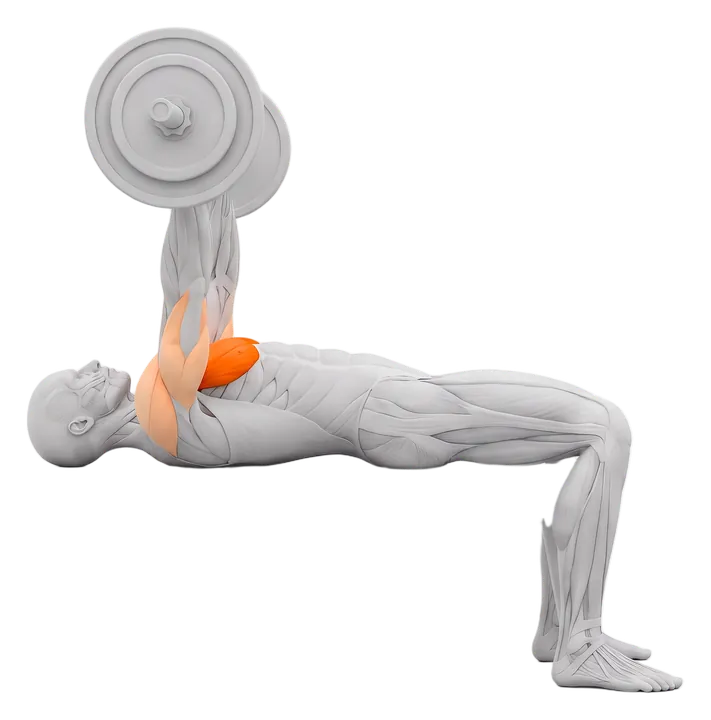 Barbell bench pressChestGuide
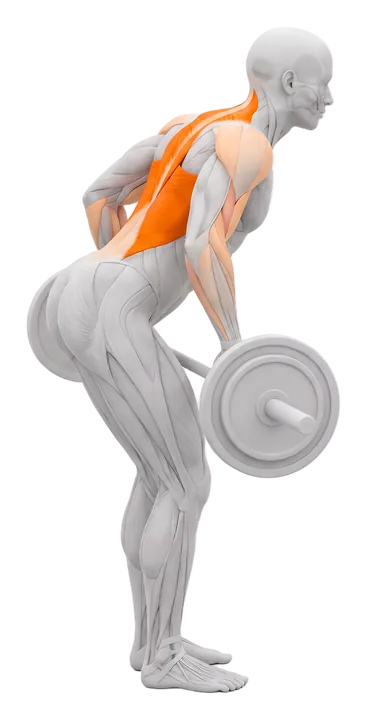 Barbell bent-over rowUpper back and lats
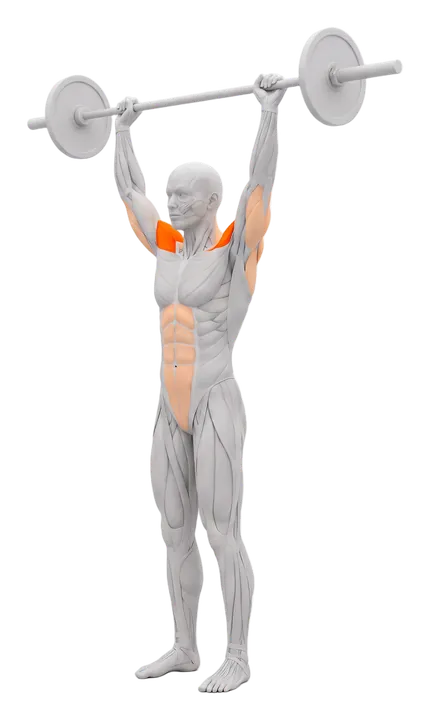 Barbell overhead pressFront deltsGuide
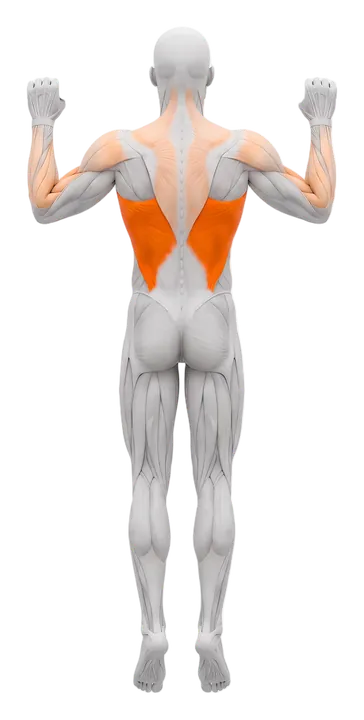 Pull-upLatsGuide
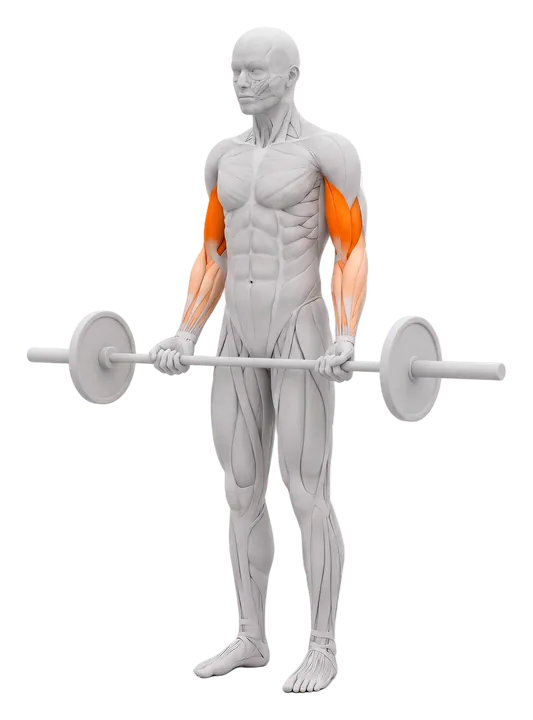 Barbell curlBiceps
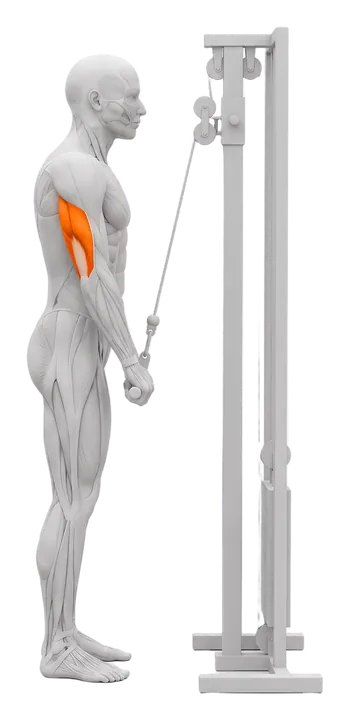 Cable triceps pushdownTriceps
 Barbell back squatQuads and glutes
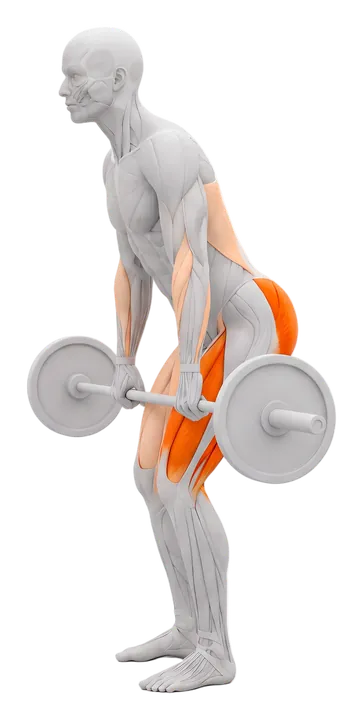 Romanian deadliftHamstrings and glutesGuide
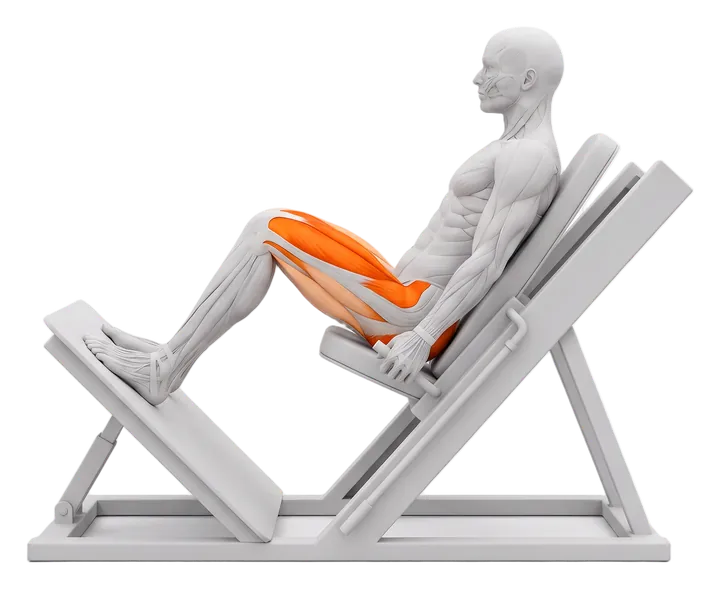 Leg pressQuads and glutesGuide
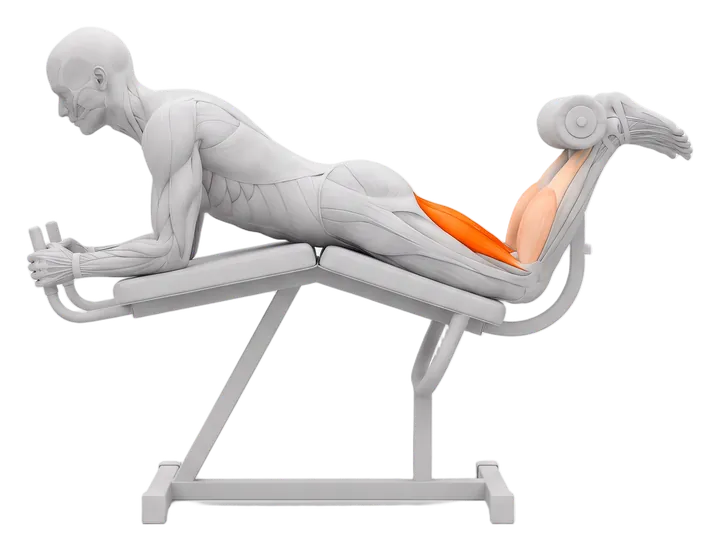 Lying leg curlHamstrings
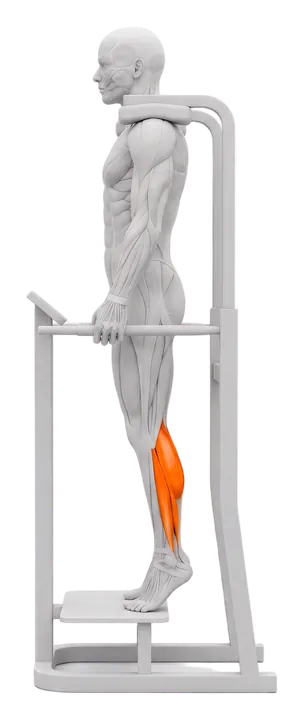 Standing calf raiseCalves
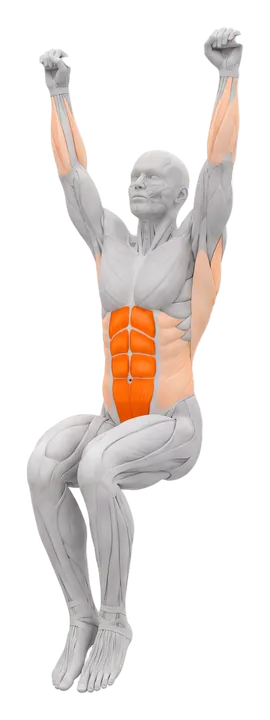 Hanging knee raiseAbs