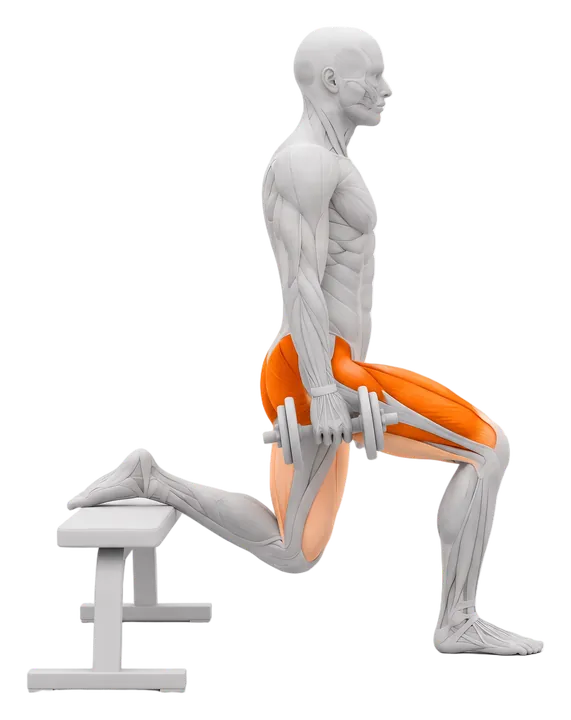
Bulgarian split squat muscles worked
Almost all the work happens in the front leg. The back leg helps you balance and gets a stretch in the hip flexor and quad, but it should carry very little of your weight.
| Muscle | Role | How much |
|---|---|---|
| Quadriceps | Straighten the knee out of the bottom | Primary |
| Gluteus maximus | Extends the hip, works hard in the deep stretch | Primary |
| Adductors | Help extend the hip and keep the knee on track | Secondary |
| Gluteus medius | Stops the hip and knee from collapsing inwards | Stabiliser |
| Calves and core | Balance on one foot, keep the torso still | Stabilisers |
| Rear leg hip flexors | Stretched, not loaded | Mobility |
Because each leg works alone, you can load your legs hard with far less weight than you would squat. That makes it easier on the lower back than a heavy back squat, and it shows strength differences between your left and right side.
How to do a Bulgarian split squat
- Find your bench heightUse a bench or box around knee height or a little lower. Lower is easier on the hip flexors of the back leg; higher gives more range but a bigger stretch.
- Set the distanceSit on the end of the bench, then step one foot forward about a long stride. Stand up and rest your rear foot on the bench, either laces down or toes tucked. Use whichever lets you balance.
- Put your weight on the front footMost of your weight should be on the front leg. Brace your core and stand tall with the dumbbells hanging at your sides.
- Lower straight downBend the front knee and let your back knee drop towards the floor. Go down under control until the back knee is a few centimetres from the floor or the front thigh is about parallel.
- Drive up through the whole front footPush through the heel and midfoot of the front leg to stand up. Finish all reps on one leg before switching, and start with your weaker side.
Bulgarian split squat form cues
- "Back knee down, not back." Think of an elevator going straight down between your feet.
- "Front foot owns the rep." If your rear foot pushes hard into the bench, the wrong leg is working.
- "Knee follows the toes." The front knee may travel forward past your toes, but it should not cave inwards.
- "Hips square." Keep both hip bones facing forward, as if they were headlights.
- "Pause before you push." A short stop at the bottom removes the bounce and makes balance easier.
Bulgarian split squat for glutes vs quads
This is the most asked question about the exercise, and the answer is in your stance and torso angle. Both versions train both muscles, but the emphasis shifts.
| Glute bias | Quad bias | |
|---|---|---|
| Front foot | Further from the bench | Closer to the bench |
| Torso | Leaned forward, roughly 30 to 45 degrees | Upright |
| Front knee | Stays roughly over the ankle | Travels forward past the toes |
| Where you feel it | Glute and upper hamstring of the front leg | Front of the thigh |
| Load | Dumbbells hanging slightly in front of you | Dumbbells at your sides or a goblet hold |
For a bulgarian split squat for glutes, the forward lean and longer stance put the hip of the front leg into a deeper bend, which stretches the glute under load. Pair it with a hip thrust to also train the glutes in the top position, or pick from the other glute exercises. For quads, stay upright and let the knee move forward; heel lifts are not needed because the stance already allows plenty of knee travel.
Common mistakes
- Stance too short. The front heel rises and the knee takes all the stress. Lengthen the stance until the whole foot stays down.
- Pushing off the back foot. It turns the exercise into a two legged squat with half the benefit. Lighten the back foot until it could almost lift off.
- Bench too high. A high bench pulls the hips into a tilt and the lower back arches. Knee height or lower works for most people.
- Knee caving in. Usually a sign the weight is too heavy for your hip stabilisers. Drop the load and slow down.
- Rushing the bottom. Bouncing out of the hole costs balance and moves stress to the knee. Control the last few centimetres.
Bulgarian split squat variations
| Variation | What changes | Good for |
|---|---|---|
| Bodyweight | No load, learn balance and depth | Beginners, warm up |
| Dumbbell Bulgarian split squat | A dumbbell in each hand | The standard version, easy to load |
| Goblet | One dumbbell or kettlebell held at the chest | Upright torso, more quads, easy balance |
| Barbell | Bar on the upper back | Heavy loads, but harder to balance and bail |
| Smith machine | Bar runs on a fixed track | Heavy loading without balance limits |
| Split squat (rear foot on the floor) | Both feet on the ground | Easier version, less hip flexor stretch |
| Front foot elevated split squat | Front foot on a low plate or step | More range, deeper stretch for glutes and quads |
Dumbbell split squat
Dumbbells are the easiest way to load the movement, because you can drop them safely if you lose balance. Grip often limits heavy sets: once the dumbbells get too heavy to hold, use straps or switch to a Smith machine or barbell version. Holding one dumbbell at your chest, as in a goblet squat, also helps if balance is the problem.
Front foot elevated split squat
Put the front foot on a 5 to 10 cm (2 to 4 in) plate or step and keep the back foot on the floor. The front leg goes deeper than in a normal split squat, so it is a good option if a bench behind you strains your hip flexors, and a natural step towards deep ATG style split squats where the back knee reaches the floor with the front knee far forward.
How many sets and reps of Bulgarian split squats?
Most people do well with moderate to higher reps. Balance and breathing get hard long before low rep strength becomes the limit, so sets of 3 to 5 reps are seldom worth it.
| Goal | Sets x reps (per leg) | Rest | Notes |
|---|---|---|---|
| Strength | 3 to 4 x 6 to 8 | 2 min between legs | Smith machine or heavy dumbbells with straps |
| Muscle growth | 3 x 8 to 12 | 60 to 90 s between legs | Stop 1 to 2 reps before failure |
| Glute focus | 3 x 10 to 15 | 60 to 90 s | Long stance, forward lean, slow lowering |
| Beginner | 2 to 3 x 8 to 10 | 60 s | Bodyweight or light dumbbells |
Two to three working sets per leg, once or twice a week, is plenty for most lifters as part of a leg workout next to squats or leg presses. In an upper lower split it fits on either lower day, and in push pull legs it works as the second leg exercise after a squat. In a full body workout it can replace the squat on one of the days. Rest briefly after the first leg, then do the second; the full rest comes after both legs.
How to progress
Progress with reps first, then weight. Work in a range such as 8 to 12 per leg; when you hit 12 on both legs in every set, go up to the next dumbbell, usually 2 kg (5 lb) per hand. Always match the reps of your weaker leg on the stronger side, so the gap closes instead of growing. That is progressive overload applied to a single leg exercise.
There are no reliable official strength standards for the Bulgarian split squat, because bench height, stance and grip vary so much. As a loose rule of thumb, holding dumbbells that add up to around half your bodyweight for 8 good reps per leg is a solid level for a regular gym-goer. Compare yourself with your own log, not with someone else's setup.
Gripp tracks each leg and tells you what to lift next
Log your reps and weight for every set and Gripp tells you what to do next session: last time 10 reps with 20 kg dumbbells, today go for 11. Hit your reps in every set and the weight goes up. Your estimated max shows on a progress chart, and the exercise page has a muscle map of what the split squat trains.
Join the waitlistBulgarian split squat alternatives
- Reverse lunge: similar single leg demand, easier on the knees for many people, no bench needed.
- Walking lunge: more of a conditioning effect and plenty of glute work with a longer step.
- Step-up: step onto a knee height box; good for glutes and an easy option if balance is the issue.
- Split squat with the rear foot on the floor: the same pattern with less stretch on the back hip.
- Leg press, one or two legs: heavy quad and glute work with no balance challenge.
- Romanian deadlift: not a squat, but a strong partner exercise for the glutes and hamstrings. See the Romanian deadlift guide.
Similar exercises
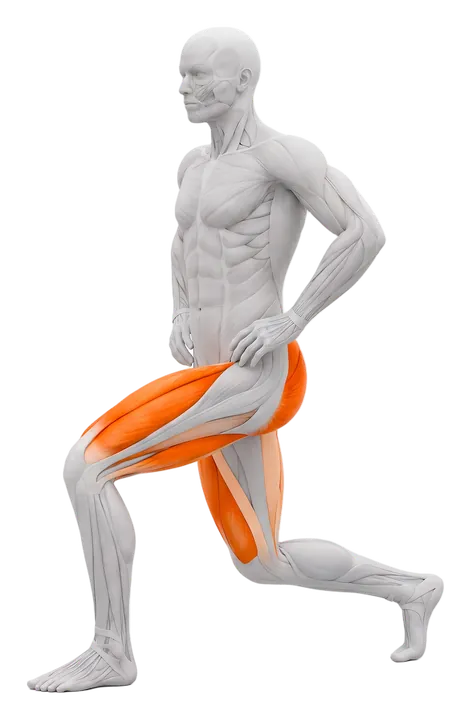 Split squatQuads and glutes
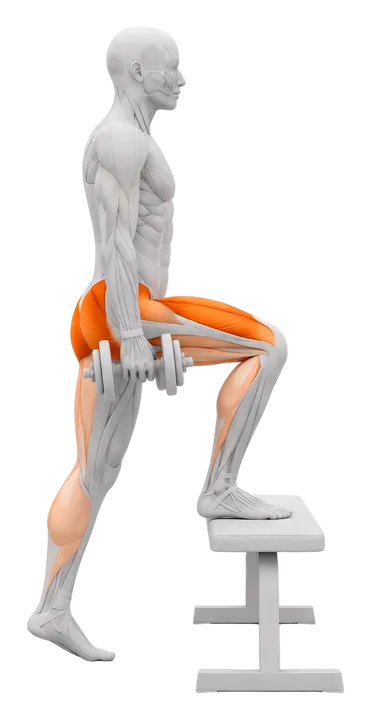 Dumbbell step-upQuads and glutes
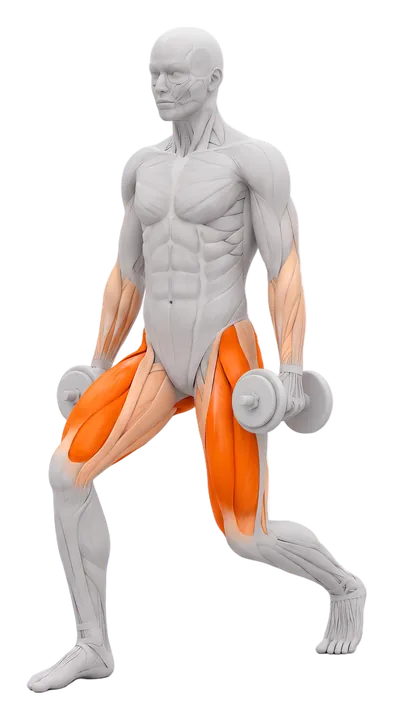 Dumbbell walking lungeQuads and glutes
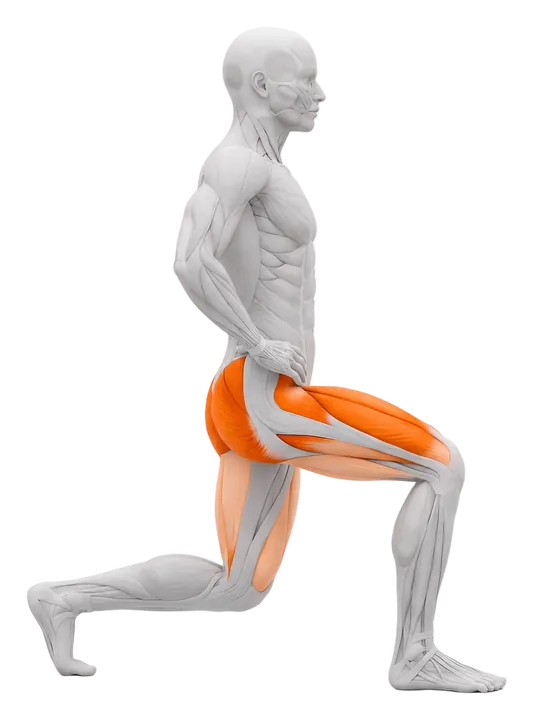 Reverse lungeQuads and glutes
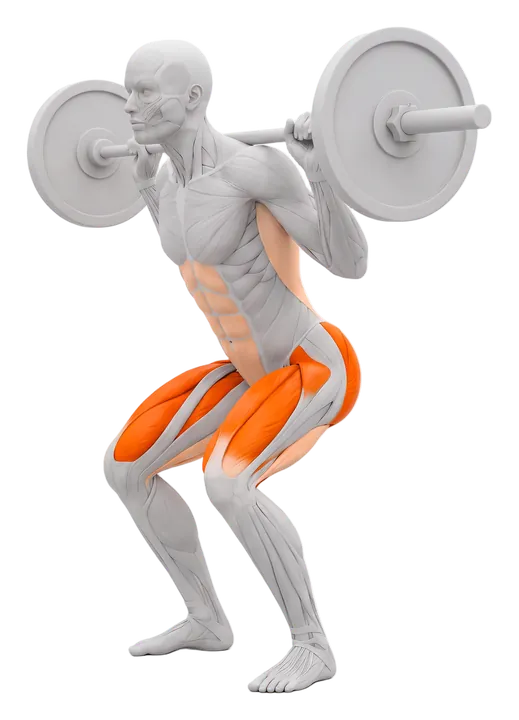 Barbell back squatQuads and glutes
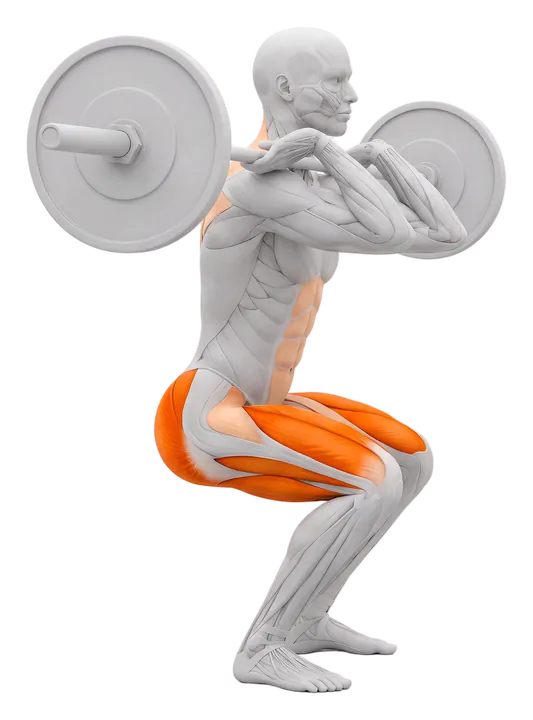 Barbell front squatQuads and glutes