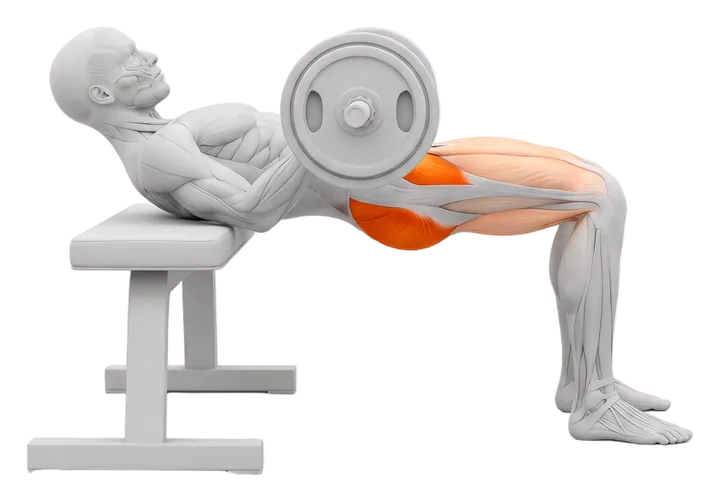
What does the hip thrust work?
| Muscle | Role | How much |
|---|---|---|
| Gluteus maximus | Extends the hip, hardest at the top | Primary |
| Hamstrings | Assist hip extension, more with feet further out | Secondary |
| Quadriceps | Hold the knee angle, more with feet closer in | Secondary |
| Adductors | Assist hip extension and keep the knees in line | Secondary |
| Gluteus medius | Keeps the knees from caving in | Stabiliser |
| Core | Keeps the ribs down and the pelvis still | Stabiliser |
Hip thrust for glutes: in a squat, a deadlift or a Romanian deadlift, the glutes work hardest when stretched at the bottom and the load gets easier near lockout. The hip thrust is the opposite: the top is the hardest part. That is why most plans built from the best glute exercises combine a hinge or a split squat with the hip thrust, so the glutes get trained across their whole range.
How to do a barbell hip thrust
- Set the benchUse a stable bench about 35 to 45 cm (14 to 18 in) high, pushed against a wall or a rack so it cannot slide. Sit on the floor with the bottom edge of your shoulder blades against the edge of the bench.
- Roll the bar into placeRoll a loaded barbell over your legs until it sits in the crease of your hips. Use a pad or a folded mat under the bar. Full size plates make this much easier, because the bar sits high enough to roll over your thighs.
- Place your feetFeet flat, about hip width, toes pointing slightly out. Choose a distance where your shins are vertical at the top of the rep.
- Drive the hips upBrace, tuck your chin and push through your heels and midfoot. Lift until your hips are level with your knees and shoulders. Hold the top for one second and squeeze your glutes.
- Lower under controlLet the hips drop until the plates almost touch the floor, then start the next rep. Keep your upper back on the bench as a hinge point for the whole set.
Hip thrust form cues
- "Chin down, eyes forward." Look ahead, not at the ceiling. Your head moves with your torso, which helps you avoid arching the lower back.
- "Ribs down." Finish by tilting the pelvis slightly under, not by bending the lower back.
- "Shins vertical at the top." Feet too close puts more work on the quads, too far out moves it to the hamstrings.
- "Push the knees out a little." Keeps the knees in line with the toes and brings in the side glutes.
- "Own the lockout." A one second pause at the top is worth more than a few extra kilos.
Common hip thrust mistakes
- Arching the lower back at the top. The hips look higher, but your back does the job instead of your glutes. Stop where the body forms a straight line.
- Feeling it mostly in the hamstrings. Usually the feet are too far away. Bring them closer.
- Feeling it mostly in the quads. Usually the feet are too close or you push through your toes. Move the feet out and press through the heels.
- Bench sliding away. Fix it against a wall or rack before you load up.
- Half reps. Not reaching full hip extension at the top skips the part the exercise is best at.
Hip thrust pad and equipment
A barbell across the hips is uncomfortable without padding. A thick foam hip thrust pad, a barbell squat pad, a folded yoga mat or an ab mat all work. Choose one that is thick enough to spread the pressure but stays put on the bar.
Any flat, stable bench works. Dedicated hip thrust benches and machines are nice to have, but not needed. If your gym only has small plates, set the bar up on a pair of blocks or step platforms so you can roll under it.
Hip thrust variations
| Variation | Setup | Good for |
|---|---|---|
| Barbell hip thrust | Bar with pad across the hips | Heaviest loads, best for long term progress |
| Dumbbell hip thrust | One dumbbell held on the hips with both hands | Lighter loads, quick setup, home gyms |
| Single leg hip thrust | One foot on the floor, the other leg held up | Fixing a weaker side, training without weights |
| B stance hip thrust | Most weight on one leg, the other foot just for balance | A step between two legs and one leg |
| Bodyweight hip thrust | No load, shoulders on a couch or bench | Beginners, warm up, high reps at home |
| Banded hip thrust | Band around the knees or across the hips | More side glute work, home training |
| Machine hip thrust | Plate or stack loaded machine | Easy setup and safe loading |
Dumbbell hip thrust
Hold a single dumbbell across your hip crease with both hands, one end against each hip bone. It works the same way as the barbell version, but once you can do more than about 15 reps with your heaviest dumbbell, move to a barbell or the single leg version.
Single leg hip thrust
Set up as normal, then lift one foot and hold that knee towards your chest, or keep the leg straight. Drive up through the working foot and keep the hips level: if one side drops, the set is over. Two hard sets per leg with bodyweight is a real challenge for most people, and you can add a dumbbell on the working hip later.
Hip thrust at home
A sturdy sofa or bed edge replaces the bench. Start with bodyweight or single leg reps, then add a backpack filled with books, a dumbbell, a kettlebell or a resistance band pinned to the floor with your hands. Slow down the lowering and pause for two seconds at the top to make light loads work harder.
Hip thrust vs glute bridge
The glute bridge is done lying on the floor, with your upper back on the ground. The hip thrust lifts your upper back onto a bench, which gives the hips a longer range of motion and lets you load more weight.
| Glute bridge | Hip thrust | |
|---|---|---|
| Upper back | On the floor | On a bench |
| Range of motion | Shorter | Longer |
| Setup | Fast, no equipment | Needs a bench, pad and space |
| Typical use | Warm up, beginners, home | Main glute exercise with heavy loads |
Both train the same muscles. Start with bridges if you are new or training at home, and move on to hip thrusts when you want to keep adding weight.
Sets and reps for the hip thrust
| Goal | Sets x reps | Rest | Notes |
|---|---|---|---|
| Strength | 3 to 5 x 5 to 8 | 2 to 3 min | Barbell, full pause at the top |
| Glute growth | 3 to 4 x 8 to 12 | 90 s to 2 min | 1 to 2 reps short of failure |
| Higher reps, home | 2 to 3 x 15 to 25 | 60 to 90 s | Bodyweight, band or single leg |
| Beginner | 2 to 3 x 10 to 12 | 90 s | Glute bridge or light barbell |
Train hip thrusts once or twice a week. On an upper lower split they fit as the second or third exercise on a lower day, after a squat, leg press or RDL. A typical glute focused leg workout could be Bulgarian split squats, then hip thrusts, then a hamstring curl.
How to progress the hip thrust
Hip thrust numbers often climb quickly in the first months, so it is tempting to jump in big steps. Add load only when every rep reaches full lockout with a pause. A step of 5 to 10 kg (10 to 20 lb) works early on; slow down to 2.5 kg (5 lb) steps when progress stalls. Read more about this in progressive overload.
Gripp shows if your hip thrust is still going up
Log every set and Gripp tells you what to lift next session, and keeps an estimated max for your hip thrust on a progress chart. The exercise page shows a muscle map, and Gripp rates your strength per muscle group against people of your age and bodyweight.
Join the waitlistHip thrust alternatives
- Glute bridge: the floor version, no bench needed.
- Cable pull-through: a hinge with the cable between your legs that also loads the glutes near lockout.
- 45 degree back extension with a rounded upper back: a glute focused hinge at higher reps.
- Romanian deadlift: loads the glutes in the stretch instead of at the top. See the RDL guide.
- Bulgarian split squat or step-up: single leg options with heavy glute involvement.
- Kickback machine or cable kickback: lighter isolation work for the glutes.
Similar exercises
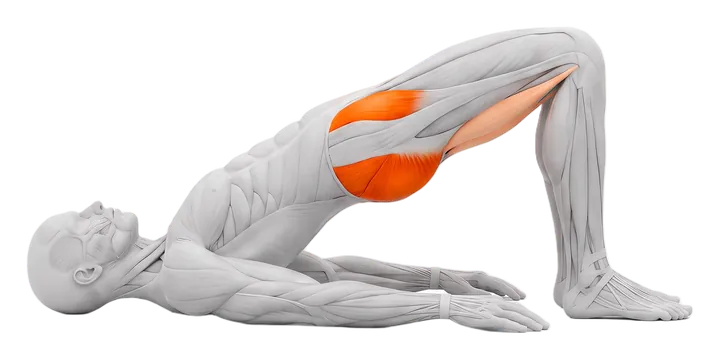 Glute bridgeGlutes
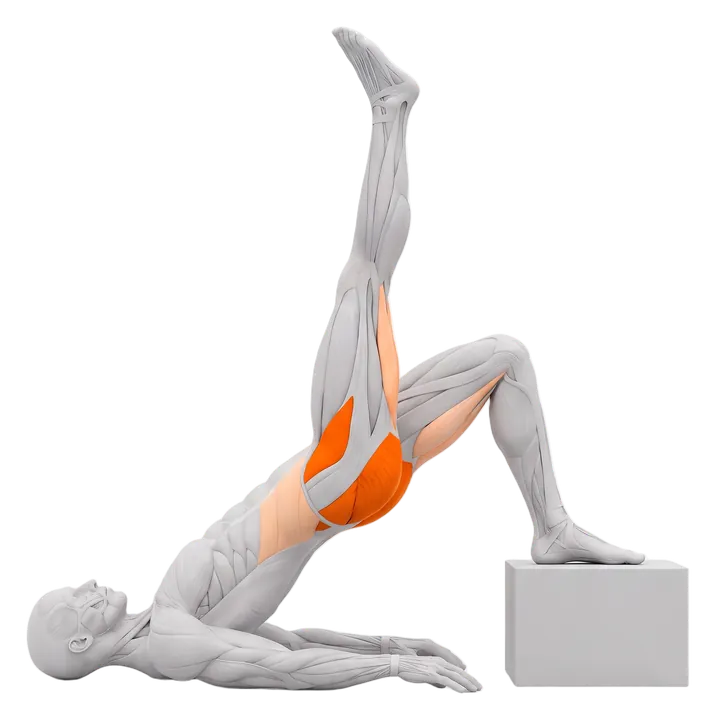 Single-leg glute bridgeGlutes
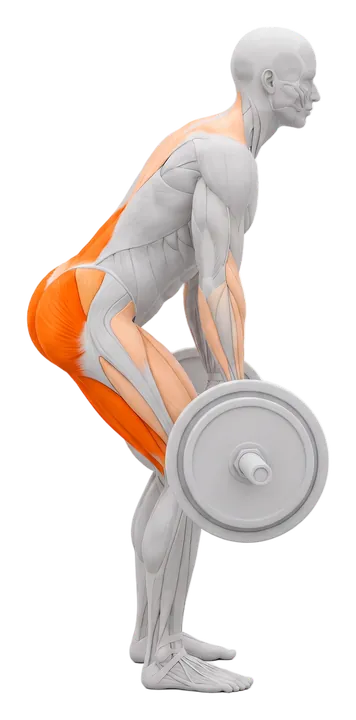 Barbell deadliftGlutes and hamstringsGuide
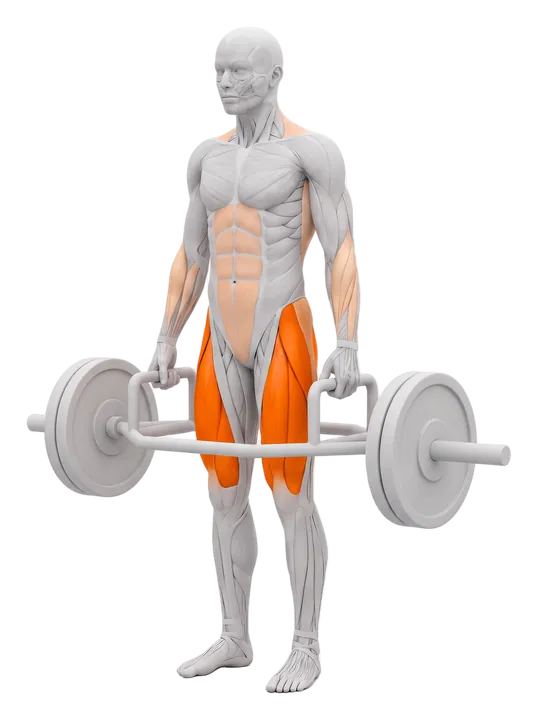 Trap bar deadliftGlutes and quads
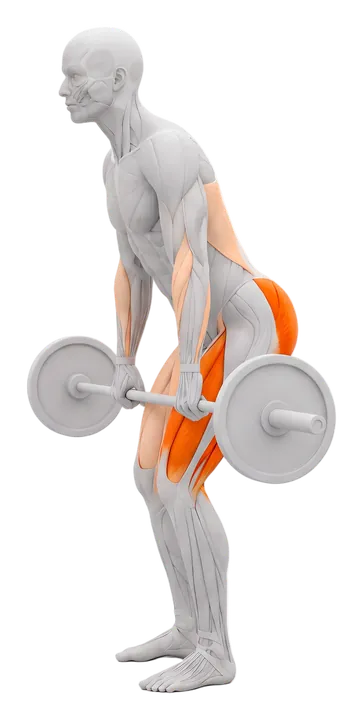 Romanian deadliftHamstrings and glutesGuide
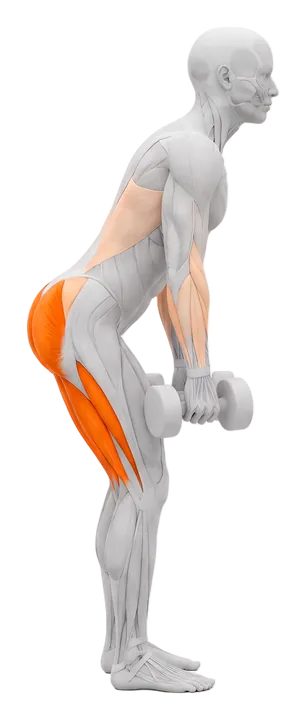 Dumbbell Romanian deadliftHamstrings and glutes