The muscles of your back
Your back is not one muscle. It is four groups with different jobs, and each responds best to a different kind of pull. A back that looks wide from the front comes mostly from the lats; a thick back seen from behind comes from the upper back and traps; the lower back holds your spine steady under load.
| Group | Muscles | Main job | Best trained by |
|---|---|---|---|
| Lats | Latissimus dorsi, teres major | Pull the upper arm down and back towards the body | Pull-up, lat pulldown, one-arm dumbbell row |
| Upper back | Rhomboids, middle and lower trapezius, rotator cuff (back side) | Pull the shoulder blades together and down | Barbell row, chest-supported row, seated cable row, face pull |
| Traps | Upper trapezius, levator scapulae | Lift and support the shoulder blades | Shrug, deadlift, farmer's carry |
| Lower back | Erector spinae, multifidus, quadratus lumborum | Hold the spine straight and extend it | Deadlift, Romanian deadlift, back extension, bird dog |
All back exercises
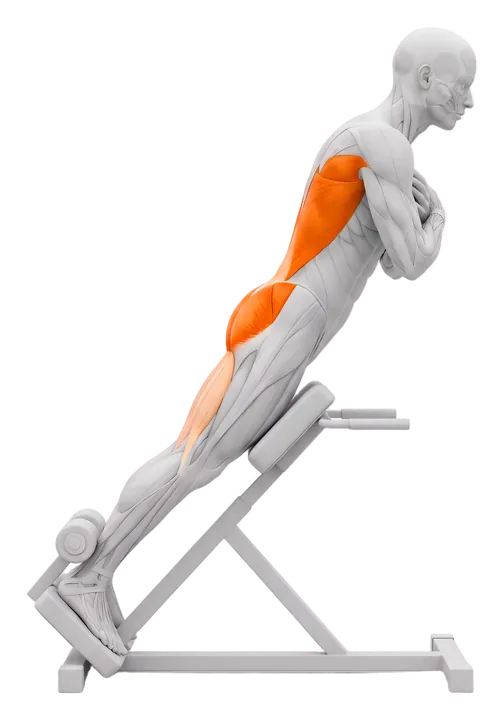 Back extension (45°)Lower back and glutes
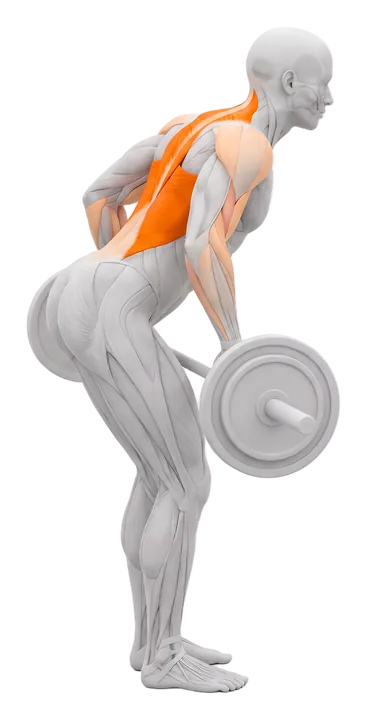 Barbell bent-over rowUpper back and lats
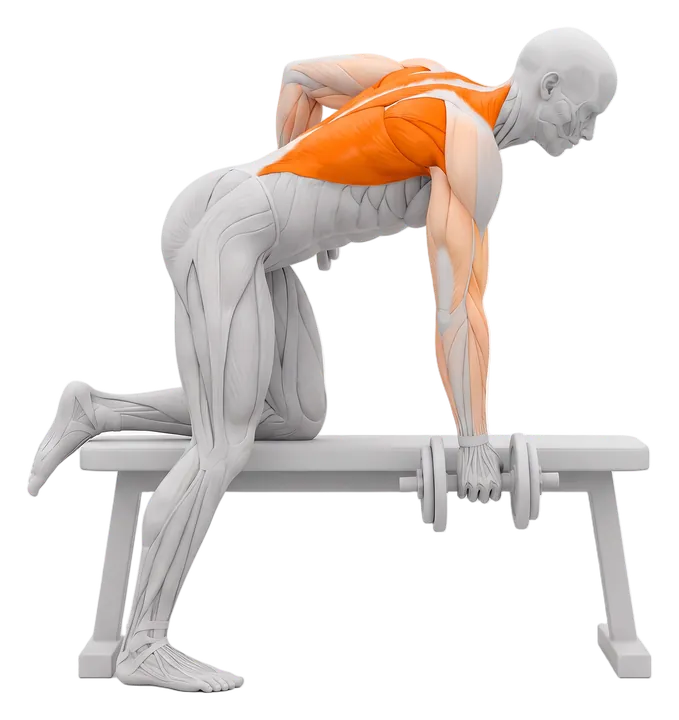 One-arm dumbbell rowLats and upper back
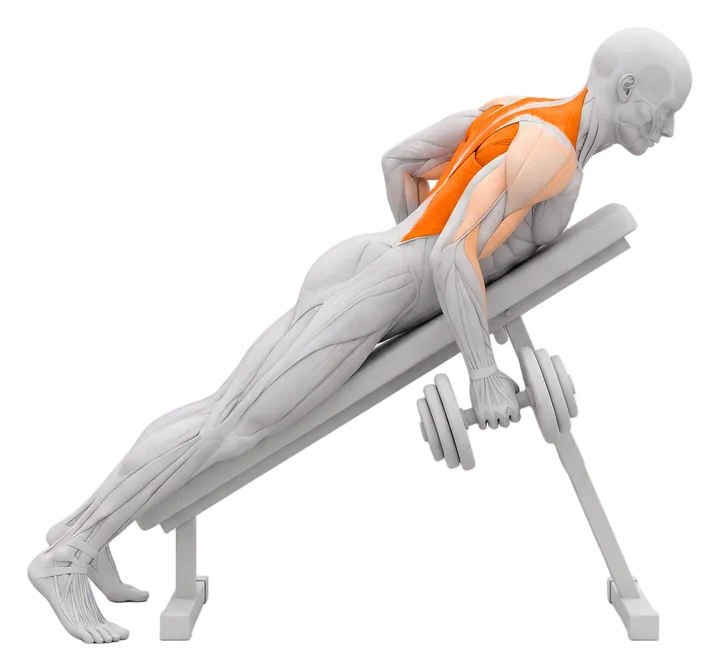 Chest-supported dumbbell rowUpper back and lats
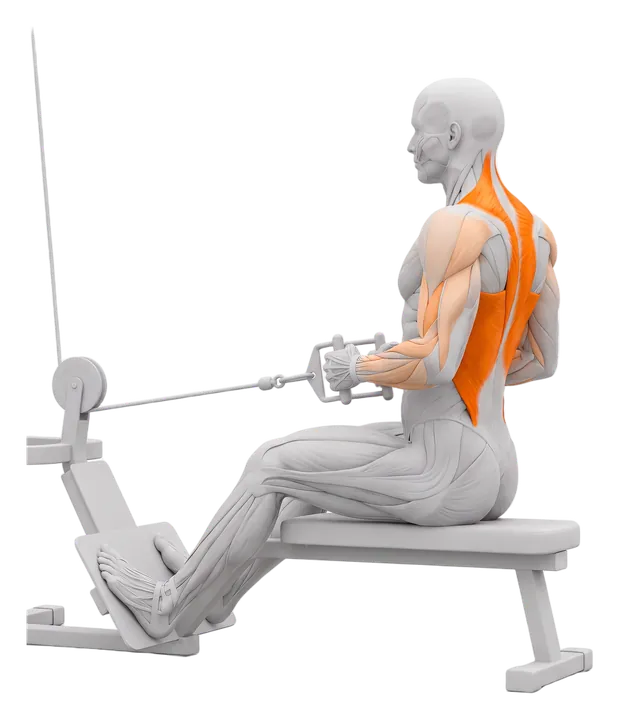 Seated cable rowUpper back and lats
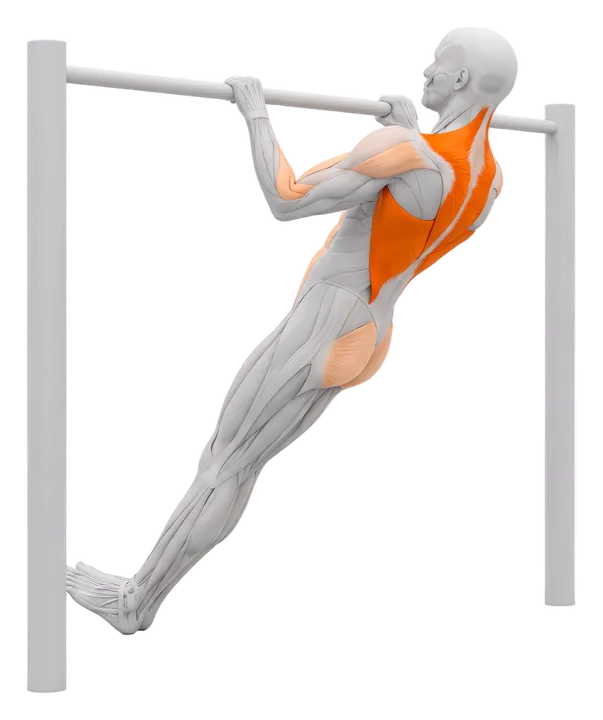 Inverted rowUpper back and lats
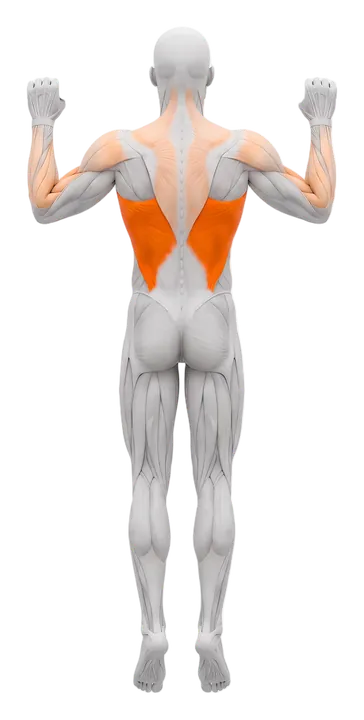 Pull-upLatsGuide
 Chin-upLats and biceps
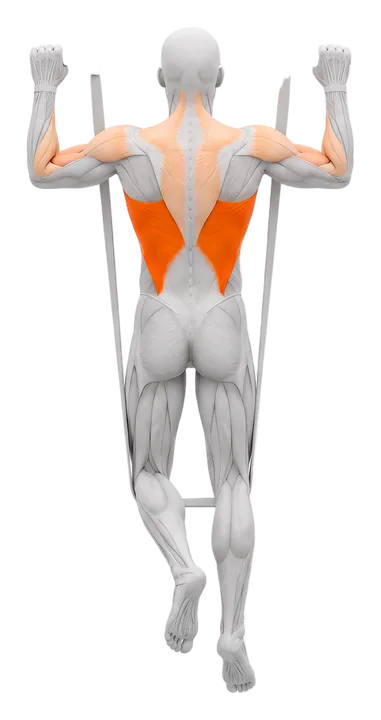 Band-assisted pull-upLats
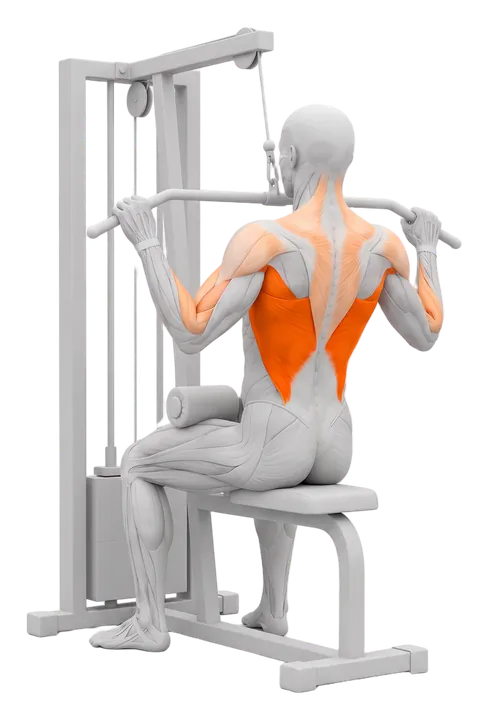 Lat pulldownLatsGuide
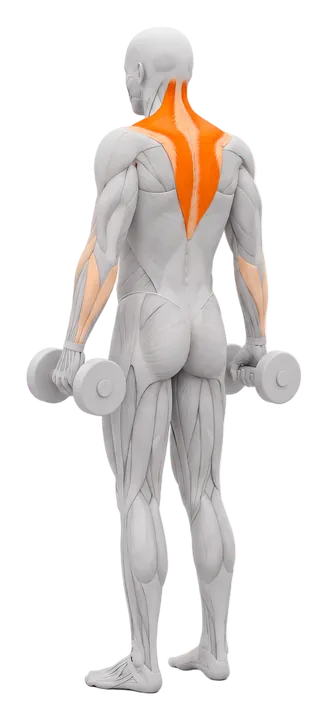 Dumbbell shrugTraps
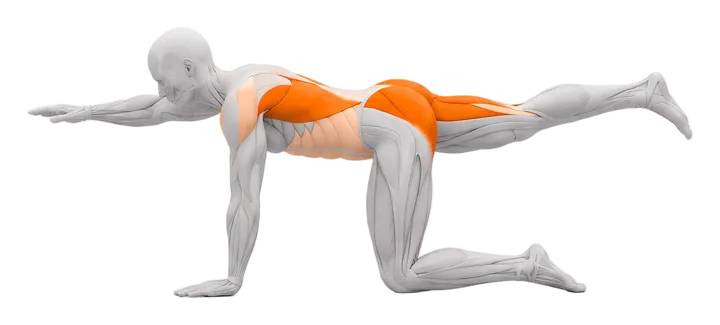 Bird dogLower back and glutes
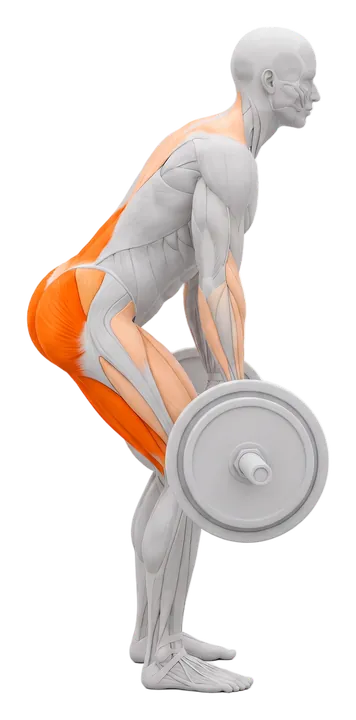 Barbell deadliftGlutes and hamstringsGuide
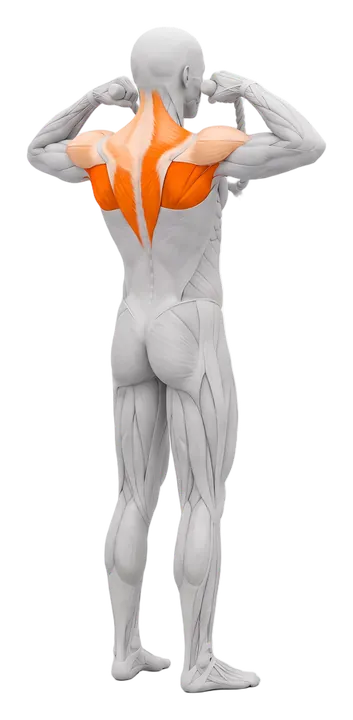 Cable face pullRear delts and upper backGuide
 Band pull-apartRear delts and upper back
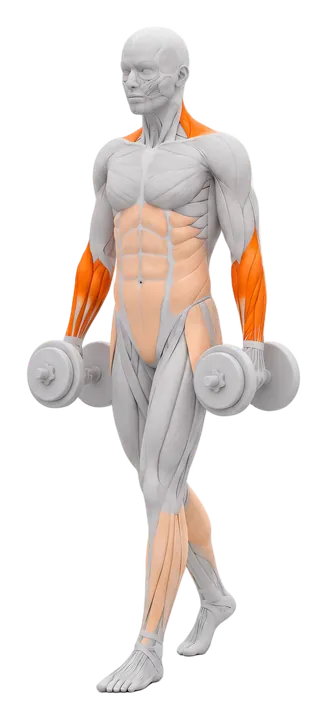 Farmer's carryForearms and traps
Best back exercises, ranked
Ranked by how much muscle they train, how easy they are to progress, and how well they fit a normal program. Pick from the top of the list first and fill gaps from below.
- Pull-up: the best bodyweight lat builder, and a clear strength test. If you cannot do one yet, use bands or negatives. Full technique in the pull-up guide.
- Barbell row: the heaviest row you can do, training the upper back, lats and lower back together. Keep the torso at about 30 to 45 degrees above horizontal and pull to the lower ribs.
- Lat pulldown: the same pattern as a pull-up, but you pick the weight. Ideal for beginners and for higher reps. See how to set it up in the lat pulldown guide.
- One-arm dumbbell row: long range of motion, one side at a time, and the best of the dumbbell back exercises.
- Deadlift: trains the whole back of the body under the heaviest loads you will lift. It belongs here as a back exercise because the spinal erectors and traps work hard to hold position. Read the deadlift guide before loading it.
- Seated cable row: constant tension and easy to adjust grip width. A good second row on a back day.
- Chest-supported row: the bench takes the lower back out of it, so you can focus on squeezing the shoulder blades.
- Face pull: small muscles, big payoff for posture and shoulder health. The face pull guide covers rope height and elbow position.
Back workout for the gym
This back workout takes about 50 minutes. Rest longer on the first two exercises, which are the heaviest.
| Exercise | Sets x reps | Rest | Focus |
|---|---|---|---|
| Pull-up or lat pulldown | 4 x 6 to 10 | 2 min | Lats, width |
| Barbell row | 4 x 6 to 10 | 2 min | Upper back, thickness |
| Seated cable row | 3 x 10 to 12 | 90 s | Upper back, pause at the chest |
| One-arm dumbbell row | 3 x 10 to 12 per side | 60 to 90 s | Lats, long stretch |
| Face pull | 3 x 12 to 15 | 60 s | Rear delts, upper back |
| Dumbbell shrug | 2 x 10 to 15 | 60 s | Traps |
On a push pull legs program this is your pull day; add two arm exercises from the bicep workout at the end. On an upper lower split, split it in two: the vertical pull and one row on each upper day.
Cable back exercises
If your gym has a cable station you can build a whole back workout on it: lat pulldown, seated cable row, straight-arm pulldown for the lats, single-arm cable row and face pulls. Cables keep tension at the top and bottom of each rep and are easy to load in small steps.
Dumbbell back exercises (home or gym)
With a pair of dumbbells and a bench or sturdy chair you can train every part of the back. This dumbbell back workout works at home or in a crowded gym.
| Exercise | Sets x reps | Rest | Tip |
|---|---|---|---|
| One-arm dumbbell row | 4 x 8 to 12 per side | 60 to 90 s | Pull the elbow towards the hip |
| Chest-supported dumbbell row | 3 x 10 to 12 | 90 s | Set the bench to about 30 degrees |
| Dumbbell Romanian deadlift | 3 x 8 to 12 | 90 s | Hips back, dumbbells close to the legs |
| Bent-over rear delt fly | 3 x 12 to 15 | 60 s | Light weight, lead with the elbows |
| Dumbbell shrug | 3 x 10 to 15 | 60 s | Pause at the top |
The missing piece at home is a vertical pull. A doorway pull-up bar gives you pull-ups and chin-ups; without one, inverted rows under a sturdy table and band pulldowns anchored to a door are the closest substitutes.
Lower back exercises
The lower back muscles are built to hold the spine still while the hips do the work. Train them with exercises that hinge at the hips and keep the back neutral, starting light.
| Exercise | Sets x reps | Notes |
|---|---|---|
| Bird dog | 2 to 3 x 8 per side | Floor exercise, good starting point |
| Glute bridge | 2 to 3 x 12 to 15 | Back stays neutral while the hips work |
| Back extension (45 degree bench) | 3 x 10 to 15 | Stop when the body forms a straight line |
| Romanian deadlift | 3 x 8 to 12 | See the Romanian deadlift guide |
| Deadlift | 3 to 5 x 3 to 6 | The heaviest option, technique first |
Sets and reps per week for your back
| Level | Back sessions per week | Hard sets per week | Reps |
|---|---|---|---|
| Beginner | 2 | 8 to 10 | 8 to 12 |
| Intermediate | 2 | 10 to 16 | 6 to 12, with some 12 to 15 on cables |
| Advanced | 2 to 3 | 14 to 20 | 5 to 15, mix heavy rows and lighter pulls |
These are typical ranges, not requirements. Split your sets roughly evenly between vertical pulls and rows. Heavy deadlifts count towards your lower back and legs, so you do not need many extra lower back sets on top. Add weight once you reach the top of the rep range in every set, as described in progressive overload.
See if your back is keeping up
Gripp is coming to iPhone. Gripp logs every set of rows and pulldowns, tells you what to lift next time, and keeps an estimated max per exercise on a chart. It also rates your back strength against people of your age and bodyweight, so you can see if it lags behind your chest or legs.
Join the waitlistCommon back training mistakes
- Pulling with the arms only. Start every rep by moving the shoulder blades, then bend the elbows. Think of the hands as hooks.
- Too much body English on rows. A little momentum on the last reps is fine; heaving the torso up on every rep turns it into a different exercise.
- Cutting the stretch short. Let the arms straighten fully at the bottom of pulldowns and rows. The stretch is part of the exercise.
- Only training width. Pulldowns without rows build width but leave the back thin when seen from the side. Do both.
- Rounding the lower back on hinges. Keep the spine neutral on deadlifts and RDLs and reduce the weight if it rounds.
- Skipping rear delts. They are small, but they balance all the pressing in your week.
Want every back exercise in one place with a muscle map? Browse the exercise library.