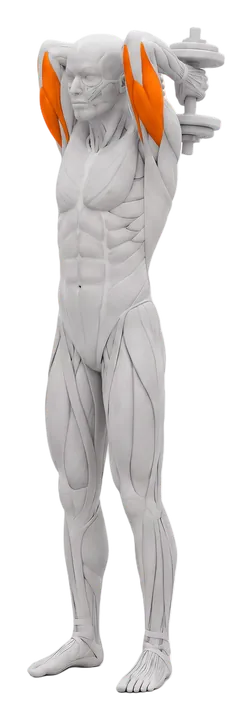
Muscles worked and why overhead is different
| Muscle | Role | How much |
|---|---|---|
| Triceps, long head | Straightens the elbow from its longest, stretched position | Primary |
| Triceps, lateral and medial heads | Straighten the elbow | Primary |
| Anconeus | Small helper at the back of the elbow | Secondary |
| Shoulders and upper back | Hold the arms overhead | Stabiliser |
| Core | Keeps the ribs down, more when standing | Stabiliser |
The long head of the triceps runs from the shoulder blade to the elbow, so it is the only head that changes length when you move your upper arm. Raise the arm overhead and the long head is stretched before the elbow even bends. A 12 week study by Maeo and colleagues (European Journal of Sport Science) had untrained adults do cable extensions with one arm overhead and the other arm at the side, with the same sets and reps. The overhead arm grew more triceps muscle, most of all in the long head. One study does not settle everything, but it fits the advice in our tricep workout guide: include at least one overhead movement.
How to do a dumbbell overhead tricep press
- Sit on a bench with back supportSet an adjustable bench upright or one notch back. The backrest stops you from arching your lower back as the weight goes overhead.
- Grip one dumbbellHold one dumbbell vertically with both hands cupped under the top plate, thumbs around the handle. Press it up over your head with straight arms.
- Point the elbows forwardUpper arms close to your head, elbows pointing forward, not out to the sides. Ribs down.
- Lower behind the headBend only at the elbows and lower the dumbbell behind your head until your forearms pass horizontal and you feel a deep stretch in the back of the arms. Take about two seconds.
- StraightenExtend the elbows until the arms are straight again. The upper arms stay where they are; only the forearms move.
Dumbbell vs cable overhead extension
| Dumbbell | Cable (rope) | |
|---|---|---|
| Where it is hardest | Bottom, in the stretch | More even through the rep |
| Top of the rep | Weight rests on straight arms, little tension | Tension stays on at lockout |
| Setup | One dumbbell and a bench | Cable at low or high position, rope |
| Loading | Fixed dumbbell steps | Stack steps, often fast to change |
| Shoulder demand | Fixed path straight overhead | Body angle can be adjusted |
| Good for | Home and simple gyms, heavy stretch | Constant tension, higher reps, drop sets |
Overhead cable tricep extension
Attach a rope to a cable set at about head or chest height. Grab it, turn away from the stack and step forward into a split stance, leaning forward slightly with the rope behind your head. Extend the arms forward and up until they are straight, spreading the rope ends at the end. Because the cable pulls from behind you, your shoulders are under less pressure than with a heavy dumbbell straight overhead, and many people find that position easier. A low pulley version, facing away and pulling the rope up from behind the neck, works too.
Single arm and other versions
- Single arm dumbbell overhead extension: a light dumbbell in one hand, lowered behind the head towards the opposite shoulder. Good for evening out a weaker side.
- EZ bar overhead extension (French press): seated, narrow grip on the inner bends. Loads in small steps, but the fixed grip is harder on some elbows.
- Standing overhead extension: more core work, but the lower back tends to arch. Sit down when the weight gets heavy.
- Band overhead extension: stand on a band and extend it behind your head; a practical home option.
Form cues and mistakes
- Elbows flaring out. A little width is fine, but elbows pointing to the sides take tension off the triceps and stress the elbow. Keep them pointing forward.
- Arching the back. The ribs flare to get the arms overhead. Brace the abs, sit against a backrest or use the cable version.
- Short range. Stopping before the stretch skips the part this exercise is best at. Lower until the forearms pass horizontal, if your shoulders allow it.
- Turning it into a press. If the upper arms swing forward to start each rep, the weight is too heavy.
- Rushing the bottom. The tendon and elbow are under the most load in the stretch. Lower slowly and do not bounce.
Overhead extension vs skull crushers and pushdowns
All three are tricep extension exercises, but they put the long head at different lengths. Use them together rather than choosing one.
| Exercise | Arm position | Long head stretch | Best use |
|---|---|---|---|
| Overhead extension | Arms overhead | Most | Long head growth, stretch focus |
| Skull crusher | Arms angled back over the chest | Moderate to high | Heavier loading lying down |
| Pushdown | Arms by the sides | Least | Lockout strength, elbow friendly volume |
A practical split: do skull crushers or a heavy press like dips first, then the overhead extension, then finish with pushdowns.
Sets and reps
| Goal | Sets x reps | Rest | Version |
|---|---|---|---|
| Triceps growth | 3 x 8 to 12 | 90 s | Dumbbell, seated |
| Long head, high reps | 2 to 3 x 12 to 20 | 60 to 90 s | Cable rope |
| Elbow friendly | 3 x 15 to 20 | 60 s | Cable or band, slow lowering |
| Beginner | 2 to 3 x 10 to 12 | 90 s | Light dumbbell, seated |
Heavy sets of 5 are not a good fit here: the stretched elbow position handles moderate loads and higher reps better. Do it once or twice a week, after your presses on a push day or an upper day. If you only have dumbbells, the dumbbell arm workout shows how to pair it with curls. In a gym, a barbell curl is a natural partner; see supersets for how to pair them.
How to progress
Dumbbell jumps of 2 kg or 2.5 kg (5 lb) are large for a single arm muscle, so use a wide rep range like 10 to 15 and stay at a weight until every set reaches 15 with a full stretch. Then move up and accept that you might be back at 10 reps. On a cable, the same rule applies one pin at a time. This is plain double progression.
Gripp remembers your stretch work
Log weight and reps for every set and Gripp tells you what to go for next session. When all sets hit the top of your range, it suggests the next dumbbell or pin. Estimated 1RM per exercise goes on a progress chart, and arm strength is rated against people of your age and bodyweight.
Join the waitlistSimilar exercises
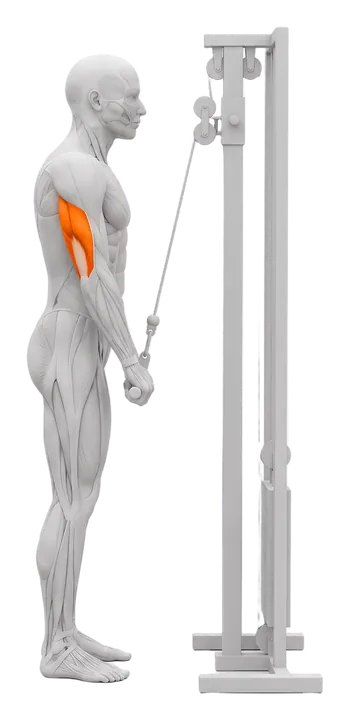 Cable triceps pushdownTricepsGuide
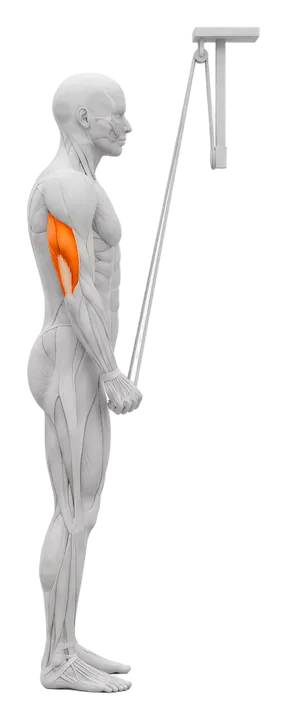 Band triceps pushdownTriceps
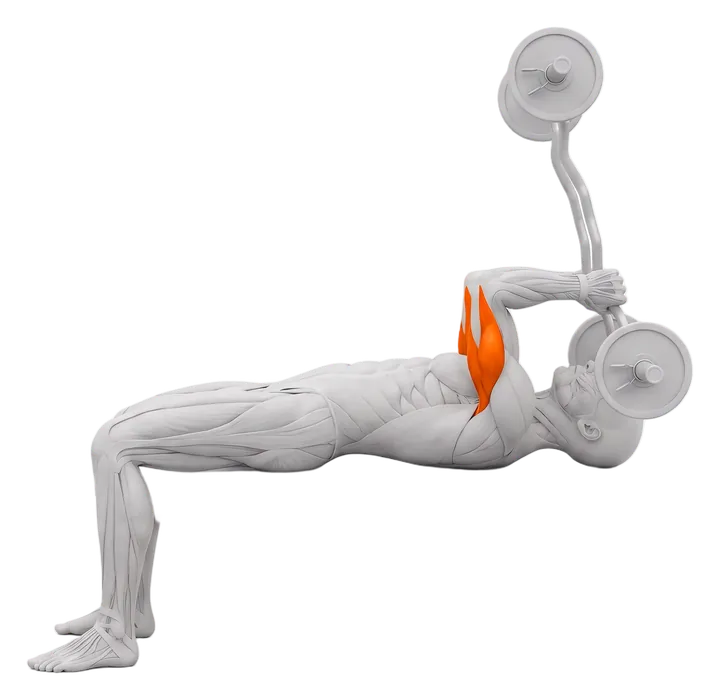 Lying triceps extension (skull crusher)TricepsGuide
 Close-grip push-upTriceps and chest