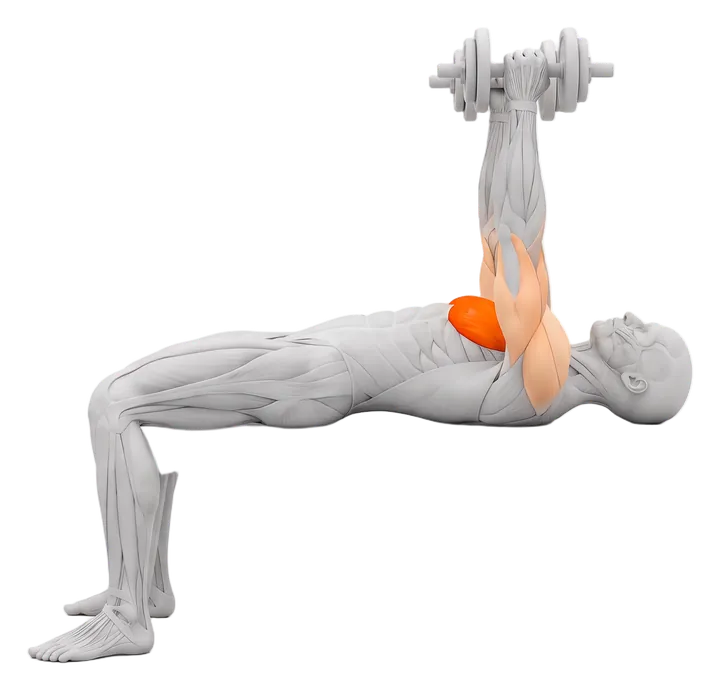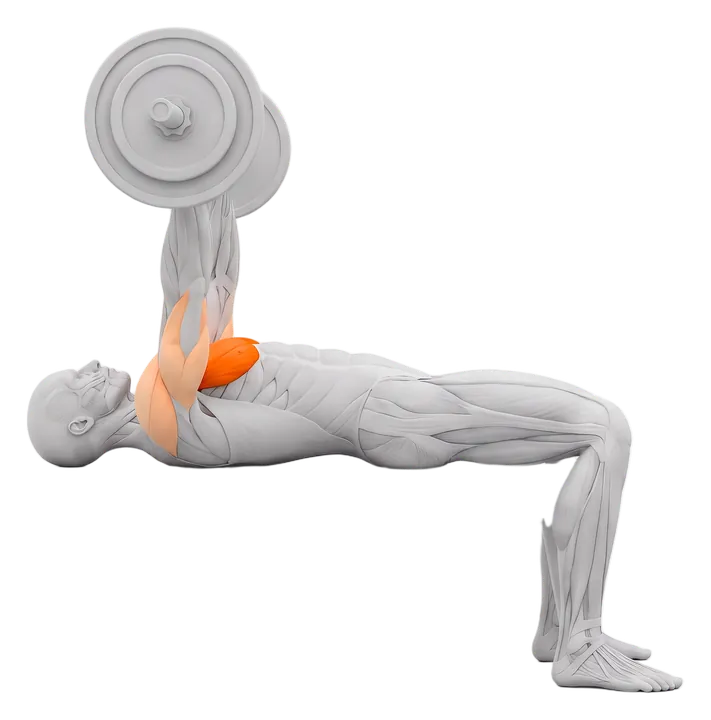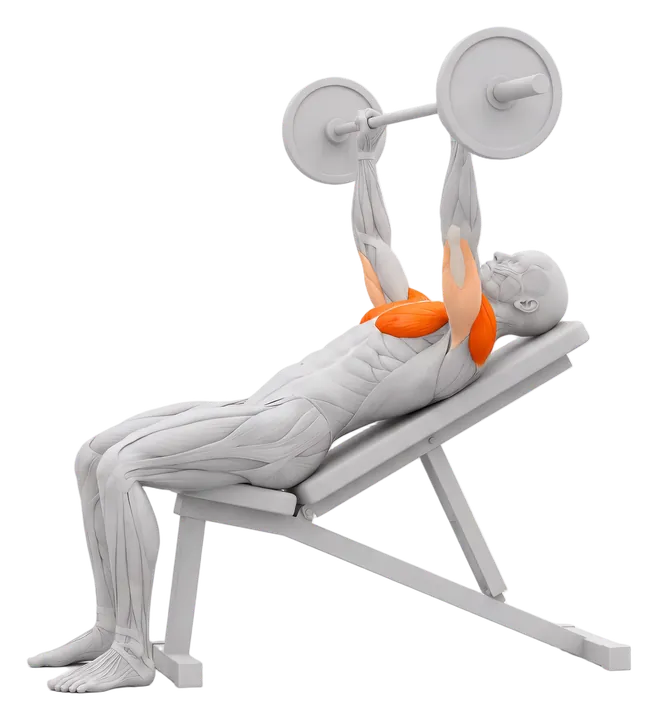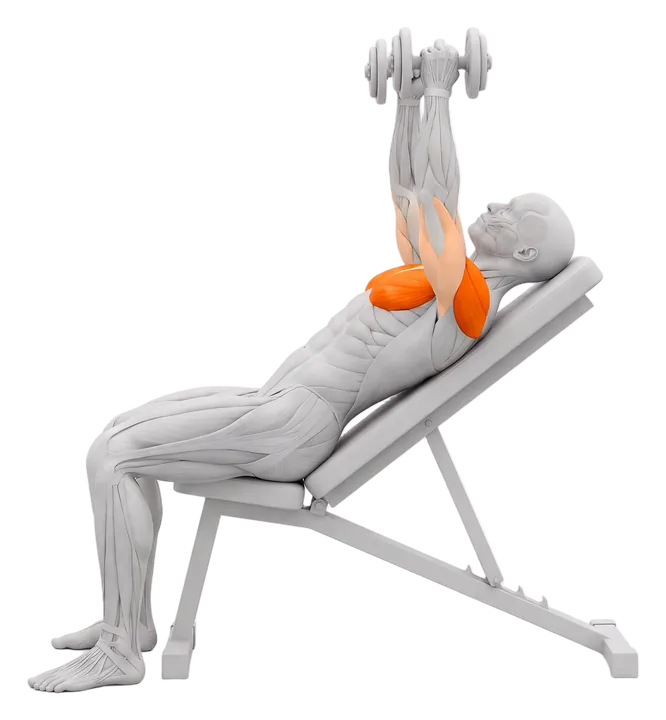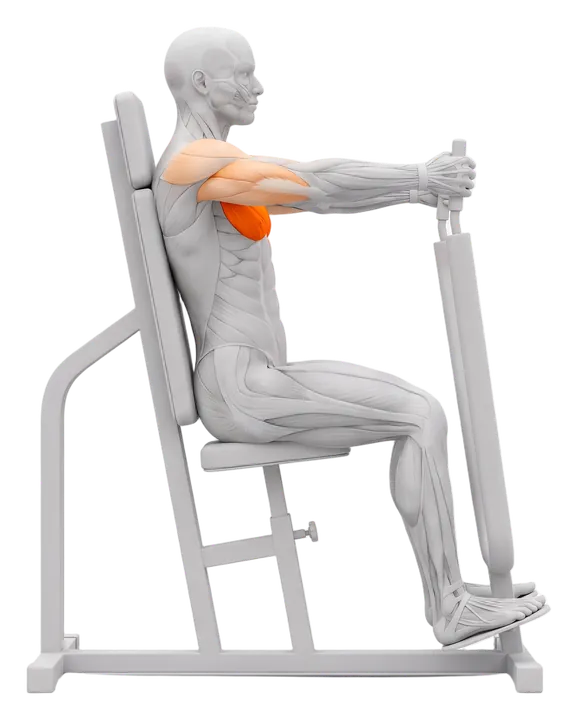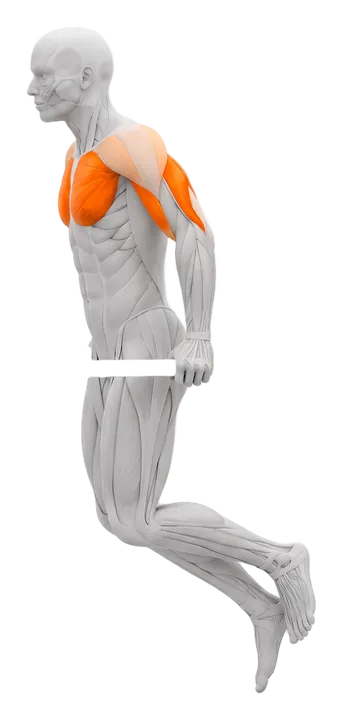
Dips muscles worked
| Muscle | Role | When it works most |
|---|---|---|
| Triceps | Straighten the elbows | Upright torso, elbows close |
| Chest, especially the lower part | Press the body up from the bottom | Forward lean, elbows slightly out |
| Front delts | Assist the press | Deeper reps |
| Lower traps and lats | Keep the shoulders down and stable | Throughout |
Dips are one of the few exercises that load the chest and triceps heavily at the same time, which is why they show up in both the chest exercises and the tricep workout hubs. They are usually done after a main press such as the bench press or overhead press.
How to do dips on parallel bars
- Grip the barsChoose bars about shoulder width apart. Grip them with your palms facing in, jump or step up and lock your arms out. Your shoulders sit directly over your hands.
- Set the shouldersPush the bars down so your shoulders move away from your ears. Bend your knees and cross your ankles, or keep the legs straight and slightly in front of you.
- Lower under controlBend the elbows and let your body move down over two to three seconds. Keep the elbows pointing back, not flaring wide. Stop when the upper arm is about parallel to the floor, or earlier if your shoulder complains.
- Press back upPush the bars away until your arms are straight again, without shrugging at the top. Keep the same torso angle all the way.
Triceps dips vs chest dips
It is the same exercise; the torso angle decides which muscle does more of the work. A gym dip is almost always a mix of the two.
| Tricep dips | Chest dips | |
|---|---|---|
| Torso | Upright, close to vertical | Leaning forward, roughly 20 to 40 degrees |
| Legs | Straight under you or slightly in front | Knees bent, feet behind you |
| Elbows | Tucked close to the body | Slightly out |
| Bars | Closer grip | Shoulder width or a little wider |
| Feels like | Back of the arms | Lower chest and front shoulders |
Do dips work chest? Yes, and the forward lean is what makes them a lower chest exercise. If your goal is arm size, stay upright. If you want a chest movement to pair with flat or incline pressing, lean forward. Most people should not force either extreme: lean as far as is comfortable and keep that angle on every rep you log, so your numbers stay comparable.
How deep should you dip?
At the bottom of a deep dip, the shoulder is pulled far into extension with your whole bodyweight on it. Some people handle that well, others feel a pinch in the front of the shoulder. A sensible default is to lower until the upper arm is about parallel to the floor, with the elbow roughly level with the shoulder. That gives the chest and triceps a full stretch without hanging on the joint.
- Control the bottom. Bouncing out of the lowest point puts the load on the joint instead of the muscles.
- Keep the shoulders down. Shrugging up towards your ears at the bottom is the position most people find irritating.
- Use a box or a pin as a depth marker if you tend to sink further as the set gets hard.
Bench dips and dips at home
Bench dips are done with your hands on the edge of a bench or chair behind you and your heels on the floor. They are popular as tricep dips at home, but the hands behind the body put the shoulder in an even more extreme position than parallel bars, and many people feel it there. If you use them, keep the range short, the elbows pointing back and the hips close to the bench.
Better options at home: two sturdy chairs back to back (test them first), the corner of a kitchen counter, or a pair of dip handles on a squat rack. If you have none of those, close grip push ups train nearly the same muscles with less shoulder stress.
Common dip mistakes
- Dropping too deep too soon. Build depth gradually over weeks.
- Elbows flaring out wide. Shifts load onto the front of the shoulder. Point them back.
- Swinging the legs. Momentum hides weak reps. Cross the ankles and keep them still.
- Half lockouts. Finish each rep with straight arms so the triceps do the full job.
- Adding weight before owning bodyweight reps. Get to 3 clean sets of 10 or more first.
Dips sets and reps
| Goal | Sets x reps | Rest | Notes |
|---|---|---|---|
| Strength | 3 to 5 x 3 to 6 | 2 to 3 min | Weighted |
| Muscle growth | 3 to 4 x 5 to 12 | 90 s to 2 min | Bodyweight or weighted, 1 to 2 reps in reserve |
| General fitness | 2 to 3 x 5 to 10 | 90 s | Bodyweight or assisted |
| Building up | 3 x 3 to 8 | 2 min | Assisted machine or band |
Dips fit on the push day of push pull legs as the second or third exercise, or on the upper day of an upper lower split. If you cannot do 5 clean reps yet, use the assisted dip machine or a resistance band under your knees, and take a little assistance away each time you reach the top of your rep range.
Weighted dips
When you can do 3 sets of 12 bodyweight dips with good depth, add weight. A dip belt with a chain and a plate is the standard; holding a dumbbell between your feet or wearing a weighted vest also works. Start with 5 kg (10 lb), drop back to 6 to 8 reps and build up again. Weighted dips work well with double progression: add reps until you reach the top of the range in every set, then add 2.5 kg (5 lb). The progressive overload guide covers this in detail.
Gripp tells you when dips get heavier
Log the reps and weight of every set. Gripp tells you when to add reps and when to add weight, and your chest and tricep strength is rated against people of your age and bodyweight.
Join the waitlistDips alternatives
- Close grip push up: same muscles, easier on the shoulder.
- Dumbbell bench press: chest and triceps with a shoulder position you can adjust.
- Cable triceps pushdown: isolates the triceps without shoulder load. See the tricep pushdown guide.
- Machine chest press: a stable way to press heavy for the chest.