What muscles do push ups work?
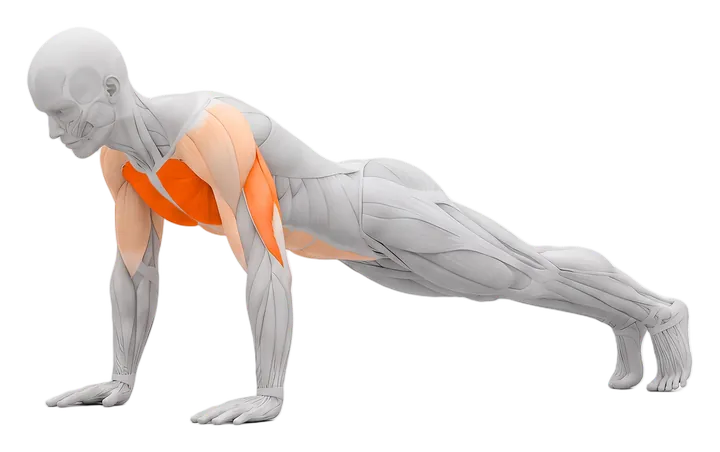
| Muscle | Role in the push up | How much |
|---|---|---|
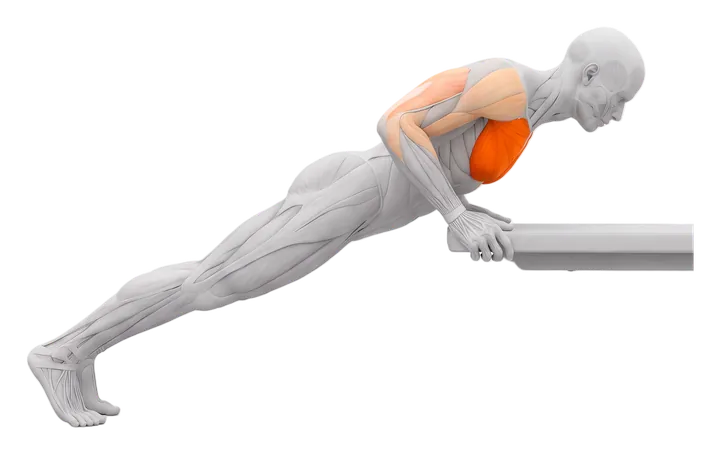
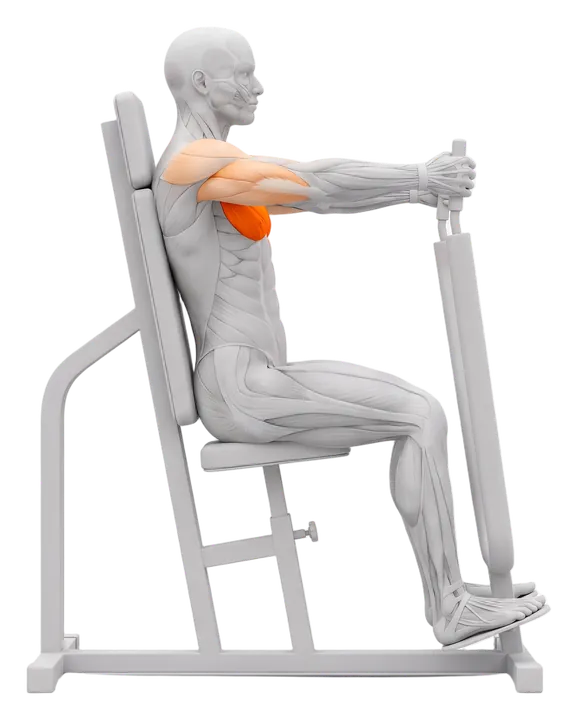
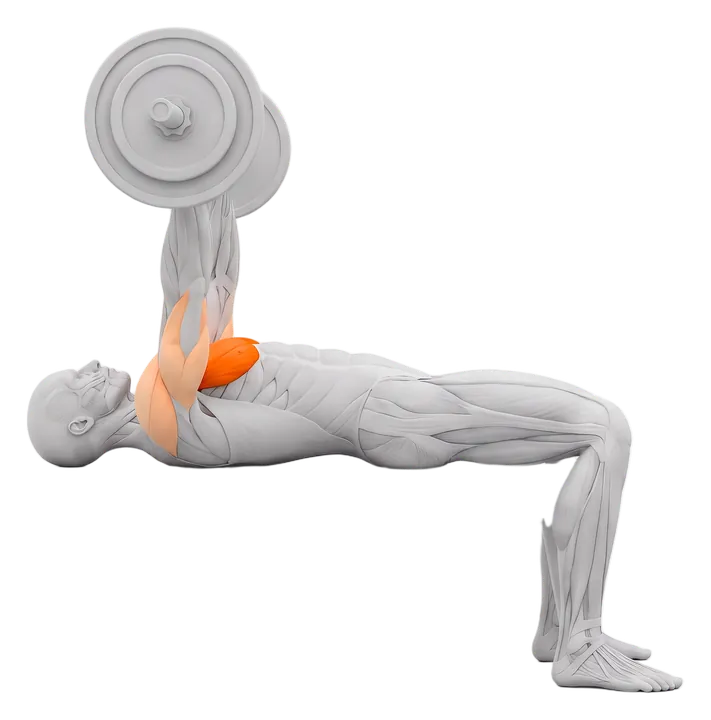
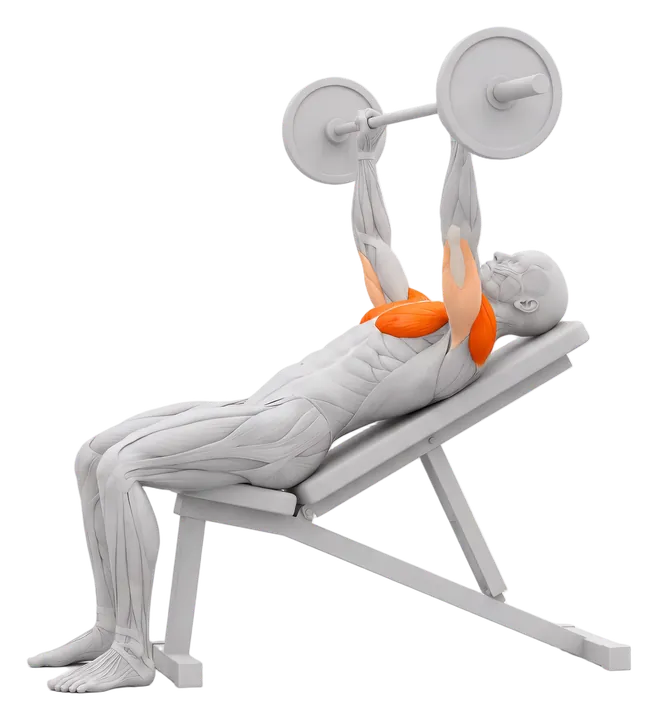
| Chest (pectoralis major) | Pushes the body away from the floor | Primary |
| Triceps | Straighten the elbows, more with a close grip | Secondary |
| Front delts | Help press, more with feet raised or in a pike | Secondary |
| Abs and obliques | Hold the body in a straight plank | Secondary |
| Serratus anterior | Moves the shoulder blades forward at the top | Secondary |
The push up trains the same pressing pattern as the bench press, with one difference: your shoulder blades are free to move and your core has to hold the plank. That makes it a useful exercise even for people who bench heavy. See every other pressing option in the chest exercises library.
How to do a push up with proper form
- Hands under the shouldersPlace your hands on the floor slightly wider than shoulder width, fingers pointing forward. Your wrists should sit roughly under your shoulders when your arms are straight.
- Make a plankStep your feet back, together or up to hip width. Squeeze your glutes and brace your abs so your body is one straight line from head to heels.
- Lower with the elbows at about 45 degreesBend your elbows so they angle back at around 45 degrees from your body, not flared straight out to the sides. Lower until your chest is a fist's height from the floor or touches it lightly.
- Press the floor awayPush back up in one piece, so hips and shoulders rise together. At the top, push a little further so the shoulder blades spread apart, then start the next rep.
Push-up form mistakes
- Sagging hips. The lower back drops and the abs switch off. Squeeze your glutes and shorten the set if you cannot hold the line.
- Piking the hips up. It shortens the range and shifts the work to the shoulders. Keep the body straight.
- Elbows flared to 90 degrees. This is the position many people find hard on the shoulders. Tuck them to around 45 degrees.
- Half reps. Stopping a few centimetres down hides the hardest part. Use an easier version you can do through the full range instead.
- Head pushed forward. Reaching with the chin makes the reps look deeper than they are. Keep the neck in line with the spine.
From your first push up to weighted push ups
Treat push ups as a ladder. Work at the step where you can do at least 3 sets of 8 to 15 clean reps; when you reach the top of that range in every set, move up one step. If you cannot do a single full push up yet, that is the normal starting point, not a problem.
| Step | Variation | How it changes the push up |
|---|---|---|
| 1 | Wall push up | Standing, hands on a wall. Very light, good for rehab and first sessions |
| 2 | Incline push up | Hands on a bench, box or kitchen counter. The higher the hands, the easier |
| 3 | Knee push ups | Full range from the knees. Keep the hips straight, not bent |
| 4 | Push up | The standard version from the toes |
| 5 | Close grip or diamond push ups | Hands close together, more triceps |
| 6 | Decline push up | Feet on a bench, more load on the upper chest and shoulders |
| 7 | Weighted push up | Weight plate on the upper back, weighted vest or a band across the back |
Incline push up
The incline push up is the best way to build up to the full movement because you can lower the hand height a little at a time: counter, then bench, then a low step. Many people find it more useful than knee push ups, since the whole body stays in the plank position you need later.
Close grip and diamond push ups
Bring your hands in to about shoulder width (close grip) or touching under your chest (diamond). Keep the elbows close to your ribs. The range is a little longer for the triceps, so expect fewer reps. These fit well into a tricep workout at home.
Weighted push ups
Once you can do 3 sets of 20 or more, extra reps mostly build endurance. Add a weight plate on your upper back (a partner helps place it), a weighted vest or a backpack. Start with 5 to 10 kg (10 to 20 lb) and go back down to 8 to 12 reps.
Pike push up: the shoulder variation
In a pike push up you walk your feet in and raise your hips until your body forms an upside down V, then lower the top of your head towards the floor just in front of your hands and press back up. The angle turns the push up into an overhead press, so the front delts do most of the work, with the triceps helping. It is the main bodyweight shoulder exercise and a step towards handstand push ups.
Put your feet on a bench to make it harder. If you have a shoulder problem, keep pike push ups out for now: overhead pressing positions are often the first ones to bother an irritated shoulder. With weights, the overhead press trains the same pattern.
Push up sets and reps
| Goal | Sets x reps | Rest | Variation |
|---|---|---|---|
| Strength | 3 to 5 x 5 to 10 | 2 min | Weighted or decline |
| Muscle growth | 3 to 4 x 8 to 20 | 60 to 90 s | Hardest variation you can do for 8 or more |
| General fitness | 2 to 3 x 8 to 15 | 60 s | Standard or incline |
| Beginner or rehab | 2 to 3 x 8 to 15 | 60 to 90 s | Wall or incline |
Two or three push up sessions a week is plenty for most people. In a gym, push ups make a good finisher after bench press or dips on a push day of push pull legs. At home they can be the main chest exercise of a full body session, next to the presses in a full body dumbbell workout. The chest workout at home and the bodyweight workout both build on them.
How many push ups a day should you do?
There is no magic number. Challenges such as 100 push ups a day can work for a few weeks, but daily high volume without rest often leads to sore wrists, elbows or shoulders, and progress stalls when the reps stop getting harder. A better plan for most people: a few hard sets two or three times a week, and when your reps go up, move to a harder variation or add weight. That is progressive overload applied to bodyweight training.
Gripp tracks your push ups set by set
Log your reps for every set and Gripp gives you a target for next time, so you know when you have earned the next variation. Your chest strength is rated against people of your age and bodyweight, and the exercise page shows which muscles you are working.
Join the waitlist