How bodyweight strength training works
In the gym you make an exercise harder by adding plates. In calisthenics you change the leverage: raise your feet, move your hands closer, shift more weight onto one arm or one leg, or slow the rep down. The muscle does not know whether the load is a barbell or your own body. It only knows the set was hard.
That gives bodyweight training one rule that matters more than any other: pick the progression where you land in the rep range. If you can do 30 push-ups, regular push-ups are now endurance work. If you cannot do 5, they are too hard to build volume with. Most of this plan works between 5 and 15 reps per set.
| Equipment | Needed for | No equipment option |
|---|---|---|
| Pull-up bar | Pull-ups, chin-ups, hanging knee raises | A sturdy table edge for inverted rows |
| Parallel bars or two sturdy chairs | Dips | Bench dips, close-grip push-ups |
| Low bar or rings | Inverted rows | Table or a broomstick across two chairs (test it first) |
| Resistance band | Assisted pull-ups | Slow negatives: jump up, lower over 5 seconds |
Calisthenics exercises in this plan
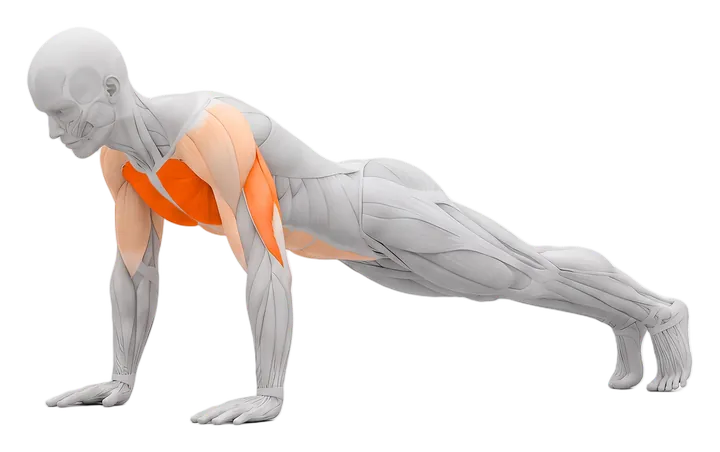 Push-upChestGuide
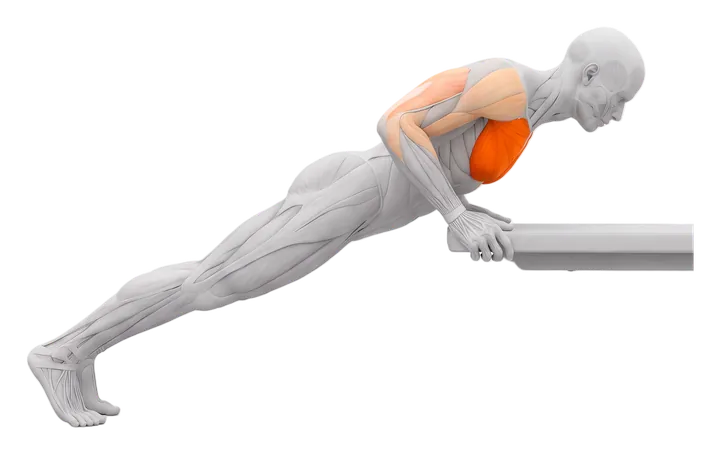 Incline push-upChest
 Close-grip push-upTriceps and chest
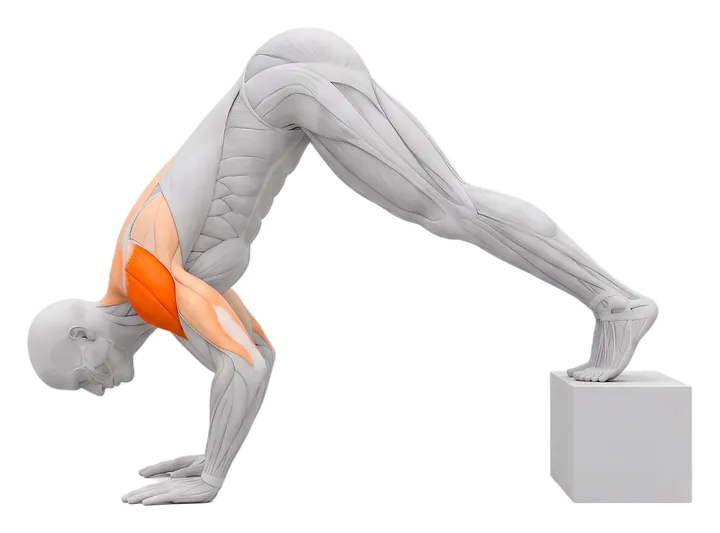 Pike push-upFront delts
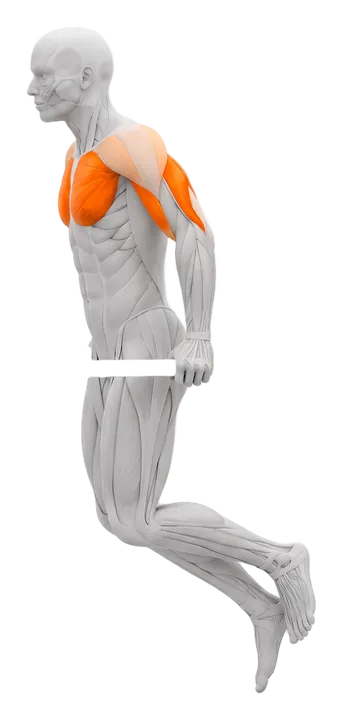 Parallel bar dipChest and tricepsGuide
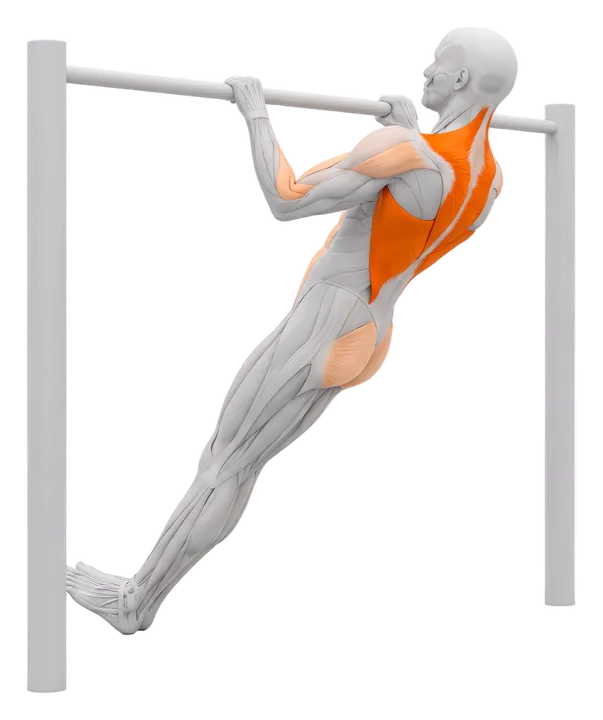 Inverted rowUpper back and latsGuide
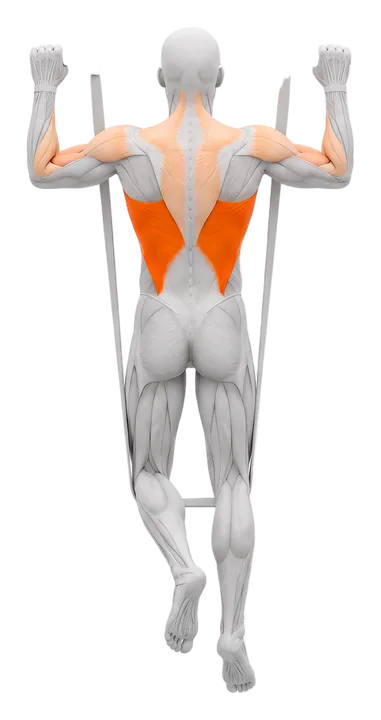 Band-assisted pull-upLats
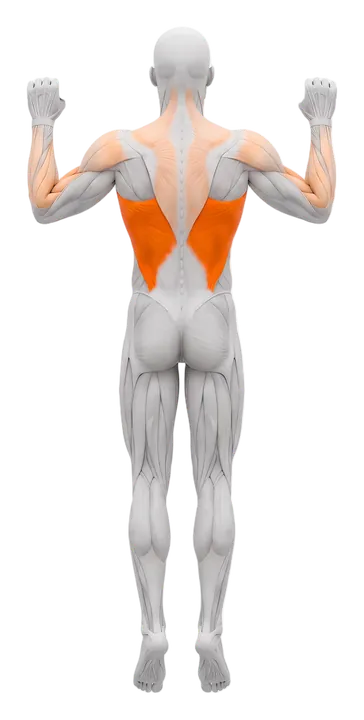 Pull-upLatsGuide
 Chin-upLats and bicepsGuide
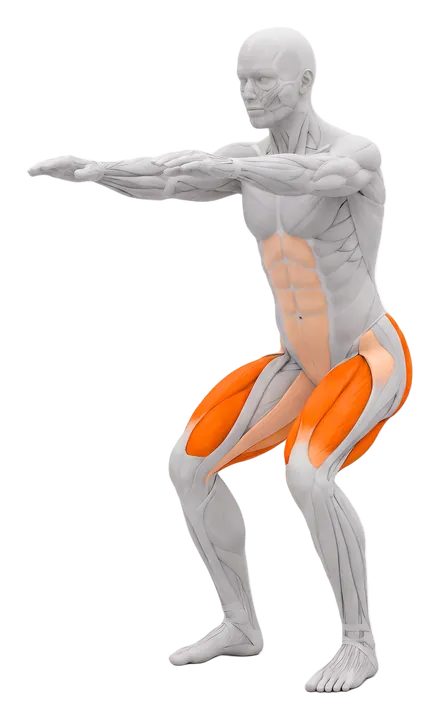 Bodyweight squatQuads and glutes
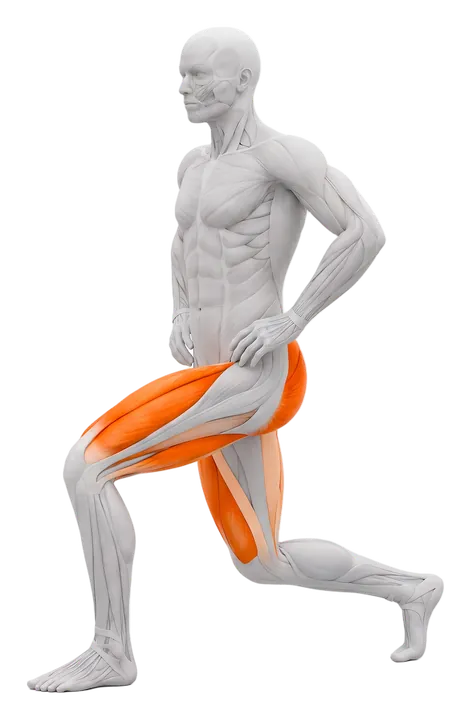 Split squatQuads and glutes
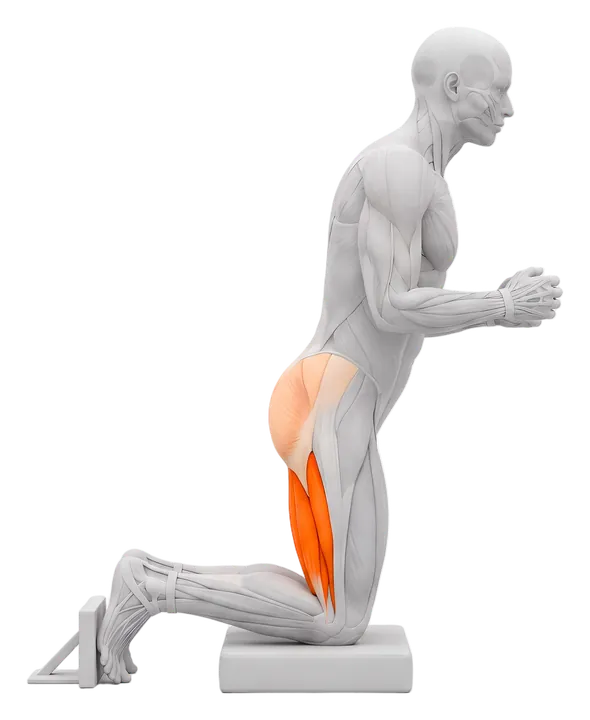 Nordic hamstring curlHamstringsGuide
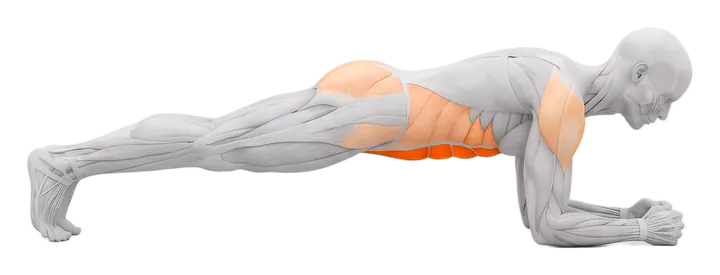 Front plankAbsGuide
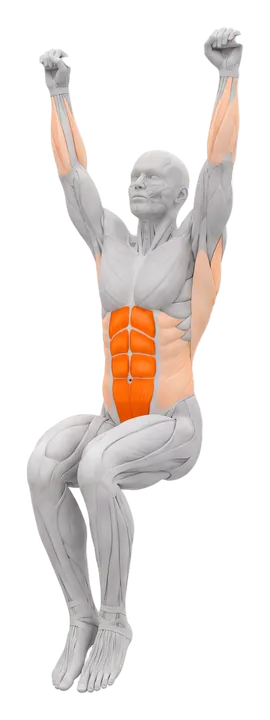 Hanging knee raiseAbsGuide
The calisthenics workout plan (3 days a week)
Train Monday, Wednesday and Friday, or any three days with a rest day between. Each session is full body and takes 40 to 50 minutes. Choose the rung from the progression tables below for each exercise.
| Order | Pattern | Sets x reps | Rest | Example rung |
|---|---|---|---|---|
| 1 | Vertical pull | 3 x 5 to 8 | 2 min | Band-assisted pull-up |
| 2 | Squat | 3 x 8 to 15 per leg or 15 to 25 on two legs | 90 s | Bulgarian split squat |
| 3 | Dip | 3 x 5 to 10 | 2 min | Parallel bar dip |
| 4 | Horizontal pull | 3 x 8 to 15 | 90 s | Inverted row, feet on the floor |
| 5 | Push-up | 3 x 8 to 15 | 90 s | Feet-elevated push-up |
| 6 | Hinge or hamstrings | 3 x 8 to 15 | 60 s | Single-leg glute bridge |
| 7 | Core | 3 x 8 to 12 or 30 to 45 s | 60 s | Hanging knee raise |
Pulls come first because they are the pattern beginners are weakest at and progress slowest on. Pushing and pulling alternate so one side rests while the other works. Legs sit in the middle to break up the upper body work. If you only have 30 minutes, pair exercises 1 and 2, 3 and 4, 5 and 6 as supersets with 60 to 90 seconds between rounds.
Progressions for every exercise
Start each pattern on the hardest rung where you can do the lower end of the rep range with clean form. Move up one rung when every set reaches the top of the range.
Push-up progression
| Rung | Exercise | Move up at |
|---|---|---|
| 1 | Incline push-up, hands on a table | 3 x 15 |
| 2 | Incline push-up, hands on a low step or chair | 3 x 15 |
| 3 | Push-up from the floor | 3 x 15 |
| 4 | Feet-elevated push-up | 3 x 12 |
| 5 | Archer push-up or pseudo planche push-up | 3 x 8 per side |
| 6 | Weighted push-up with a backpack, or one-arm push-up work | Keep adding load |
Body in one straight line, elbows about 45 degrees from the body, chest to the floor. The push-up guide covers hand position and common faults, and a close-grip version shifts the work to the triceps.
Pull-up progression
| Rung | Exercise | Move up at |
|---|---|---|
| 1 | Dead hang and scapular pulls | 3 x 30 s hang |
| 2 | Inverted row, body steep | 3 x 12 |
| 3 | Slow negative pull-up, 5 seconds down | 3 x 5 |
| 4 | Band-assisted pull-up, lighter band over time | 3 x 8 |
| 5 | Chin-up, palms facing you | 3 x 8 |
| 6 | Pull-up | 3 x 10 |
| 7 | Weighted pull-up or archer pull-up | Keep adding load |
Most people get their first chin-up before their first pull-up because the biceps help more. The pull-up guide and chin-up guide go through grip and full range. Want to know where your reps stand? The pull-up standards compare them by bodyweight.
Inverted row progression
The inverted row is the horizontal pull and balances all the pushing. Make it harder by walking your feet forward until your body is flat, then raising the feet on a chair, then pausing for 2 seconds with the chest at the bar.
Dip progression
| Rung | Exercise | Move up at |
|---|---|---|
| 1 | Close-grip push-up | 3 x 12 |
| 2 | Bench dip, knees bent | 3 x 15 |
| 3 | Top hold on parallel bars, then slow negatives | 3 x 20 s hold, then 3 x 5 negatives |
| 4 | Parallel bar dip | 3 x 12 |
| 5 | Weighted dip | Keep adding load |
Go down until your upper arms are about parallel to the floor, or less if the front of the shoulder complains. Dips are not for everyone with shoulder trouble; the dips guide has safer depth cues.
Squat and leg progression
| Rung | Exercise | Move up at |
|---|---|---|
| 1 | Box squat to a chair | 3 x 15 |
| 2 | Bodyweight squat | 3 x 25 |
| 3 | Split squat | 3 x 15 per leg |
| 4 | Bulgarian split squat | 3 x 15 per leg |
| 5 | Shrimp squat or assisted pistol squat | 3 x 8 per leg |
| 6 | Pistol squat | 3 x 8 per leg |
Squats only cover the front of the leg. Add a hinge: single-leg glute bridges early on, and the Nordic hamstring curl once you are stronger. A full no equipment leg day is in the leg workout at home.
Core progression
| Rung | Exercise | Move up at |
|---|---|---|
| 1 | Dead bug | 3 x 10 per side |
| 2 | Plank | 3 x 45 s |
| 3 | Hanging knee raise | 3 x 12 |
| 4 | Hanging leg raise, straight legs | 3 x 10 |
| 5 | L-sit on parallel bars or the floor | 3 x 20 s |
Pull-ups, dips and push-ups already work the trunk hard, so one core exercise per session is plenty. The hanging leg raise guide explains how to stop swinging.
Beginner and advanced calisthenics routines
Beginner calisthenics workout (no pull-up yet)
| Exercise | Sets x reps | Rest |
|---|---|---|
| Inverted row, feet on the floor | 3 x 8 to 12 | 90 s |
| Incline push-up | 3 x 8 to 15 | 90 s |
| Bodyweight squat | 3 x 12 to 20 | 60 s |
| Slow negative pull-up | 3 x 3 to 5 | 2 min |
| Glute bridge | 2 x 12 to 15 | 60 s |
| Plank | 2 x 20 to 40 s | 60 s |
Stop each set with one or two reps left. Most beginners can move up a rung on push-ups and squats every few weeks; the pull-up takes longer, often a few months. For a plan that mixes bodyweight and gym work, see the beginner workout plan.
Advanced: upper and lower days
| Day | Exercises | Sets x reps |
|---|---|---|
| Upper A (Mon) | Weighted pull-up, weighted dip, archer push-up, inverted row feet raised, L-sit | 4 x 5 to 8, accessories 3 x 8 to 12 |
| Lower A (Tue) | Pistol squat, Nordic curl, single-leg calf raise, hanging leg raise | 4 x 5 to 8, accessories 3 x 10 to 15 |
| Upper B (Thu) | Chin-up, pseudo planche push-up, ring or bar dip, archer row, pike push-up | 4 x 6 to 10 |
| Lower B (Fri) | Bulgarian split squat with backpack, shrimp squat, single-leg bridge, side plank | 3 x 8 to 15 |
This is an upper lower split with bodyweight moves. Once you can do 10 or more strict pull-ups or 15 dips, a dip belt or loaded backpack is the simplest way to keep progressing in a low rep range.
How to progress, log and stay consistent
Calisthenics progress is easy to lose track of, because there is no number on a plate. Write down the rung and the reps for every set. Each session, try to beat one number: one more rep, a slower lowering, or the next rung. When three sessions in a row bring nothing new, take an easier week and then try again.
- Reps first, then the rung. Do not jump to archer push-ups while regular ones still wobble.
- Weak spots get the first slot. If pull-ups lag, train them at the start of every session.
- Add load when the rungs run out. A backpack with books works for push-ups, dips, squats and pull-ups.
- Rest long enough. 90 seconds to 2 minutes on pulls and dips keeps the reps up.
The progressive overload guide explains why reps, tempo and harder variations all count as progress.
Gripp tracks reps and the next rung
Gripp is coming to iPhone. Log every set of pull-ups, dips and push-ups and Gripp shows what to aim for next session: last time 6 pull-ups, today go for 7. Your weekly plan can be 3 calisthenics days plus a run, and the in-app coach can suggest an easier or harder variation that you approve before anything changes.
Join the waitlist