How this home workout routine is built
Most home routines fail for one reason: the exercises never get harder. Ten push-ups and twenty squats feel tough in week one and do very little by week six. This plan solves that with ladders. Each slot in a workout (a horizontal push, a squat, a hinge, a row) has three to four versions, from easy to hard. You stay on a rung until you hit the top of the rep range in every set, then you step up.
- 4 days a week: upper body on Monday and Thursday, lower body on Tuesday and Friday, about 35 to 45 minutes each.
- Two hard sessions per muscle per week: enough frequency to learn the moves and build muscle without daily soreness.
- Rep ranges, not fixed reps: 6 to 12 for hard moves, 10 to 20 for easier ones, with 1 to 3 reps left in the tank on most sets.
- Optional extras later: a resistance band, a doorway pull-up bar or a pair of dumbbells slot straight into the same plan.
If you only have time for three days, or you are brand new to training, the beginner workout plan covers a gentler full body start. If you already own dumbbells, the full body dumbbell workout is a ready made alternative with loaded moves.
Your weekly workout schedule at home
| Mon | Tue | Wed | Thu | Fri | Sat | Sun |
|---|---|---|---|---|---|---|
| Upper A | Lower A | Rest or walk | Upper B | Lower B | Run, walk or sport | Rest |
The days can move. What matters is that you never do the same half of the body two days in a row, and that you get one full rest day. Upper days can follow lower days back to back without trouble, because the muscles worked are different.
The full home workout program: all 4 days
Each exercise names the starting rung. Pick the version where you can do at least the bottom of the rep range with clean form. Rest 60 to 90 seconds between sets unless noted.
Upper A: push focus
| Exercise | Sets x reps | Rest |
|---|---|---|
| Push-up (or incline push-up on a counter) | 3 x 6 to 15 | 90 s |
| Table row (inverted row under a sturdy table) | 3 x 6 to 12 | 90 s |
| Pike push-up | 3 x 5 to 10 | 90 s |
| Chair dip (hands on a stable chair or step) | 2 x 8 to 15 | 60 s |
| Prone Y-T raise (lying face down) | 2 x 10 to 15 | 60 s |
| Plank | 3 x 20 to 45 s | 45 s |
Lower A: squat focus
| Exercise | Sets x reps | Rest |
|---|---|---|
| Bodyweight squat (tempo: 3 s down) | 3 x 10 to 20 | 90 s |
| Reverse lunge | 3 x 8 to 12 per leg | 90 s |
| Glute bridge | 3 x 12 to 20 | 60 s |
| Wall sit | 2 x 30 to 60 s | 60 s |
| Bodyweight calf raise on a step | 3 x 12 to 20 | 45 s |
| Dead bug | 2 x 8 to 10 per side | 45 s |
Upper B: pull focus
| Exercise | Sets x reps | Rest |
|---|---|---|
| Table row, feet further forward than Monday | 4 x 6 to 12 | 90 s |
| Close-grip push-up | 3 x 6 to 12 | 90 s |
| Towel row in a doorway (lean back, pull in) | 3 x 10 to 15 | 60 s |
| Decline push-up (feet on a chair) | 2 x 6 to 12 | 90 s |
| Superman hold | 2 x 20 to 30 s | 45 s |
| Side plank | 2 x 20 to 40 s per side | 45 s |
Lower B: hinge and single leg focus
| Exercise | Sets x reps | Rest |
|---|---|---|
| Split squat (rear foot on the floor) | 3 x 8 to 12 per leg | 90 s |
| Single-leg glute bridge | 3 x 8 to 15 per leg | 60 s |
| Step-up onto a sturdy chair or stair | 3 x 8 to 12 per leg | 90 s |
| Hamstring walkout (bridge, walk heels out and back) | 2 x 6 to 10 | 60 s |
| Single-leg calf raise | 2 x 10 to 15 per leg | 45 s |
| Hollow hold or reverse crunch | 2 x 20 s or 10 to 15 | 45 s |
Why each exercise is in it
Every session covers the same movement patterns a gym program does, just with your own body as the load. For a single session you can do anywhere, try the bodyweight workout.
- Push-ups and their variations are the horizontal press, training chest, front shoulders and triceps. The push-up guide covers hand width and the common elbow flare mistake.
- Pike push-ups are the home version of an overhead press: hips high, head travels down in front of the hands.
- Table rows are the most important move in the plan. Home routines are almost always short on pulling, and the inverted row balances all that pushing for the upper back and biceps.
- Squats, lunges and split squats train quads and glutes. One leg at a time doubles the load on each side, which is how bodyweight leg training stays hard.
- Bridges and hamstring walkouts cover the hinge: glutes and hamstrings, the muscles that sitting all day neglects.
- Planks, dead bugs and side planks teach the trunk to resist movement, which carries straight over to every other exercise.
Exercise ladders: how to keep progressing without weights
This is the engine of the plan. Use double progression: add reps inside the range first, and when every set reaches the top of the range, move one rung up and drop back to the bottom of the range.
| Slot | Rung 1 | Rung 2 | Rung 3 | Rung 4 |
|---|---|---|---|---|
| Horizontal push | Incline push-up (counter) | Push-up | Decline push-up | Archer or deficit push-up |
| Vertical push | Pike push-up, knees bent | Pike push-up | Feet-elevated pike push-up | Wall-supported handstand hold |
| Row | Table row, knees bent | Table row, legs straight | Feet elevated on a chair | One-arm assisted table row |
| Squat | Bodyweight squat | Tempo squat, 3 s down, 2 s pause | Rear foot elevated split squat | Shrimp squat or pistol to a box |
| Hinge | Glute bridge | Single-leg glute bridge | Shoulders-elevated single-leg bridge | Hamstring walkout, single leg |
| Core | Dead bug | Plank | Long lever plank | Body saw or hollow rock |
Three more tools make an easy rung harder without changing the exercise: a slower lowering phase (3 to 4 seconds), a pause at the hardest point, and a backpack loaded with books or water bottles. The backpack is the cheapest weight you will ever buy, and it works for squats, lunges, step-ups and push-ups.
The principle behind all of it is progressive overload: the muscles must face a slightly bigger challenge over time, whether that comes from reps, leverage, tempo or load.
The first 6 weeks
| Week | Sets per exercise | Effort | Goal |
|---|---|---|---|
| 1 | 2 | 3 to 4 reps left in reserve | Learn the moves, find your rung |
| 2 | 3 | 2 to 3 reps left | Full plan, same rungs |
| 3 | 3 | 1 to 2 reps left | Add reps every session |
| 4 | 3 | 1 to 2 reps left | First rung changes on push and squat |
| 5 | 3 (4 on rows) | 1 to 2 reps left | Keep climbing |
| 6 | 2 | Easy | Lighter week, then repeat weeks 3 to 6 |
Sore after week one is normal. If the soreness lasts beyond three or four days, cut a set from each exercise for the next session. Pain in a joint is different from muscle soreness: if a knee, shoulder or back hurts during a move, swap it for an easier rung, and see a physiotherapist if it does not settle.
Upgrades: a band, a bar or dumbbells
You can follow the no equipment version for a long time. When you want more options, these three buys fit the plan without changing its structure.
| Add | What it replaces or adds | Best new exercises |
|---|---|---|
| Resistance band | Adds load to pulling and shoulder work | Band pull-apart, band row, band lateral raise, band curl |
| Doorway pull-up bar | Replaces the towel row on Upper B | Chin-up, negative pull-up, hanging knee raise |
| Dumbbells or a kettlebell | Adds load to every lower body slot | Goblet squat, dumbbell Romanian deadlift, Bulgarian split squat |
With a single kettlebell, the swing and goblet squat cover most of a lower body day; the kettlebell workout shows how. For single sessions that target one area, see the chest workout at home, the back workout at home and the leg workout at home, or the shorter bodyweight workout for days with little time.
Track your home training in Gripp
Bodyweight work is easy to lose track of. Log the reps of every set and Gripp shows what to aim for next session, so you know when a rung is done. Not sure which exercise to swap in for a sore knee? Ask the coach in the app, and approve the change before it goes into your plan.
Join the waitlistCommon home training mistakes
- Doing the same reps forever. If you have done 3 x 15 squats for a month, you are maintaining, not progressing. Climb the ladder.
- Skipping pulling. A routine of push-ups and squats only leaves the upper back behind. Do the rows, even if they feel awkward at first.
- Rushing the reps. Fast, bouncy reps hide weak spots. Two seconds down, a short pause, then up.
- Going to failure on every set. Stopping one or two reps short lets you train four days a week and still recover.
- Training every day. More is not better if sleep and recovery suffer. Walking or easy cardio on the off days is plenty.
The exercises
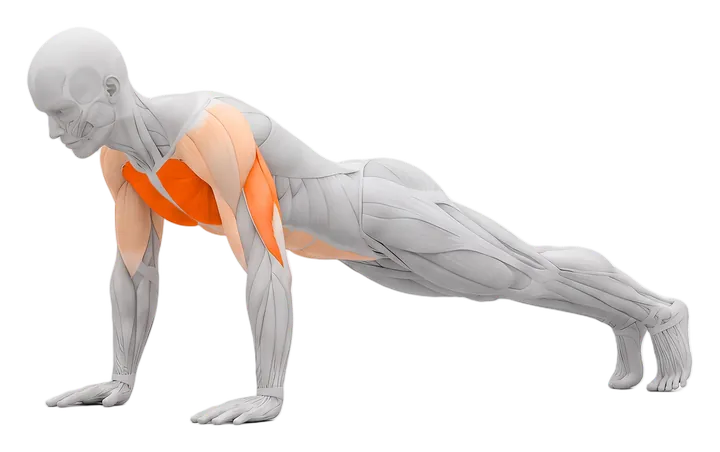 Push-upChestGuide
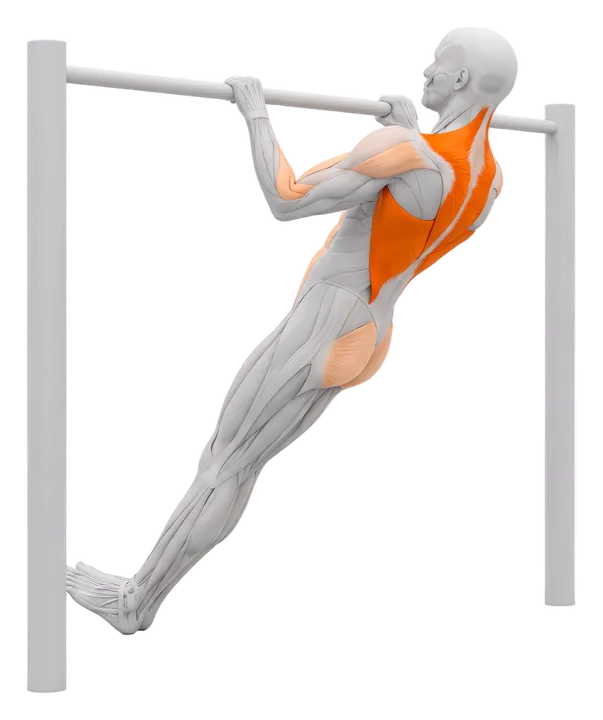 Inverted rowUpper back and latsGuide
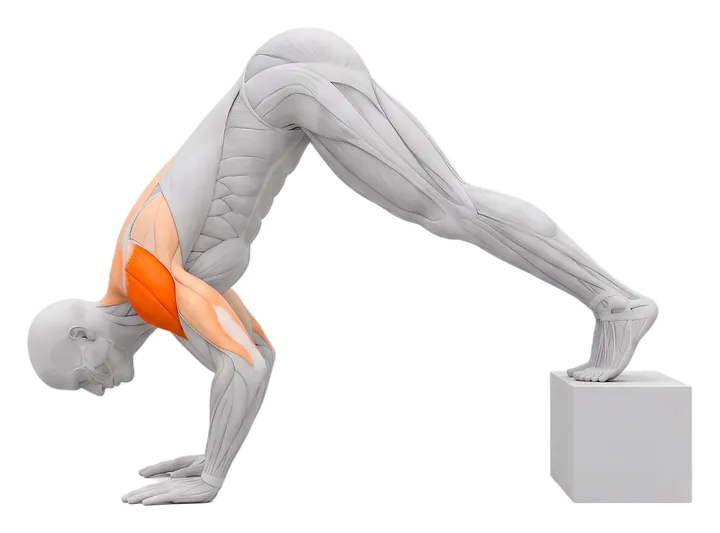 Pike push-upFront delts
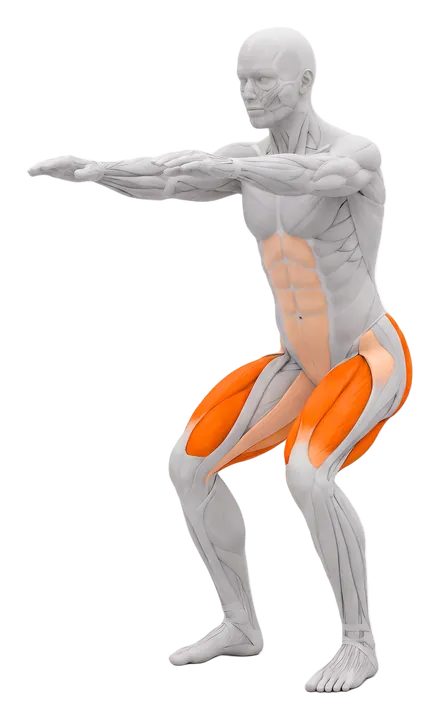 Bodyweight squatQuads and glutes
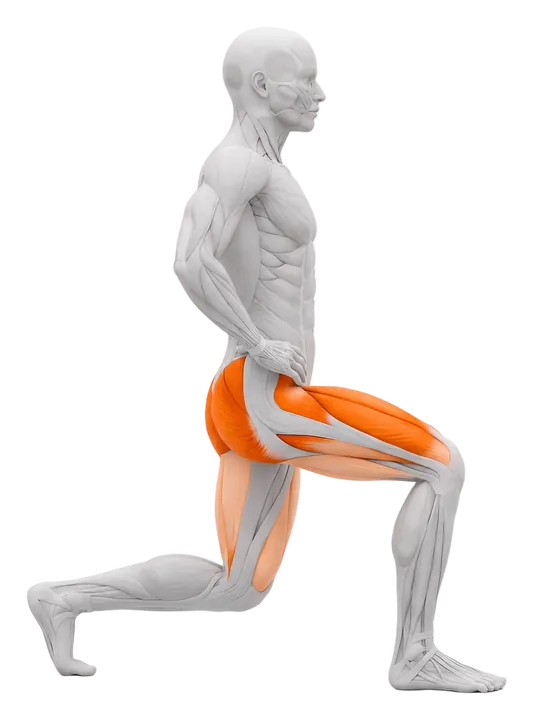 Reverse lungeQuads and glutes
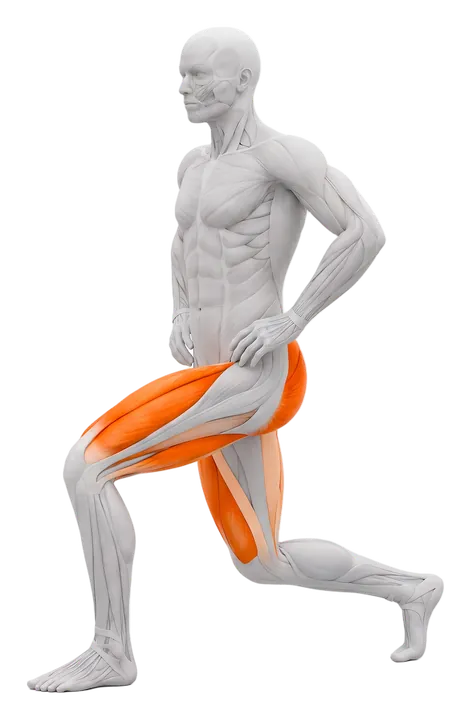 Split squatQuads and glutes
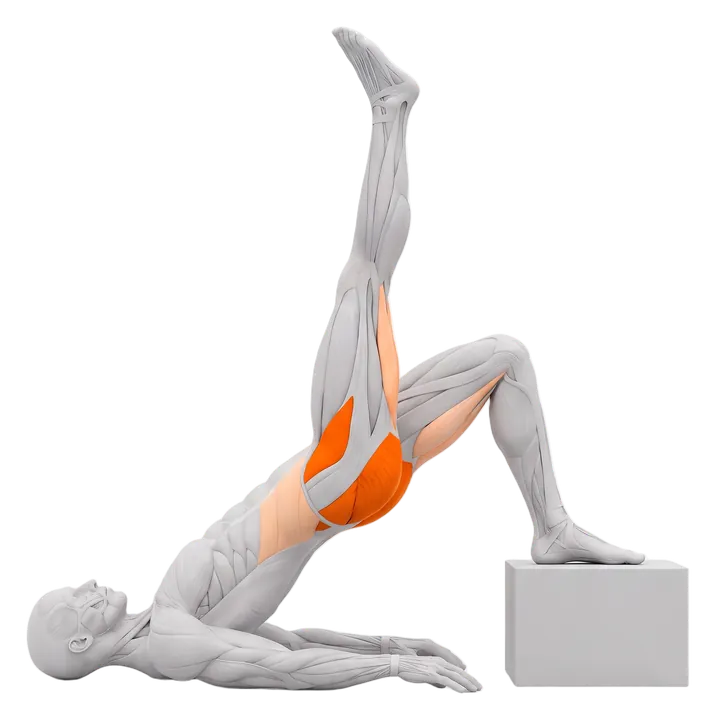 Single-leg glute bridgeGlutes
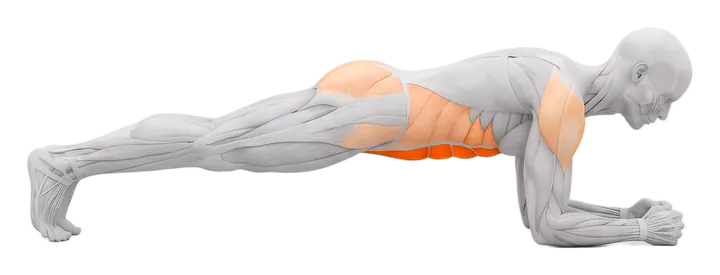 Front plankAbsGuide