
What muscles do chin ups work?
| Muscle | Role | How much |
|---|---|---|
| Lats | Pull the upper arms down and back to your sides | Primary |
| Biceps | Bend the elbows, strongly with palms facing you | Primary |
| Upper back (rhomboids, middle and lower traps) | Pull the shoulder blades down and together | Secondary |
| Chest (lower fibres) | Assist pulling the arms down in front of the body | Secondary |
| Forearms and grip | Hold your bodyweight on the bar | Secondary |
| Abs | Keep the body from swinging | Secondary |
Do chin ups work biceps? Yes, more than almost any other back exercise. That makes them a good fit both for the back exercises part of your week and as a heavy compound lift in a bicep workout. Pair them with a barbell curl and the biceps get both a heavy pull and a direct curl. They still count as a back exercise first: the lats are moving most of your bodyweight.
How to do a chin up
- GripTake the bar with your palms facing you, hands about shoulder width apart. Wrap your thumbs around the bar.
- Hang fullyStart from straight arms. Pull your shoulders slightly down away from your ears so you are not hanging passively on the joints. Squeeze the glutes and keep your legs still, either straight or with crossed ankles.
- PullDrive the elbows down towards your ribs and pull your chest towards the bar. Keep the neck neutral; do not reach for the bar with your chin.
- FinishThe rep counts when your chin is clearly above the bar. A short pause at the top makes every rep honest.
- Lower under controlTake two to three seconds to lower yourself back to a full hang. That lowering phase builds a lot of strength, so do not drop.
Chin up vs pull up
The difference between pull ups and chin ups comes down to grip. The pull up uses an overhand grip (palms away) a bit wider than the shoulders; the chin up uses an underhand grip (palms towards you) at shoulder width. That small change shifts which muscles help the lats.
| Chin up | Pull up | |
|---|---|---|
| Grip | Underhand, palms towards you | Overhand, palms away |
| Hand width | About shoulder width | Slightly wider than shoulders |
| Main muscles | Lats and biceps | Lats, with more upper back |
| Biceps | Strongly involved | Less involved |
| Which is harder | Easier for most people | Harder for most people |
| Typical use | First bodyweight pull, back and arm day | Back width, calisthenics standard |
Chin up vs pull up, which is harder? For most people the pull up, because the biceps are in a weaker position with the palms turned away. Neither is better overall. A good plan uses both, or alternates them in blocks of a few weeks. A neutral grip, palms facing each other on parallel handles, sits in between and is often the most comfortable for the elbows and shoulders. Read the full pull up guide for the overhand version.
How to get your first chin up
If you cannot do a single chin up yet, you need to build pulling strength in the exact range you are missing. Pick two or three of the tools below, train them two or three times a week, and test a full chin up every week or two.
- Negative chin ups. Jump or step up so your chin is above the bar, then lower yourself as slowly as you can, aiming for 3 to 5 seconds. Do 3 to 5 sets of 3 to 5 reps.
- Flexed arm hang. Hold the top position, chin over the bar, for as long as you can. Build up to 20 to 30 seconds.
- Resistance band chin ups. Loop a band over the bar and put one foot or knee in it. Use the lightest band that lets you do 5 to 8 full reps, then move to a thinner band.
- Assisted chin up machine. The counterweight works like a band but is easier to adjust in small steps. Reduce the assistance whenever you hit the top of your rep range.
- Lat pulldown with an underhand grip. Builds the same muscles with a load lighter than your bodyweight. See the lat pulldown guide.
- Inverted rows. Rows under a bar or rings build the upper back and grip.
Chin up form mistakes
- Half reps. Starting from bent arms or stopping with the chin below the bar. Full hang to chin over bar, every time.
- Kipping and swinging. Momentum makes it look like more reps but trains less. Keep the legs quiet.
- Craning the neck. Pushing your chin up to the bar does not count. Pull your chest up instead.
- Dropping down. Falling into the hang is hard on the elbows and shoulders and wastes the lowering phase.
- Grip too narrow. Hands touching puts more strain on the wrists and elbows. Stay around shoulder width.
Chin up sets and reps
| Goal | Sets x reps | Rest | Notes |
|---|---|---|---|
| Strength | 3 to 5 x 3 to 6 | 2 to 3 min | Weighted |
| Muscle growth | 3 to 4 x 5 to 12 | 2 min | Bodyweight or weighted |
| General fitness | 3 x 5 to 10 | 90 s to 2 min | Bodyweight or assisted |
| First chin up | 3 to 5 x 3 to 5 | 2 min | Negatives, bands or machine |
Chin ups usually open a pull day or come right after rows. On push pull legs you can alternate them with pull ups from one pull day to the next; in a full body workout they cover the vertical pull. Two sessions a week is enough for steady progress.
Weighted chin ups and progression
Progress chin ups in two stages. First add reps: when you can do 3 sets of 10 to 12 clean reps, add weight with a dip belt, a weighted vest or a dumbbell held between your feet. Start with 2.5 to 5 kg (5 to 10 lb), drop to 5 to 6 reps and climb again. That is the same double progression the progressive overload guide describes for barbell lifts.
To estimate your max on weighted chin ups, add your bodyweight and the extra load together and put the total into the 1RM calculator with your reps.
From assisted to weighted in Gripp
Log each chin up set with its reps and weight. Gripp tells you what to aim for next session and keeps an estimated 1RM on a chart, so you can see the progress from your first rep to weighted sets. Your back and bicep strength is rated against people of your age and bodyweight.
Join the waitlistSimilar exercises
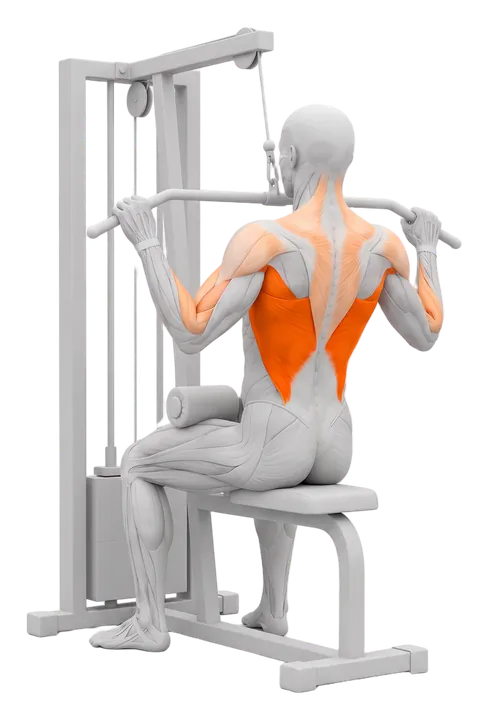 Lat pulldownLatsGuide
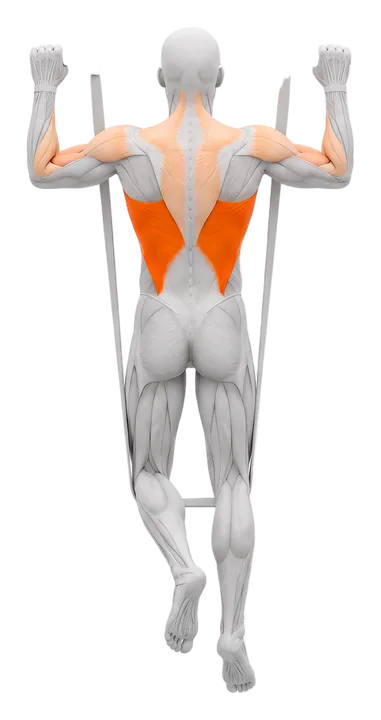 Band-assisted pull-upLats
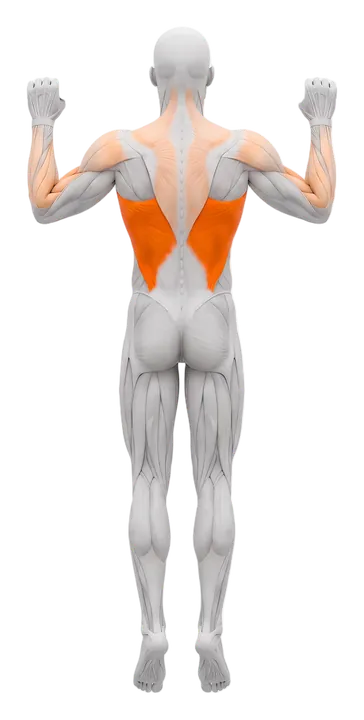 Pull-upLatsGuide
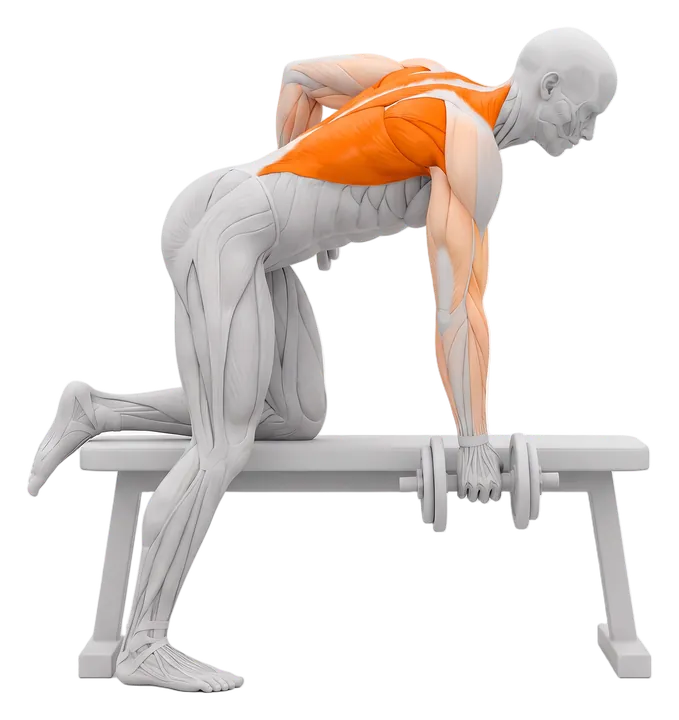 One-arm dumbbell rowLats and upper backGuide