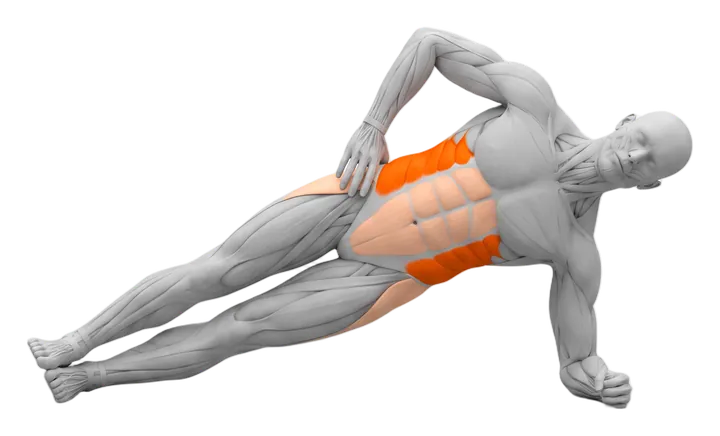
Side plank muscles worked
In a side plank, gravity pulls your hips towards the floor. The muscles on the lower side of your body fight that pull, and the hip muscles on the same side keep the pelvis up. That makes it one of the few bodyweight exercises that trains the obliques and the side glutes together.
| Muscle | Job in the side plank | Role |
|---|---|---|
| External and internal obliques | Stop the trunk side bending towards the floor | Primary |
| Quadratus lumborum | Deep lower back muscle that holds the hip up next to the spine | Primary |
| Gluteus medius | Keeps the pelvis lifted from the hip of the bottom leg | Secondary |
| Rectus and transversus abdominis | Keep the trunk braced and stop it rotating | Secondary |
| Shoulder muscles | Hold the supporting shoulder stable over the elbow | Stabiliser |
| Adductors | Inner thigh of the top leg, mainly in the Copenhagen version | Variation |
Side plank for obliques: a crunch or twist trains the obliques by moving the spine. The side plank trains them to resist movement, which is how they work when you carry a heavy bag in one hand, lunge or press one dumbbell overhead. Most good ab workouts include one of each.
How to do a side plank
- Lie on your sideLie on a mat on your right side with your legs straight and stacked. Place your right elbow directly under your right shoulder, forearm pointing forward.
- Line up the bodyHead, shoulders, hips and feet should be in one line, as if you were lying against a wall. Hips slightly forward, never behind you.
- Lift the hipsPress the forearm and the side of the bottom foot into the floor and lift your hips until your body is straight. Put your free hand on your hip or reach it to the ceiling.
- Hold the lineKeep your top hip stacked over your bottom hip, squeeze your glutes and breathe calmly. Do not let the hips drop or roll back.
- Switch sidesLower with control, rest briefly and do the same time on the other side. Start with your weaker side and match the time on the stronger one.
Side plank mistakes
- Hips sinking. The obliques switch off and you hang on the shoulder. End the set when the hips drop.
- Hips behind the body. Sitting back into a jackknife turns it into an easier hold. Push the hips forward until they line up with your shoulders and feet.
- Chest rolling towards the floor. Keep the top shoulder stacked over the bottom one, as if your back were against a wall.
- Elbow too far forward. Puts the shoulder in a weak position. Stack it directly under the joint.
- Only training one side. Always do both sides with the same time, and add an extra set for the weaker side if they differ a lot.
Side plank variations, easy to hard
| Variation | How | Good for |
|---|---|---|
| Modified side plank (knees) | Knees bent 90 degrees, support on knee and forearm | Beginners, a shorter lever while learning the line |
| Side plank | Feet stacked, support on forearm | The standard hold |
| Staggered feet | Top foot in front of the bottom foot | A bit more balance while building time |
| High side plank | Straight arm, hand under the shoulder | Shoulder strength, a slightly easier trunk hold |
| Side plank hip dips | Lower the hip a few cm, lift it back up, repeat | Turning the hold into reps for the obliques |
| Side plank leg raise | Lift the top leg while holding the plank | Side glutes and hip stability |
| Side plank clamshell | Knee version, open the top knee like a clam | Glute medius work, warm up for leg day |
| Copenhagen side plank | Top leg on a bench, bottom leg free | Adductors and a much harder trunk hold |
| Weighted side plank | Dumbbell or plate held on the top hip | Measurable progress in kg |
Modified side plank
Bend both knees so your feet are behind you and support yourself on the knee and forearm. The line now runs from head to knees. It is the right starting point if the full version makes your hips sag within 15 seconds, and it is a good choice on days when a sore shoulder needs a lighter load.
Side plank hip dips
From a full side plank, slowly lower your bottom hip towards the floor without touching it, then drive it up past the starting line. Do 8 to 15 dips per side. Keep the movement in the trunk and hip, and do not let the chest roll forward. Hip dips give you reps to count, which makes progress easier to track than seconds.
Side plank leg raise
Hold a side plank and lift the top leg to about hip height, a little behind the body rather than in front, then lower it. 6 to 12 slow raises per side is plenty. This variation moves the work towards the side glutes, a nice addition to the glute exercises on leg day.
Copenhagen side plank
Place the inner side of your top knee or ankle on a bench, with your forearm on the floor, and lift your hips so your body is straight. The bottom leg hangs free or is lifted to meet the bench. Knee on the bench is the easier version, ankle the harder one. It loads the adductors of the top leg hard, so start with 2 sets of 10 to 20 seconds. In the gym, the hip adduction machine trains the same inner thigh muscles with a weight stack.
Side plank sets, time and frequency
| Goal | Sets x time or reps | Rest | Notes |
|---|---|---|---|
| Beginner | 2 to 3 x 15 to 30 s per side | 30 s between sides | Knee version until 30 s is clean |
| Core strength | 3 x 20 to 45 s per side | 45 to 60 s | Move to a harder variation at 45 s |
| Obliques, reps | 2 to 3 x 8 to 15 hip dips per side | 45 to 60 s | Slow lowering, pause at the top |
| Adductors | 2 to 3 x 10 to 30 s Copenhagen | 60 s | Knee on the bench before ankle |
| Rehab goal | 2 to 3 x 10 to 30 s | 60 s | Follow your physio's plan first |
Two or three times a week is enough. The side plank pairs well with the front plank and a curling movement like the hanging leg raise, which gives you anti-extension, anti side bend and flexion in three exercises. Because it is light on the body, it also works in a warm up before squats or deadlifts.
Core work that keeps moving forward
Gripp is coming to iPhone. It puts your core work into a weekly plan with your other lifts, gives you a clear target for the next session and suggests the next variation once the current one gets easy. Your core gets a strength rating next to your other muscle groups.
Join the waitlistSide plank alternative exercises
- Suitcase carry: walk with one heavy dumbbell or kettlebell in one hand and stay upright. It trains the same anti side bend job, standing.
- Pallof press: press a band or cable straight out from the chest and resist the pull to the side.
- Dumbbell side bend: one dumbbell, bend sideways and come back up, for oblique reps with load.
- Bird dog: a gentle anti-rotation drill on hands and knees, covered in the back exercises guide.
Similar exercises
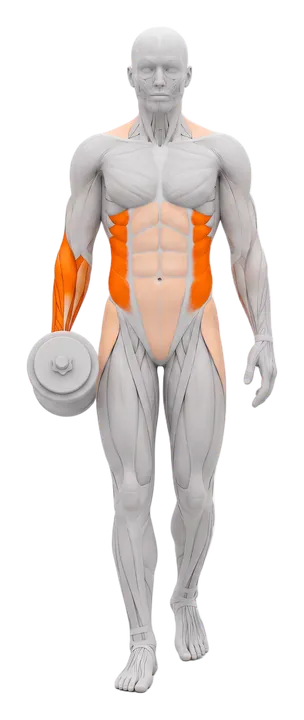 Suitcase carryObliques and forearms
 Pallof pressObliques and abs
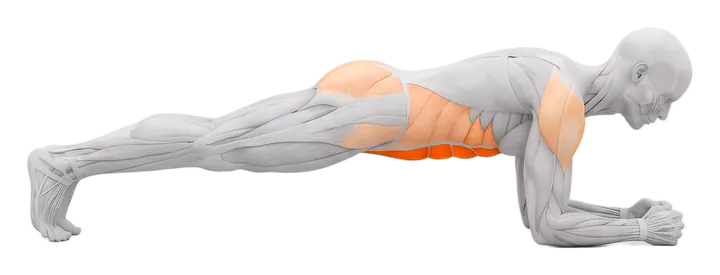 Front plankAbsGuide
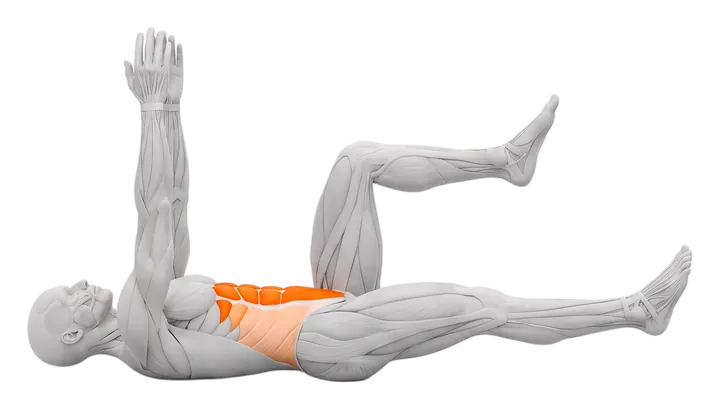 Dead bugAbsGuide
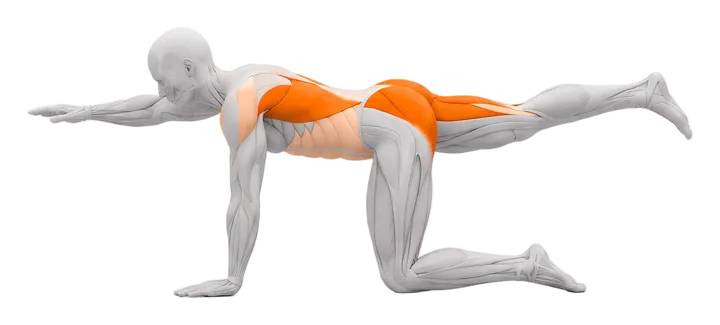 Bird dogLower back and glutes
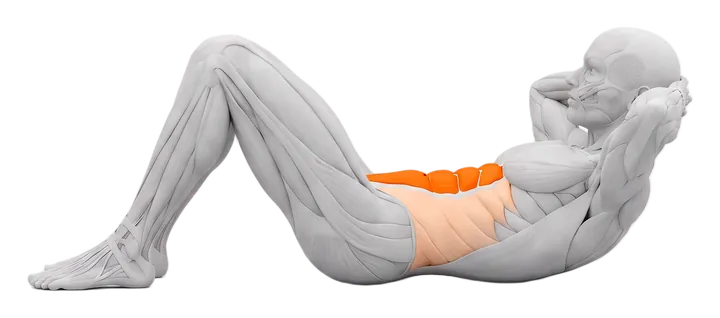 CrunchAbsGuide