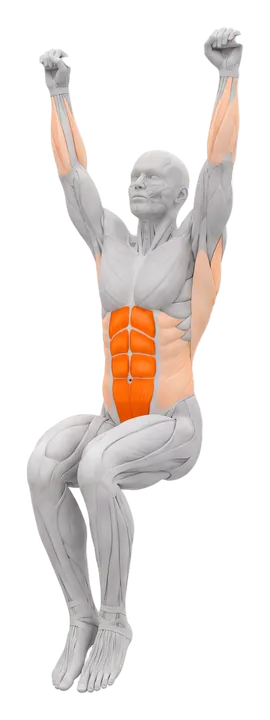
Hanging leg raise muscles worked
Two muscle groups share the work, and which one does more depends on your technique. The hip flexors lift the legs. The abs only take over when the pelvis tilts back and the lower spine curls. A raise that stops with the legs at hip height and a flat or arched lower back is mostly a hip flexor exercise.
| Muscle | What it does | Role |
|---|---|---|
| Rectus abdominis | Curls the pelvis up towards the ribs, mostly in the top half | Primary |
| Hip flexors (iliopsoas, rectus femoris) | Lift the thighs from the hanging position | Primary |
| Obliques | Help curl the pelvis and stop the body twisting | Secondary |
| Forearms and grip | Hold you on the bar for the whole set | Secondary |
| Lats | Keep the shoulders set and help stop the swing | Stabiliser |
Hanging leg raise for abs: think "belt buckle to chin". Every rep should end with the hips higher than they were and the lower back rounded, which is the part a lying leg raise cannot give you. That is why the hanging version ranks near the top of most ab workout lists.
How to do a hanging leg raise
- Grip the barHang from a pull-up bar with an overhand grip, hands shoulder width. Your feet should clear the floor with straight legs.
- Set the shouldersPull your shoulders slightly down away from your ears and press the bar a little forward. You stay in a hang, but the shoulders are active, not loose.
- Brace in a slight hollowSqueeze your legs together and bring them slightly in front of you, ribs pulled down. This small hollow position is what kills the swing before the first rep.
- Lift and curlRaise your legs, then keep going by rolling your pelvis up so the hips move towards the bar. Bent knees to the chest, or straight legs to at least hip height.
- Lower in 2 to 3 secondsLower under control back to the slightly hollow start position. Do not drop into a full dead hang between reps, because that is where the swing starts.
How to stop swinging on leg raises
The swing is the main reason people get little out of this exercise. Momentum from the last rep lifts the legs for you, and the abs only work in the bottom half. These fixes work, roughly in order of how often they help.
- Slow the lowering. Count three seconds down. Most of the swing comes from dropping the legs fast.
- Stop just before the bottom. Keep the legs a little in front of the body at the end of each rep, so the body never pendulums behind the bar.
- Pause in the hang. Hold one second at the bottom with the body still before starting the next rep.
- Push the bar forward with straight arms. Active lats keep the upper body still while the legs move.
- Use a wall or door frame. Hang with your back lightly touching a wall, or face a rack upright that your legs cannot swing past.
- Go back a step. If you need momentum to finish a straight leg rep, the knee version is the right exercise for now.
Hanging leg raise progression
Each step makes the lever longer or the range bigger. Stay on a step until you can do 3 sets of 12 clean reps without swinging, then move on and start again at around 6 to 8 reps.
| Step | Exercise | Target before moving on |
|---|---|---|
| 1 | Reverse crunch on the floor or a bench | 3 x 15 with a slow lowering |
| 2 | Captain's chair knee raise | 3 x 12, hips curl up at the top |
| 3 | Hanging knee raise | 3 x 12 from a still hang |
| 4 | Hanging knee raise, knees to chest | 3 x 10 with a clear pelvic curl |
| 5 | Hanging straight leg raise to hip height | 3 x 10, legs locked |
| 6 | Hanging leg raise, feet above hip height | 3 x 8 with a 3 second lowering |
| 7 | Toes to bar | 3 x 6 to 8, no kip |
| 8 | Weighted hanging leg raise | Add an ankle weight or a light dumbbell between the feet |
Hanging knee raise
Bend the knees about 90 degrees, then pull them towards the chest and finish with the hips tilting up. Because the lever is short, you can focus completely on the pelvic curl. Many lifters never need more than this, especially when they add a slow lowering and an ankle weight.
Toes to bar
The strict version lifts straight legs all the way up until the feet touch the bar, with the arms helping a little by pulling the bar down. It needs good hamstring flexibility as well as strong abs. The kipping version used in CrossFit is a different, swing based skill; for ab training, keep it strict.
Weighted hanging leg raise
Start with ankle weights of 1 to 2.5 kg (2 to 5 lb) per side or a light dumbbell squeezed between the feet. Add weight in small steps, because the load sits at the end of a long lever and feels far heavier than the number suggests.
Sets and reps for hanging leg raises
| Goal | Sets x reps | Rest | Notes |
|---|---|---|---|
| Beginner | 3 x 6 to 12 knee raises | 60 to 90 s | Captain's chair is fine |
| Ab growth | 3 to 4 x 8 to 15 | 60 to 90 s | 1 to 2 reps short of failure |
| Strength | 3 to 5 x 5 to 8 | 90 s to 2 min | Weighted or toes to bar |
| Lifters short on time | 2 x 10 to 15 | Superset | Pair with a press or curl |
Two or three sessions a week works well. Put them at the end of a pull day, after rows and chin-ups, or at the end of a leg day. Count reps the way you would with a loaded lift: when every set reaches the top of the range with no swing, step up the variation or the load, the same rule as in double progression.
From knee raise to toes to bar, logged
Gripp is coming to iPhone. Log your reps every set and Gripp tells you when you hit the top of your range and it is time for the harder version. Each exercise page shows a muscle map, and your abs get a strength rating against people of your age and bodyweight.
Join the waitlistCaptain's chair vs hanging leg raise
The captain's chair, often called the hanging leg raise machine or station, supports you on your forearms with your back against a pad. Grip is not a limit, and the back pad removes most of the swing, so it is easier to learn the pelvic curl there. The bar version is harder to control and trains grip and shoulder stability too. Use the chair while you build up, or to finish with extra reps after your grip is gone, and keep the bar as the main exercise once you can hang still.
Hanging leg raise alternatives
- Reverse crunch: the same pelvic curl lying on a bench or floor. Best alternative at home.
- Lying leg raise: legs lift from the floor, hands under the hips. Stop before the lower back arches.
- Ab wheel rollout: different job, but the same level of challenge. See the ab wheel rollout guide.
- Cable crunch: the easiest way to load the abs heavy. The crunches guide covers form and variations.
- Dead bug: a gentle option if hanging bothers your shoulders.
Similar exercises
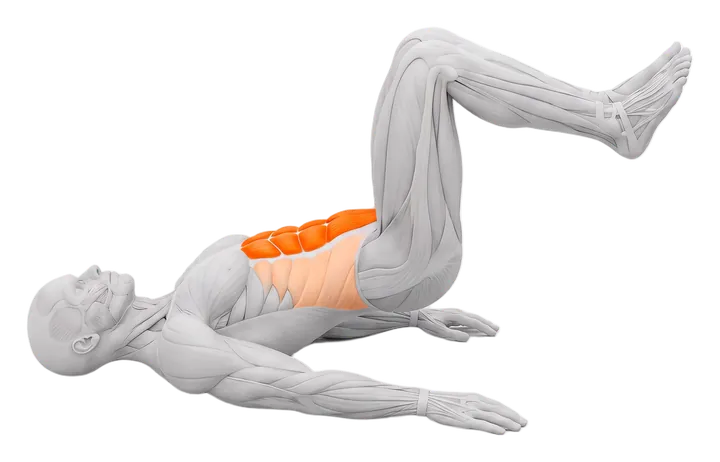 Reverse crunchAbs
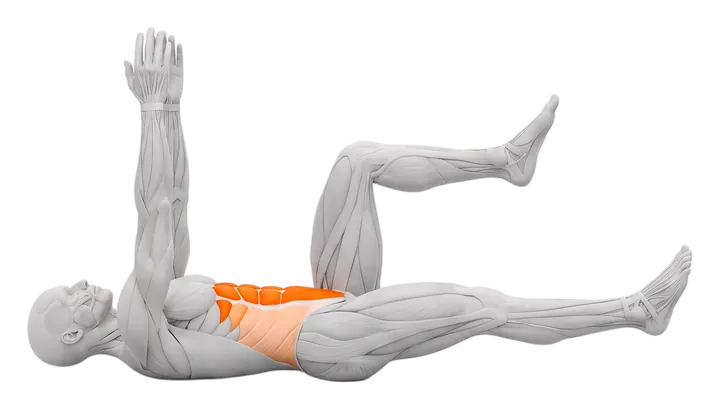 Dead bugAbsGuide
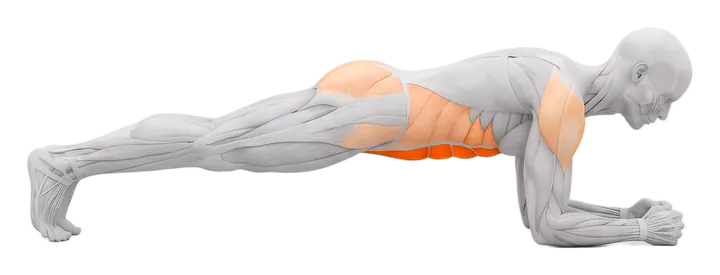 Front plankAbsGuide
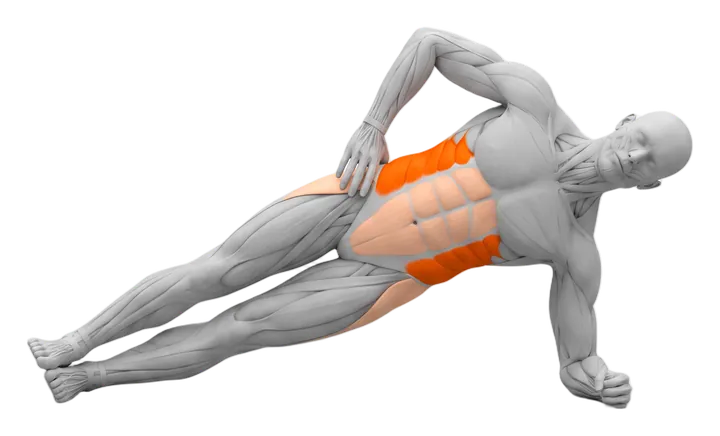 Side plankObliquesGuide
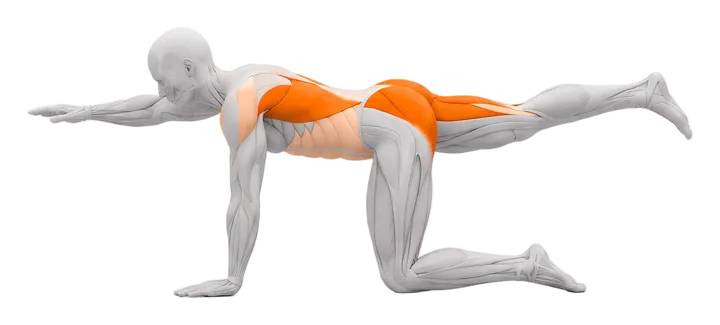 Bird dogLower back and glutes
 Pallof pressObliques and abs