Which kettlebell to start with
One bell is enough for months of training, but the weight matters more than with dumbbells because you cannot adjust it. Kettlebells usually come in 4 kg steps: 8, 12, 16, 20 and 24 kg (about 18, 26, 35, 44 and 53 lb). The jump between bells is big, so pick one that is heavy enough for your legs and hips, and handle the lighter upper body moves with more reps or by holding the bell differently.
| You are | Common first bell | Feels light on | Feels heavy on |
|---|---|---|---|
| New to training, smaller frame | 8 kg (18 lb) | Deadlift, swing after a few weeks | Overhead press |
| New to training, most women | 8 to 12 kg (18 to 26 lb) | Deadlift, goblet squat | Overhead press |
| New to training, most men | 12 to 16 kg (26 to 35 lb) | Deadlift, swing | Overhead press |
| Already lift weights | 16 to 24 kg (35 to 53 lb) | Deadlift, swing, row | Press, Turkish get-up |
These are typical starting points, not rules. If you can only buy one bell, choose the weight you can goblet squat for 10 clean reps. You will grow into it on the swing quickly, and press it for fewer reps.
Exercises in this kettlebell workout
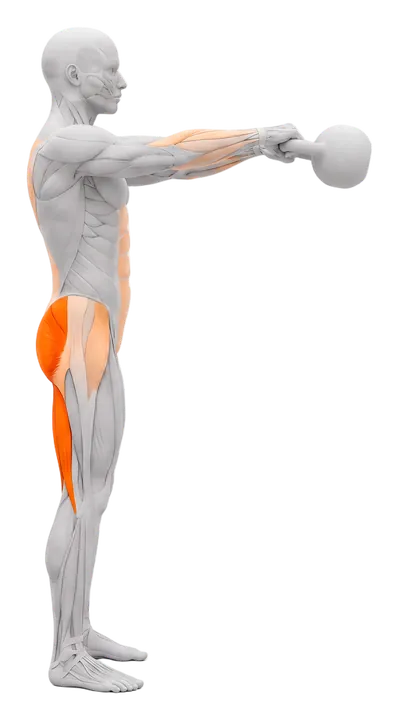 Kettlebell swingGlutes and hamstringsGuide
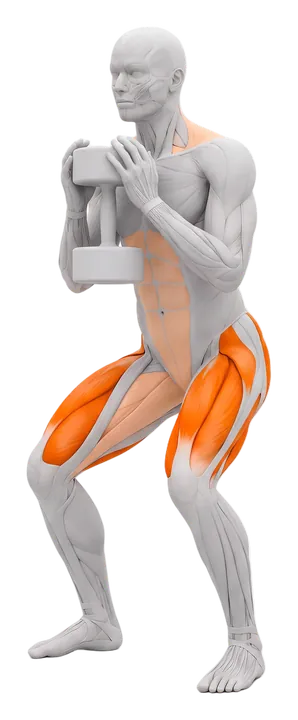 Goblet squatQuads and glutesGuide
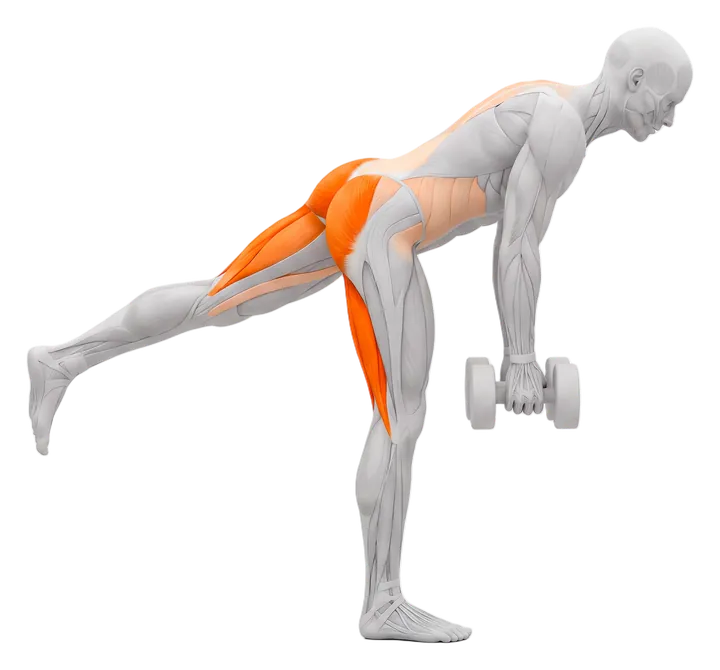 Single-leg Romanian deadliftHamstrings and glutesGuide
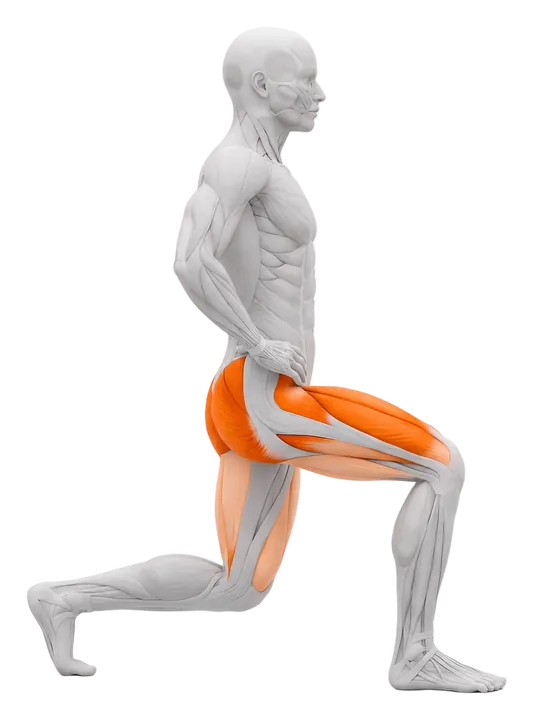 Reverse lungeQuads and glutes
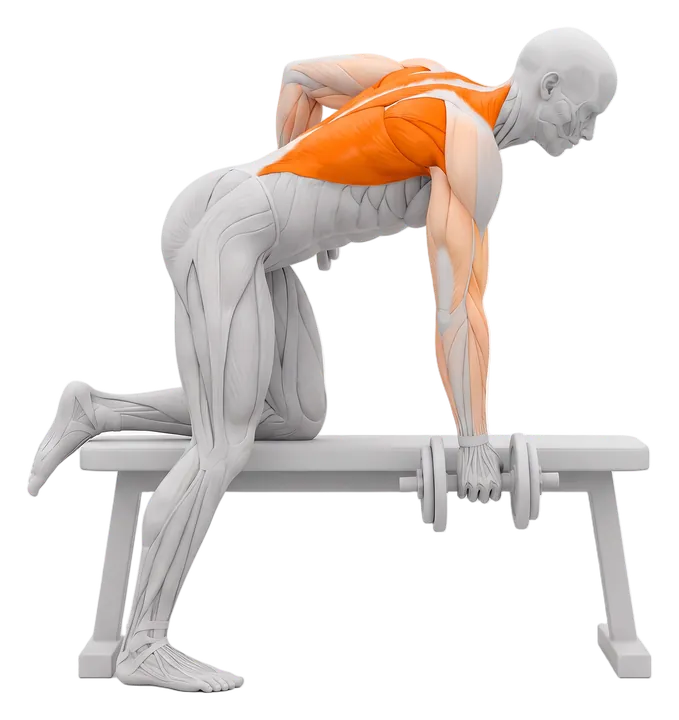 One-arm dumbbell rowLats and upper backGuide
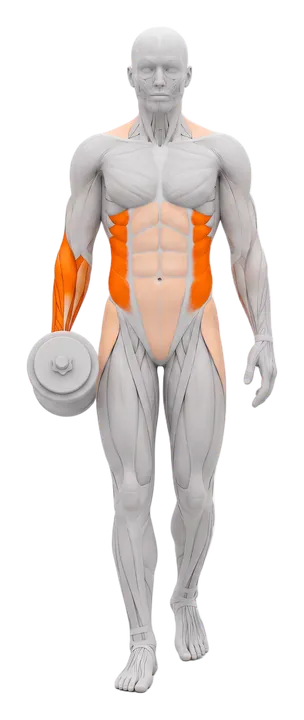 Suitcase carryObliques and forearms
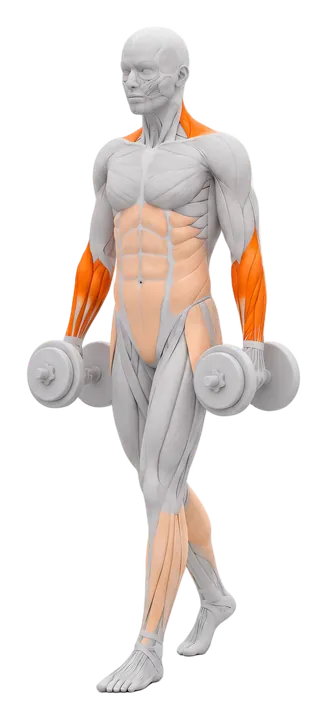 Farmer's carryForearms and trapsGuide
The full body kettlebell workout (A and B)
Alternate the two sessions: A, B, A one week and B, A, B the next, with a rest day between. Each takes about 35 to 45 minutes.
| Exercise | Sets x reps | Rest | Why it is here |
|---|---|---|---|
| Kettlebell deadlift (bell between the feet) | 3 x 8 to 12 | 90 s | Teaches the hip hinge that the swing is built on |
| Goblet squat | 3 x 8 to 15 | 90 s | Quads and glutes, the bell held at the chest keeps you upright |
| One-arm overhead press | 3 x 5 to 10 per arm | 90 s | Shoulders and triceps, one side at a time |
| One-arm row, hand on a bench or chair | 3 x 8 to 12 per arm | 60 s | Lats and upper back |
| Suitcase carry | 3 x 20 to 30 m per hand | 60 s | Grip and the side of the core |
| Exercise | Sets x reps | Rest | Why it is here |
|---|---|---|---|
| Two-hand kettlebell swing | 5 x 10 to 15 | 60 to 90 s | Explosive glutes and hamstrings, raises the heart rate |
| Reverse lunge, bell held at the chest | 3 x 8 to 10 per leg | 90 s | Single leg strength and balance |
| Floor press, one arm | 3 x 8 to 12 per arm | 60 s | Chest and triceps without a bench |
| Single-leg Romanian deadlift | 3 x 8 to 10 per leg | 60 s | Hamstrings and hip stability |
| Dead bug or plank | 3 x 8 per side or 30 to 45 s | 45 s | Core |
The goblet squat and the deadlift are the base: they build the strength and positions the other moves need. The press and row are done one arm at a time because one bell is too light for two-hand pressing and rowing once you get going. The single-leg Romanian deadlift makes a light bell feel heavy on the hamstrings, and the carry trains grip and trunk at the same time, much like a one-sided farmer's walk.
Learn the swing in the right order
The swing is the signature kettlebell move, and the one beginners most often rush. It is a hip hinge done fast, not a squat and not a front raise. Build it in three steps:
- Week 1 to 2: deadliftBell between your feet. Push the hips back, keep the back flat, grip the handle and stand up by squeezing the glutes. This is the shape every swing passes through.
- Week 2 to 3: hike and parkBell a foot in front of you. Hinge, tilt it back, hike it between your legs like a football snap, then set it down again. One rep at a time.
- Week 3 onward: the swingHike it back, then snap the hips forward hard so the bell floats to about chest height. Arms stay loose, the power comes from the hips. Let it fall back, hinge again, repeat.
Stop the set when the bell starts to drift lower or your back rounds. The full technique, common faults and muscles worked are in the kettlebell swing guide. If your lower back hurts during swings, go back to deadlifts and glute bridges, and see a physiotherapist if it does not settle.
6 week beginner kettlebell workout plan
| Weeks | Sessions | Sets | Focus |
|---|---|---|---|
| 1 to 2 | A, B, A then B, A, B | 2 per exercise, swing replaced by deadlift | Learn the hinge, squat and press, stop well short of failure |
| 3 to 4 | Same rotation | 3 per exercise, swings 5 x 10 | Add reps each session at the same weight |
| 5 to 6 | Same rotation | 3 to 4 per exercise, swings 5 x 15 | Reach the top of the rep range; add a set where you can |
| 7 onward | Continue or add a third session type | As above | Move to harder variations or a heavier bell |
The plan fits next to a run or a sport day. Rest at least one day between kettlebell sessions so the hips recover from the swings. For a wider plan with more equipment, see the beginner workout plan or the full body dumbbell workout.
How to progress with one kettlebell
With a barbell you add 2.5 kg (5 lb). With one kettlebell the next step is often 4 kg (about 9 lb), which can be 25 to 50 percent heavier. You need several steps in between:
- Add reps until every set reaches the top of the range, for example goblet squats from 8 to 15.
- Add a set, from 3 to 4.
- Slow the lowering to 3 seconds, or pause at the bottom of squats and lunges.
- Move to a harder version: two-hand swing to one-hand swing, goblet squat to front rack squat, reverse lunge to Bulgarian split squat with the bell at the chest.
- Shorten the rest on swings, for example 10 swings at the start of every minute for 10 minutes.
- Then buy the next bell and drop back to the bottom of each rep range.
This is progressive overload with fixed weight. The press is usually the first lift to stall, so it is fine to keep pressing the lighter bell while squats and swings move up.
Gripp tracks every bell, every rep
Gripp is coming to iPhone. Log your kettlebell sets and Gripp tells you what to do next session: last time 11 goblet squats with 16 kg (35 lb), today go for 12. When every set hits the top of the range it is time for the next step. It keeps an estimated 1RM per exercise on a chart and fits your kettlebell days into a weekly plan with your runs.
Join the waitlistKettlebell exercises by body part
| Body part | Kettlebell exercises | Note |
|---|---|---|
| Legs and glutes | Goblet squat, reverse lunge, swing, single-leg Romanian deadlift, step-up | The easiest area to train hard with one bell |
| Chest | Floor press, push-up with hands on the handles of two bells | A bench lets you press deeper |
| Shoulders | One-arm overhead press, halo, bottoms-up press | Bottoms-up press needs a much lighter bell |
| Back | One-arm row, gorilla row with two bells, swing | Rows can go heavy |
| Arms | Bell curl holding the horns, overhead triceps extension | Small extras at the end of a session |
| Core | Suitcase carry, dead bug holding the bell, Turkish get-up | Learn the get-up with no weight first |
A kettlebell leg workout can be as simple as goblet squats, reverse lunges, single-leg Romanian deadlifts and swings, 3 sets each. More leg options without a gym are in the leg workout at home.