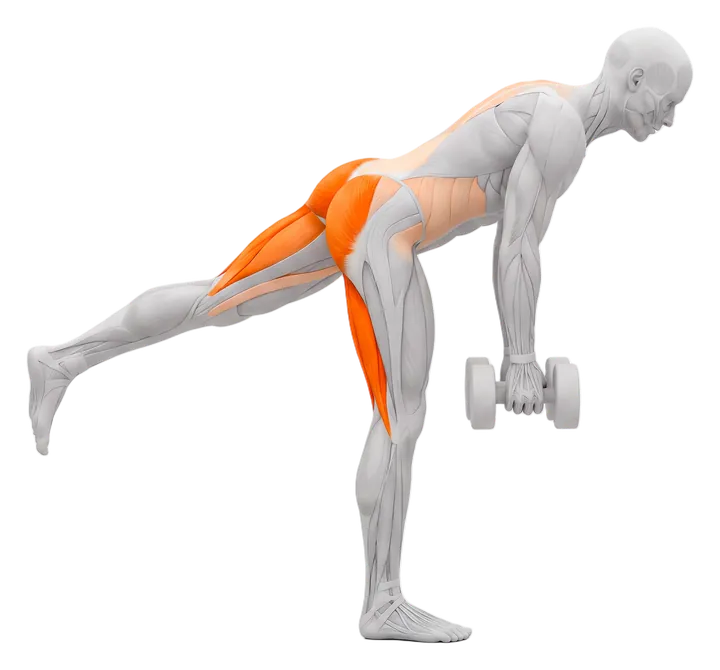
Single leg RDL muscles worked
| Muscle | Job in the movement | Role |
|---|---|---|
| Hamstrings (standing leg) | Lengthen under load as you tip forward, then pull you up | Primary |
| Gluteus maximus (standing leg) | Extends the hip back to standing | Primary |
| Gluteus medius and minimus | Stop the pelvis from tilting and the knee from caving | Stabiliser, much more than in two leg hinges |
| Adductors | Help extend the hip and hold the pelvis level | Secondary |
| Lower back and obliques | Keep the spine neutral and stop the torso twisting | Stabiliser |
| Foot and ankle muscles | Small corrections to hold balance | Stabiliser |
How to do a single leg Romanian deadlift
- Stand on one legWeight on the working leg, knee softly bent about 15 to 20 degrees and kept at that angle all the way. Hold the dumbbell in the opposite hand.
- Reach the free leg backStart the movement by pushing the free heel towards the wall behind you. The torso tips forward as a result. Think of the back leg and your torso as one rigid piece.
- Lower to your hamstring stretchGo down until you feel a strong stretch in the back of the standing thigh, usually with the torso close to parallel to the floor. The weight hangs straight under your shoulder, near the standing shin.
- Drive the hip throughPush the floor away with the whole standing foot and bring the hip forward until you stand tall. Tap the free foot down only if you need to reset.
- "Belt buckle to the floor." Both hip bones face down at the bottom. If the free hip opens towards the ceiling, you have rotated.
- "Toes of the back foot point down." A simple check for the same problem.
- "Tripod foot." Big toe, little toe and heel all press into the floor.
- "Long neck." Look at the floor a metre or two in front of you, not up.
How to stop wobbling
Balance is the first limit for most people, long before the hamstrings are. Wobbling is normal for the first few sessions and gets better quickly with practice. These fixes help:
- Hold onto something. Rest the free hand lightly on a rack, bench or wall. You still train the hinge and the hamstrings, and you can let go once the pattern is solid.
- Use a kickstand. The B-stance RDL keeps the toes of the back foot on the floor for balance while most of the weight stays on the front leg.
- Go barefoot or in flat shoes. Soft, thick soles make the foot work harder to find stability.
- Slow the lowering to 3 seconds. Fast reps give you less time to correct.
- Fix your eyes on one point. A spot on the floor ahead of you.
Single leg RDL vs Romanian deadlift
Both are hinges for the hamstrings and glutes, but they do different jobs in a plan. The Romanian deadlift with a barbell lets you load the hamstrings heavily and track strength over years. The one leg version trades load for balance, hip stability and side to side work.
| Single leg RDL | Barbell RDL | |
|---|---|---|
| Typical load | One dumbbell or kettlebell | Barbell, often heavy |
| Limit in the set | Balance and hip control | Hamstrings, grip, lower back |
| Lower back load | Low | Higher |
| Side glutes | Work hard | Little |
| Left and right sides | Trained and logged separately | Hidden, the stronger side can help |
| Best for | Runners, field sports, home training, weaker side | Maximum hamstring strength and size |
Many plans use the barbell RDL as the main hinge and the single leg version as an accessory later in the session or on a lighter day.
Dumbbell, kettlebell or bodyweight?
| Variation | Setup | Why choose it |
|---|---|---|
| Bodyweight single leg RDL | Arms out to the sides or reaching forward | Learning the pattern, warm up |
| Dumbbell, opposite hand | Dumbbell in the hand opposite the standing leg | Standard version, a little more glute medius work |
| Dumbbell, same side hand | Dumbbell in the hand on the side of the standing leg | Easier to balance for some people |
| Two dumbbells | One in each hand | Heavier loading once balance is solid |
| Kettlebell single leg deadlift | Bell hangs from the handle, close to the shin | Compact grip, home training |
| Landmine single leg RDL | Hold the end of a barbell in a landmine | The bar guides you, so balance limits less |
| B-stance RDL | Back toes on the floor as a kickstand | A bridge between two legs and one |
If you train at home, the single leg version is one of the few ways to get a real hamstring and glute stimulus from one pair of dumbbells. It shows up in most dumbbell leg workouts for that reason. With a single bell, it is also a staple of a kettlebell workout.
Common single leg deadlift mistakes
- Opening the hip. The free leg swings out and up to the side. Turn the back toes down and square the hips.
- Squatting it. The standing knee bends more and more on the way down. Set the bend at the start and keep it.
- Reaching with the arm. The weight drifts forward away from the body and pulls you off balance. Let it hang.
- Rounding to go deeper. Stop where your hamstrings stop you, depth comes with time.
- Going too heavy too soon. If you need to touch down between reps, the weight is too heavy for now.
Sets and reps for the single leg RDL
| Goal | Sets x reps per leg | Rest | Load |
|---|---|---|---|
| Learning | 2 x 8 to 10 | 60 s | Bodyweight or light, hand on a support |
| Muscle growth | 3 x 8 to 12 | 60 to 90 s between legs | Dumbbell or kettlebell, 3 s lowering |
| Strength | 3 to 4 x 6 to 8 | 90 s to 2 min | Two dumbbells or landmine |
| Sport and running | 2 to 3 x 6 to 10 | 60 to 90 s | Moderate, focus on balance |
Start with your weaker leg and match its reps on the other side. Good places for it: after squats on a lower day, in a dumbbell glute workout, or as the hinge on a full body day. It pairs well with a knee bending exercise like the nordic hamstring curl or a leg curl.
See both legs, side by side
Gripp logs reps and weight for every set, so a weaker side is easy to see over time. It suggests what to lift next session and keeps an estimated max and a progress chart for the exercise.
Join the waitlistHow to progress the single leg RDL
Progress in this order: hand support to no support, then reps, then load. Once you can do 3 sets of 12 per leg without touching down, go up one dumbbell size. Dumbbell steps are big compared with the load, so add reps within the range before each jump, which is the method explained in double progression.
Alternatives if it does not suit you: the B-stance RDL, a back extension, a glute bridge on one leg or a regular dumbbell RDL.
Similar exercises
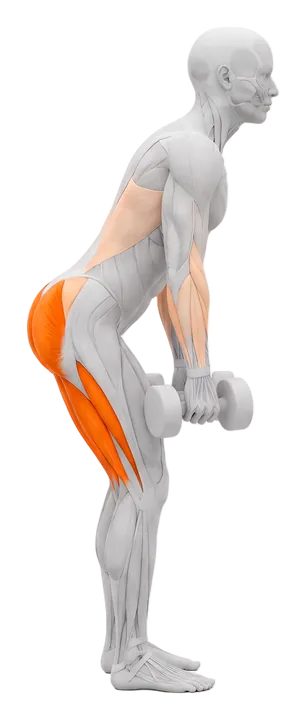 Dumbbell Romanian deadliftHamstrings and glutes
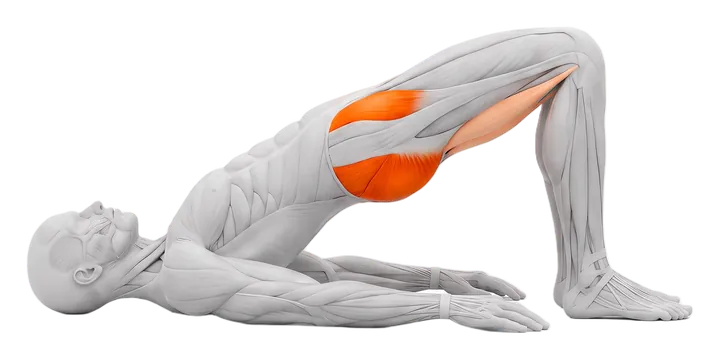 Glute bridgeGlutesGuide
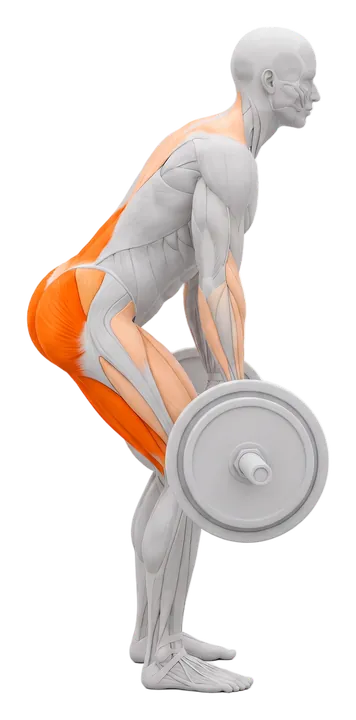 Barbell deadliftGlutes and hamstringsGuide
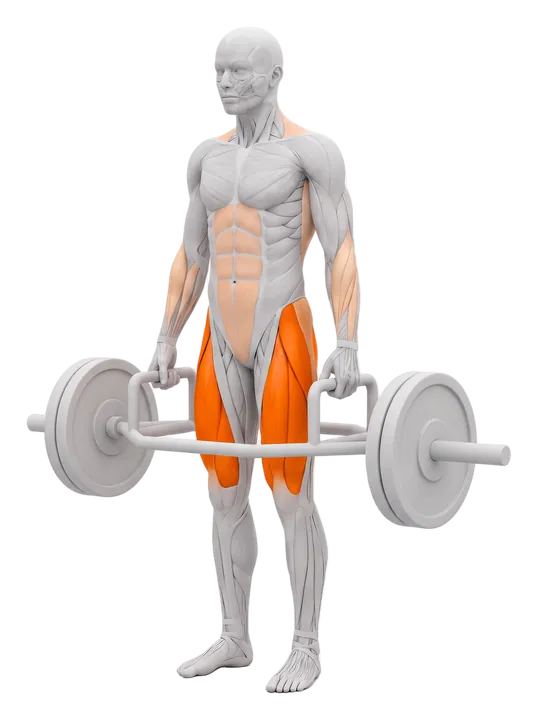 Trap bar deadliftGlutes and quadsGuide
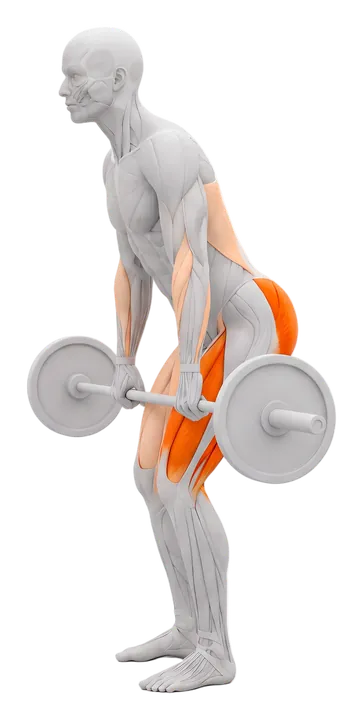 Romanian deadliftHamstrings and glutesGuide
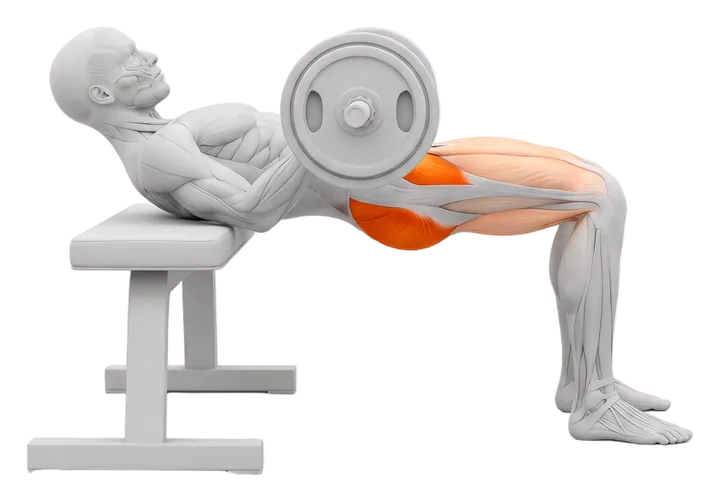 Barbell hip thrustGlutesGuide