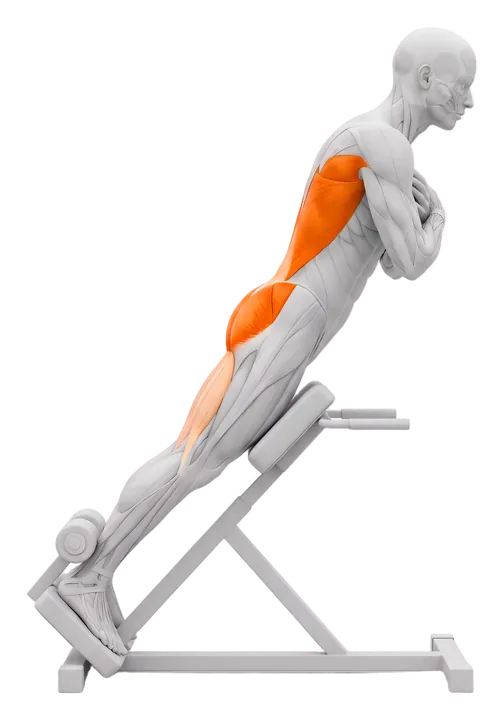
Back extension muscles worked
| Muscle | What it does | Role |
|---|---|---|
| Erector spinae (lower back) | Holds or extends the spine against gravity | Primary, most in the lower back version |
| Gluteus maximus | Extends the hip to bring you up | Primary, most in the glute version |
| Hamstrings | Help extend the hip | Secondary |
| Adductor magnus | Helps extend the hip | Secondary |
The name hyperextension is a bit misleading. You should not arch past a straight line at the top. The goal is to extend the hips, not to bend the lower back backwards under load.
How to do a 45 degree back extension
- Set the pad heightAdjust the pad so its top edge sits just below your hip bones. Too high and the pad blocks your hips from bending, so you can only bend at the spine.
- Lock the feetHeels against the foot plate, legs straight, body in one line. Cross your arms on your chest or hold a plate there.
- Hinge downBend forward at the hips until you feel a stretch in the hamstrings, usually with the torso close to vertical towards the floor. Keep the back in its neutral shape.
- Rise to a straight lineSqueeze the glutes and bring the torso up until shoulders, hips and heels line up. Pause for a second, then lower slowly.
Glute vs lower back bias
The same bench can be a glute exercise or a lower back exercise. It comes down to where you bend and how your feet sit.
| Glute focused | Lower back focused | |
|---|---|---|
| Upper back | Rounded, chin tucked | Neutral or rolling up through the spine |
| Feet | Turned out about 30 to 45 degrees | Straight ahead |
| Pad | Just below the hip bones, hips free to bend | Slightly higher, more movement from the spine |
| Top position | Hips fully extended with a hard glute squeeze, pelvis tucked | Straight line from head to heels |
| Feel it | Glutes, a little hamstrings | Lower back muscles along the spine |
| Typical reps | 12 to 20 | 10 to 15 |
Glute back extension
Round the upper back slightly and keep it rounded for the whole set, so the spine stays still and only the hips move. Turn the toes out and push the hips into the pad at the top. This version is popular as a glute finisher after hip thrusts, because it loads the glutes from a stretched position instead of only at the top.
Lower back back extension
Here the spine is meant to move a little. Some lifters curl down one vertebra at a time and roll back up, others keep a neutral spine and hold the top for longer. Use a light load. This version suits people who want to build the lower back muscles for deadlifts and squats. If you have back pain or a past back injury, get a physiotherapist's view first.
45 degree vs 90 degree back extension
The 45 degree bench is the common back extension machine in gyms. The 90 degree version, also called a horizontal or GHD back extension, has you lying flat with your hips on the pad.
- 45 degree: hardest in the middle of the range, when your torso passes horizontal, and lighter at the top. More forgiving and a good place to start.
- 90 degree (horizontal): hardest at the top, where your body is parallel to the floor. Feels heavier with the same load.
- Reverse hyperextension: the torso stays on the bench and the legs swing up behind you. A different machine, but a similar target.
How to load a back extension
Start with bodyweight. When 3 sets of 15 clean reps are easy, add load in one of these ways, in rough order of difficulty:
| Method | How | Notes |
|---|---|---|
| Slower reps and pauses | 3 s down, 2 s hold at the top | No equipment, good first step |
| Plate on the chest | Hug a plate with crossed arms | The usual way, 5 to 20 kg (10 to 45 lb) steps |
| Dumbbell or kettlebell | Hold it at the chest | Easier to grip than a big plate |
| Weight held further out | Plate behind the head or arms reaching forward | Longer lever, much harder |
| Band | Band under the foot plate and around the neck or shoulders | Adds load at the top, where the 45 degree eases off |
| Barbell | Bar across the upper back | Advanced, heavy loads, keep the range strict |
Move the plate from the chest to behind the head only after you own the chest version. The longer lever can feel like adding a lot of weight at once. Read progressive overload for how to plan the steps.
Common back extension mistakes
- Arching hard at the top. Going past straight puts load on the lower back joints, not the muscles. Stop at a straight line.
- Pad too high. The hips cannot bend, so the movement comes only from the spine.
- Swinging up fast. Momentum gets you to the top. Use a 2 to 3 second lowering.
- Jumping straight to heavy plates. The lower back adapts slower than you think. Add load in small steps.
- Mixing the two styles from set to set. Pick glute or lower back focus for an exercise and log it as that.
Sets and reps for the back extension
| Goal | Sets x reps | Rest | Notes |
|---|---|---|---|
| Glute growth | 3 x 12 to 20 | 60 to 90 s | Glute style, pause at the top |
| Lower back strength | 3 x 8 to 12 | 90 s to 2 min | Plate on the chest |
| Beginner | 2 x 10 to 15 | 60 s | Bodyweight, slow lowering |
| Deadlift accessory | 3 x 10 to 15 | 90 s | After the main lift, moderate load |
Once or twice a week is enough. On days with heavy deadlifts or squats, keep it light or skip it so your lower back is not tired for the next session. A glute bridge or a nordic hamstring curl pairs well with it on the same day. More hinge options for the hamstrings are on the single leg Romanian deadlift page.
Bodyweight first, then plates
Gripp logs your back extension reps with or without load and tells you when to add weight: hit the top of the range in every set and the next session suggests a plate. Each exercise has its own progress chart.
Join the waitlistBack extension alternatives
- Romanian deadlift: the free weight hinge for the same muscles, see the RDL guide.
- Glute bridge or hip thrust: hip extension without loading the lower back much.
- Bird dog: a gentle floor exercise for the back muscles, a good start at home.
- Cable pull-through: a standing hinge with the cable between your legs.
- Superman on the floor: lift arms and legs from lying face down, a bodyweight option with no bench.
If you train at home without a bench, the bird dog and glute bridge cover a lot of the same ground. More options are listed in the back exercises hub.
Similar exercises
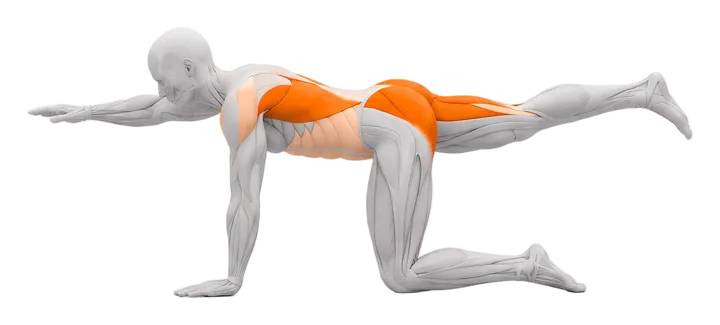 Bird dogLower back and glutes
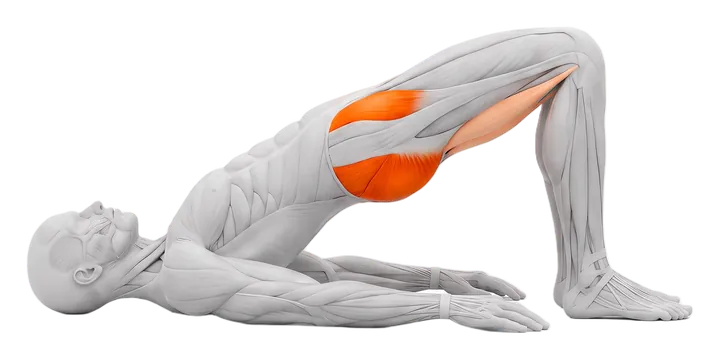 Glute bridgeGlutesGuide
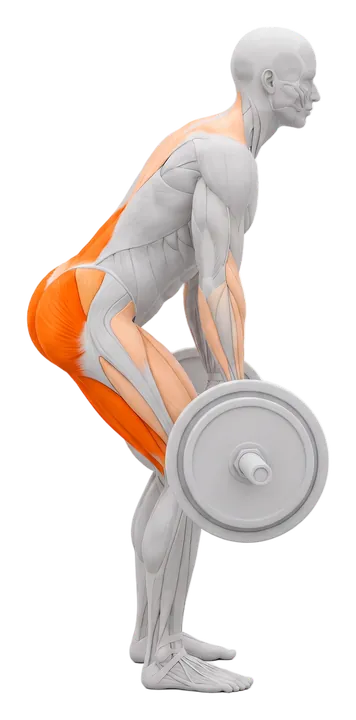 Barbell deadliftGlutes and hamstringsGuide
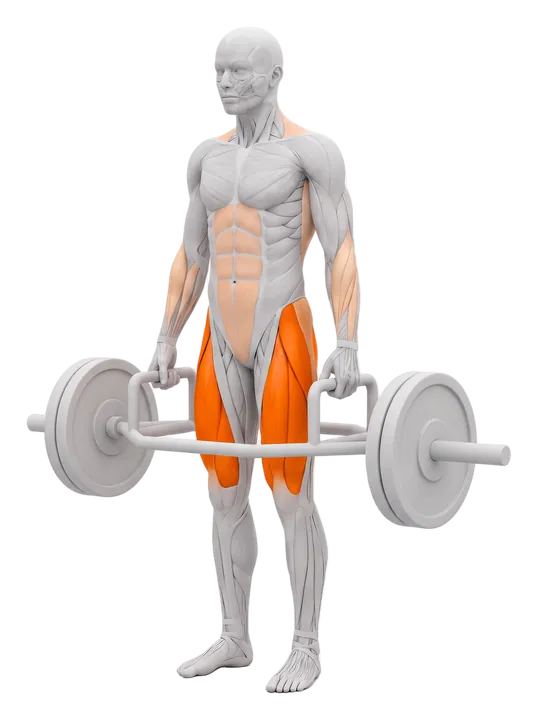 Trap bar deadliftGlutes and quadsGuide
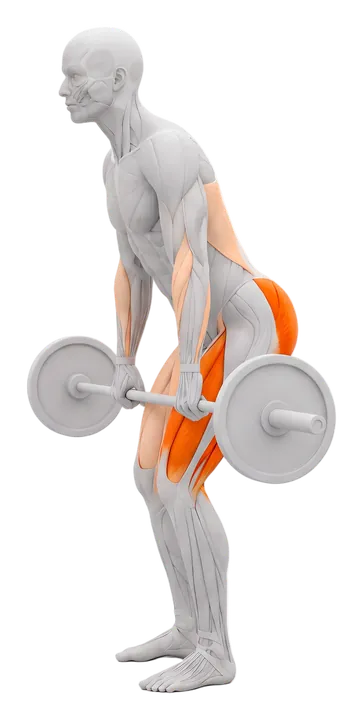 Romanian deadliftHamstrings and glutesGuide
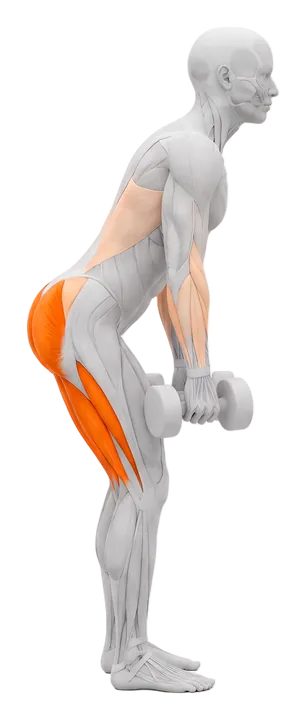 Dumbbell Romanian deadliftHamstrings and glutes