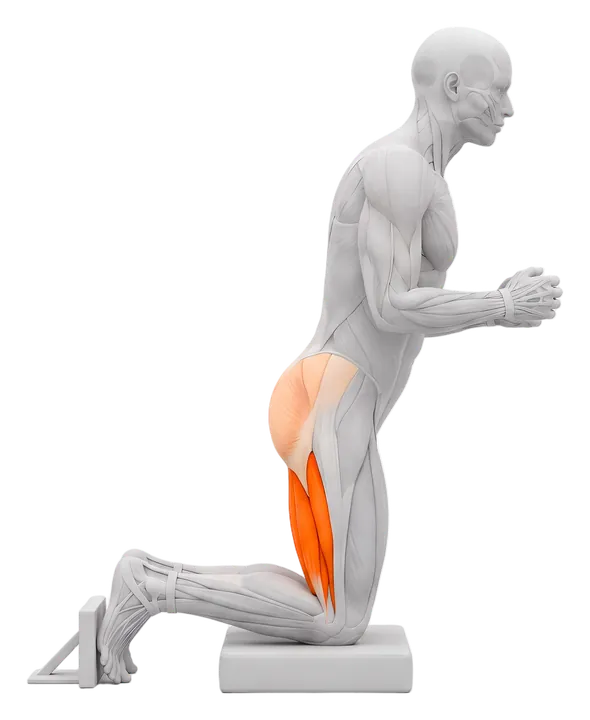
What is a nordic curl and why is it so hard?
In a normal leg curl the machine lets you pick a load that fits you. In a nordic curl the load is your own upper body, hanging off a lever that gets longer the further forward you lean. Near the bottom, your hamstrings have to hold a large part of your bodyweight with almost straight knees. That is why a lifter who curls the whole stack on a machine can still fall flat after a few centimetres the first time.
The hard part is the lowering, the eccentric phase. Most people can resist far more weight while lowering than while lifting, so the exercise is mainly trained as a slow negative. Getting back up with no help is a later goal, not the starting point.
| Muscle | What it does in the nordic | Role |
|---|---|---|
| Hamstrings (biceps femoris, semitendinosus, semimembranosus) | Brake the knee as it straightens under load | Primary |
| Glutes | Hold the hips straight so you do not fold forward | Secondary |
| Calves (gastrocnemius) | Help bend the knee, most at the start | Assist |
| Core and lower back | Keep one straight line from knees to head | Stabiliser |
Nordic curl setup: bench, strap or partner
You need two things: something soft under your knees and something that holds your heels down without moving. Any of these work:
- Nordic curl bench or attachment: a padded bench with ankle rollers, or a plate loaded nordic attachment. The most stable option and the easiest to repeat week to week.
- Lat pulldown or leg extension seat: kneel facing away and hook your heels under the thigh pad. Common in commercial gyms without a nordic bench.
- Partner: they kneel behind you and press your ankles to the floor with both hands and their bodyweight.
- Nordic curl strap at home: a strap that anchors in a closed door with a padded ankle loop.
- Without equipment: heels under a heavy sofa or a loaded barbell with a pad. Test it with a gentle lean before you trust it.
How to do a nordic hamstring curl
- Kneel tallKnees on a pad, about hip width, heels locked in. Hips fully straight, glutes squeezed, arms crossed or hands in front of the chest.
- Lean forward from the kneesStart tipping forward as one solid plank. Only the knee joint moves. Aim for a lowering of 3 to 5 seconds.
- Fight every centimetreWhen you feel you are losing control, keep resisting anyway. The last part of the fall still trains the muscle as long as you brake.
- Catch and resetLand softly in a push-up position, then push yourself back up with your arms and as little or as much help from your hamstrings as you can give.
- "Hips locked." Folding at the hips shortens the lever and turns it into a different exercise.
- "Toes tucked." Toes dug into the floor often give a firmer base than flat feet.
- "Slower than you think." A slow lowering to the point you can control beats a fast drop all the way down.
Nordic curl progression: from zero to full reps
Move on to the next stage when you can do 3 sets of the target reps with a controlled lowering through the whole range of that stage. Most people need several weeks per stage, and that is normal.
| Stage | What you do | Target before moving on |
|---|---|---|
| 1. Build the base | Lying leg curls and glute bridges, plus 2 sets of short nordic leans | 3 x 10 to 12 leg curls with a steady load |
| 2. Band assisted nordic curl | Band from a rack or anchor above you, looped around your chest | 3 x 5 slow lowers all the way down |
| 3. Partial range negatives | No band, lower as far as you can, catch with your hands | 3 x 5, control to roughly halfway |
| 4. Full negatives | Brake the whole way, push back up with your arms | 3 x 5 lowers of 4 to 5 seconds |
| 5. Small push-off | Use only a light push from the hands to start the way up | 3 x 3 to 5 |
| 6. Full nordic | Lower and curl back up with the hamstrings alone | Any clean reps are a strong result |
Two ways to make assisted nordic curls easier or harder without a new stage: use a thinner or thicker band, or lower towards a box or a stack of pads in front of you, which cuts the range. Lower the box over the weeks.
Once you can do full reps, hold a small plate across your chest or slow the lowering further. This is the progressive overload of a bodyweight exercise: more range, more time, then more load.
Common nordic curl mistakes
- Bending at the hips. The butt sticks out and the hamstrings get an easier job. Squeeze the glutes and keep the line.
- Doing too much the first time. Nordics are known for heavy soreness after the first sessions. Start with 2 sets and read about DOMS if you walk stiff for days.
- Dropping as soon as it gets hard. The hardest part is the part you need. Keep braking even when you are going down.
- A slipping anchor. Sliding feet make every rep different and unsafe.
- Training them right before sprinting or heavy hinges. Put nordics at the end of the session or on a separate day.
Sets and reps for the nordic hamstring curl
| Level | Sets x reps | Rest | How often |
|---|---|---|---|
| First 2 weeks | 2 x 3 to 5 assisted or partial | 2 min | 1 time per week |
| Building | 3 x 4 to 6 negatives | 2 min | 1 to 2 times per week |
| Advanced | 3 to 4 x 3 to 6 full or loaded | 2 to 3 min | 1 to 2 times per week |
| Maintenance | 1 to 2 x 3 to 5 | 2 min | 1 time per week |
Keep reps low and quality high. Add nordics as the last exercise on a lower day of an upper lower split, after your squat or Romanian deadlift. They pair well with the RDL because the RDL trains the hamstrings at the hip and the nordic trains them at the knee. Count them in your weekly hamstring volume; see how many sets per week.
Track the stage, not just the reps
Gripp logs every set and reps for bodyweight exercises, so you can see when you hit 3 x 5 on a stage and are ready for the next. It keeps your history per exercise and rates your hamstring strength against people of your age and bodyweight.
Join the waitlistNordic curl vs glute ham raise
A glute ham raise (GHR) is done on a special bench where your thighs rest on a curved pad and your feet push against a plate. The hips can bend and the pad supports part of your weight, so most people can do full reps on a GHR long before a full nordic. A nordic on the floor is harder at the bottom because nothing supports your thighs. If your gym has a GHD bench, a nordic on the GHD is a nice middle step: hook the feet, kneel on the pad and lower with straight hips.
Nordic curl alternatives
- Lying or seated leg curl: the machine version of knee flexion, easy to load in small steps.
- Slow eccentric leg curl: lift with two legs, lower with one over 4 seconds. Closest to the nordic on a machine.
- Swiss ball or slider curl: a home option where you curl your heels in from a glute bridge.
- Glute ham raise: similar work with more support.
- Single leg Romanian deadlift: trains the hamstrings at the hip instead, see the single leg RDL guide.
For a complete plan for the back of the legs, combine one knee bending exercise and one hinge in your leg workout, or check the hinge options on the back extension page.
Similar exercises
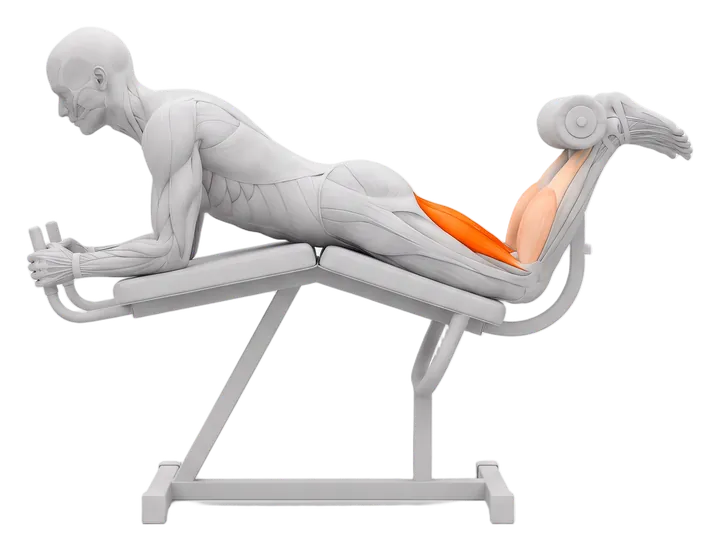 Lying leg curlHamstringsGuide
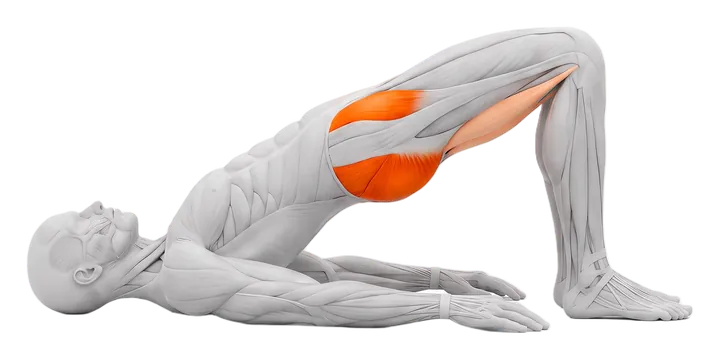 Glute bridgeGlutesGuide
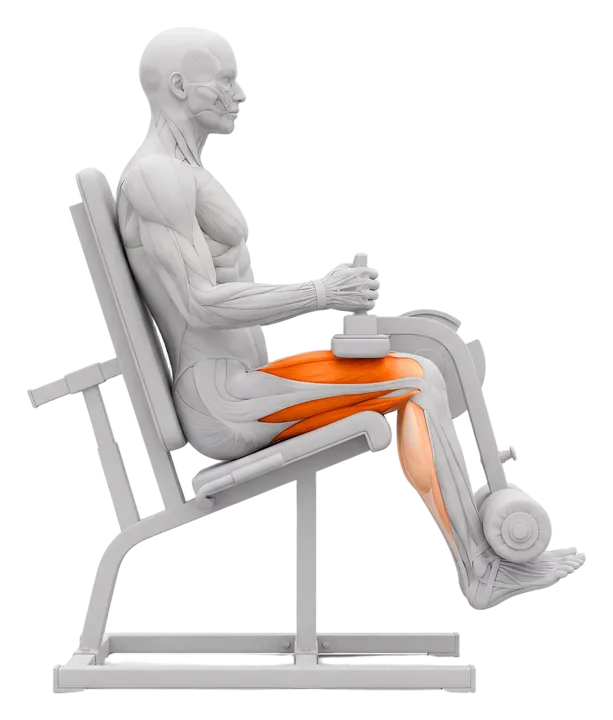 Seated leg curlHamstrings
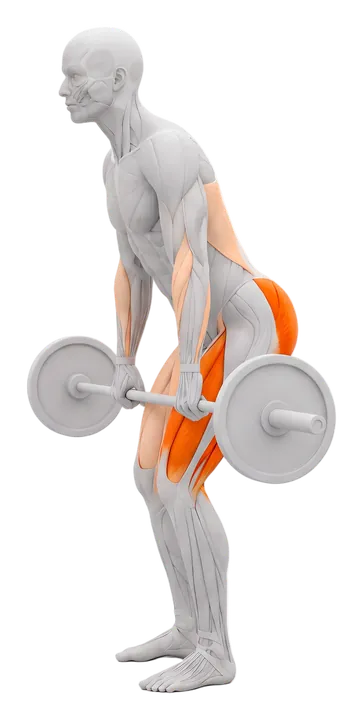 Romanian deadliftHamstrings and glutesGuide
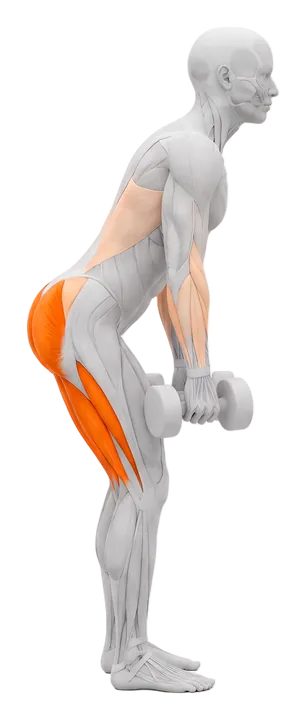 Dumbbell Romanian deadliftHamstrings and glutes
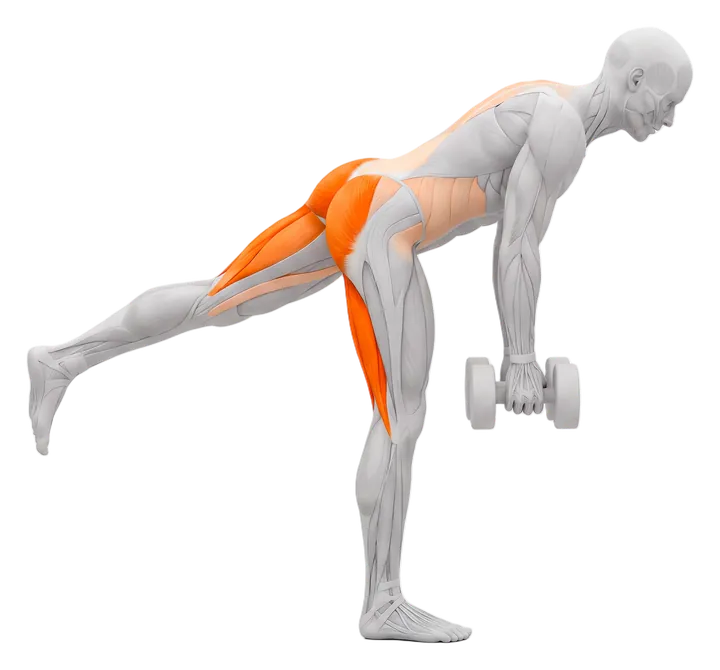 Single-leg Romanian deadliftHamstrings and glutesGuide