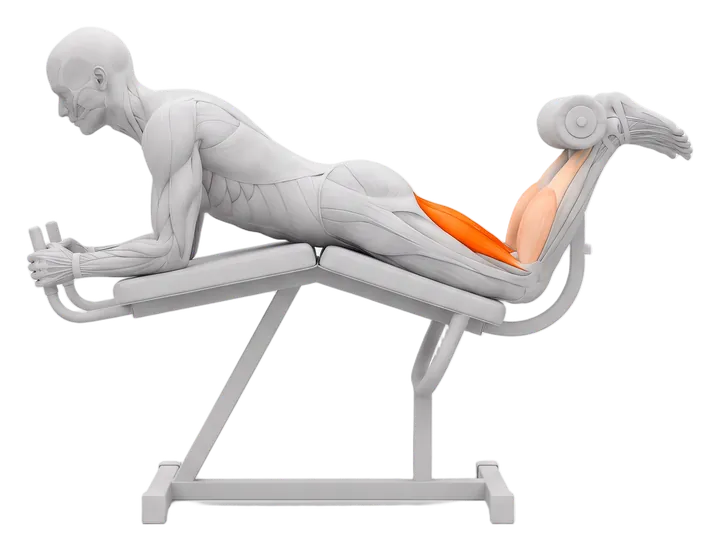
What muscles does the leg curl work?
| Muscle | Role | How much |
|---|---|---|
| Biceps femoris (long and short head) | Bends the knee, outer back thigh | Primary |
| Semitendinosus | Bends the knee, inner back thigh | Primary |
| Semimembranosus | Bends the knee, inner back thigh | Primary |
| Calves (gastrocnemius) | Help bend the knee, more with toes pulled up | Secondary |
The hamstrings cross both the hip and the knee. A Romanian deadlift trains them by extending the hip; a leg curl trains them by bending the knee. The short head of the biceps femoris only crosses the knee, so hinges barely touch it, while curls do. That is why most well built plans have one of each.
How to do a lying leg curl
- Set the machineLie face down with your knees just off the end of the bench, lined up with the machine's pivot point. Set the ankle pad so it sits just above your heels, on the lower calf or Achilles area, not on the heel itself.
- Pin your hips downGrip the handles and press your hips into the pad. Many lying machines have a bend in the bench so the hips sit slightly flexed, which helps.
- Curl upBend your knees and pull the pad as close to your glutes as you can without your hips lifting. Keep your feet flexed, toes pulled towards your shins.
- Squeeze brieflyHold the top for a moment.
- Lower slowlyTake two to three seconds back to nearly straight legs. Keep a tiny bend at the bottom instead of snapping the knees straight.
Hamstring curl form cues
- "Hips heavy." If the hips rise, the lower back is helping and the hamstrings are doing less.
- "Heels to butt." Aim for a full curl, even if the weight has to drop.
- "Toes up." Pulling the toes towards the shins lets the calves help and usually gives a stronger curl. Pointing them takes the calves out and makes it harder.
- "Count three on the way down." The lowering is where most people rush.
Lying vs seated leg curl
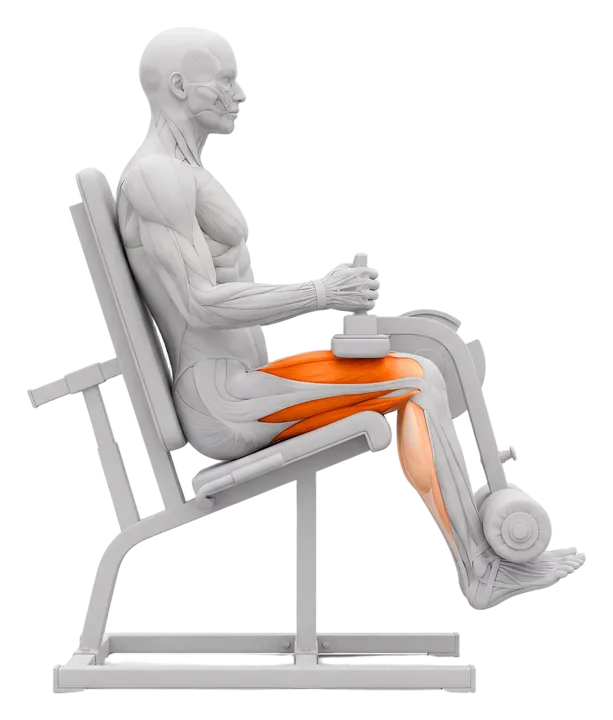
Both machines bend the knee; the difference is the hip angle. In the seated leg curl the hip is bent, so the hamstrings start from a longer, more stretched position. In the lying leg curl the hip is nearly straight. Either one fits into a leg machine workout.
| Lying leg curl | Seated leg curl | |
|---|---|---|
| Hip position | Nearly straight | Bent about 90 degrees |
| Hamstring length | Shorter | Longer, more stretch |
| Main challenge | Keeping the hips down | Keeping the thighs locked under the pad |
| Feels like | Harder squeeze at the top | Stronger stretch at the bottom |
| Good for | Gyms with only this machine, hip friendly | Hamstring growth, comfortable setup |
If your gym has both, the seated version is a strong first choice for size because it works the hamstrings in a lengthened position, and the lying version is a fine way to rotate. If you only have one, use it: the setup and the effort matter more than which machine you are on. For the seated curl, line your knee up with the pivot, lock the thigh pad down firmly and pull your heels under the seat.
Nordic hamstring curl: the hard version
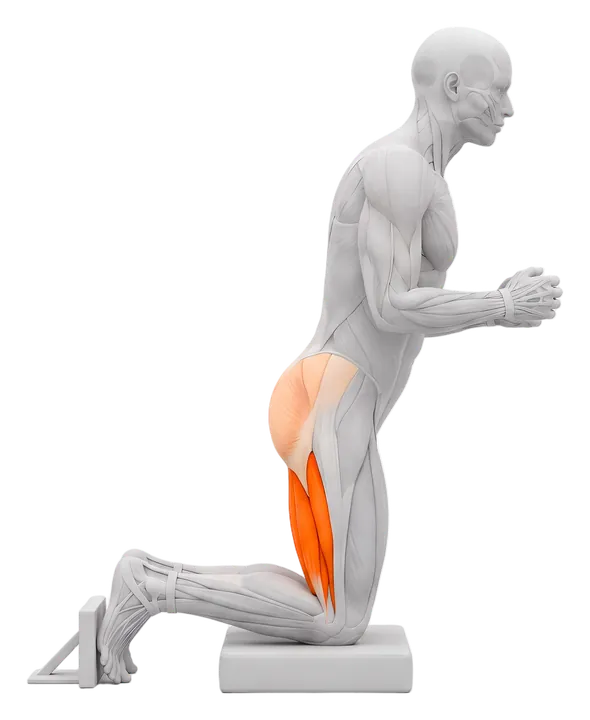
The nordic curl is done kneeling on a pad with your ankles held down by a partner, a bar or a nordic bench. You lower your body forward as slowly as you can with straight hips, catch yourself with your hands, and push back up. It is mostly a lowering (eccentric) exercise, and even strong lifters often cannot control the whole range at first.
- Start with 2 to 3 sets of 3 to 5 slow lowers, using your hands to push back to the top.
- Keep the line from knees to shoulders straight. Bending at the hips makes it easier but takes away the point.
- Each week, try to control the lowering a little further before you fall forward.
- Use a band anchored above you around your chest to assist if you cannot control any range yet.
Nordics are very hard on the hamstrings and often cause strong soreness the first few times. Start with low volume, and read about DOMS if your legs are stiff for days.
Hamstring curl without a machine
- Swiss ball leg curl: lie on your back with heels on a ball, lift the hips and roll the ball in with your heels. Keep the hips up the whole set. One leg at a time is a big step up.
- Slider leg curl: the same idea with towels or sliders on a smooth floor.
- Band hamstring curl: lying face down with a band anchored in front of you, or standing with a band around one ankle.
- Dumbbell leg curl: a dumbbell held between the feet while lying face down on a bench. Start light; it can slip.
- Nordic curl: feet hooked under a sofa or a secured bar.
Common leg curl mistakes
- Hips coming up. On the lying curl this is the most common error. Drop the weight.
- Pad on the heel or the calf muscle. It slides and changes the leverage. Aim for just above the heel.
- Half reps. Not curling up fully, or not lowering far enough, skips the hardest positions.
- Yanking the weight. A fast start and a dropped stack turn the set into momentum.
- Cramping. Very common in the hamstrings. Stop, stretch gently and go a bit lighter.
Sets and reps for the hamstring curl
| Goal | Sets x reps | Rest | Notes |
|---|---|---|---|
| Hamstring growth | 3 x 8 to 12 | 90 s | Seated or lying, 1 to 2 reps short of failure |
| Finisher | 2 x 12 to 15 | 60 to 90 s | Slow lowering |
| Nordic curl | 2 to 3 x 3 to 6 | 2 min | Control the way down |
| Beginner | 2 x 10 to 12 | 90 s | Machine, learn to keep hips down |
Pairing the leg curl with the RDL
A simple way to cover the hamstrings fully is one hinge and one curl in the same week, or the same session. A typical lower day could be squats or a leg press, then the Romanian deadlift, then the seated leg curl. On a push pull legs split you can put the RDL on one leg day and nordic curls on the other. Pair the curl with a leg extension as a superset at the end to save time. More options are in the leg workout guide.
How to progress the hamstring curl
On the machine, work up a rep range first, then add the next plate. Leg curl stacks are small enough that a 2.5 to 5 kg (5 to 10 lb) step usually works. Nordics progress by range: control a few degrees further before adding reps or a pause. See progressive overload for the system behind it.
Gripp tells you when to add a plate
Log your leg curls and Gripp shows last session's weight and reps next to today's target. Hit the top of your range in every set and it suggests more weight. It keeps an estimated max on a chart and rates your hamstrings against people of your age and bodyweight.
Join the waitlistLeg curl alternatives
- Romanian deadlift: hamstrings through the hip, heavy and stretched.
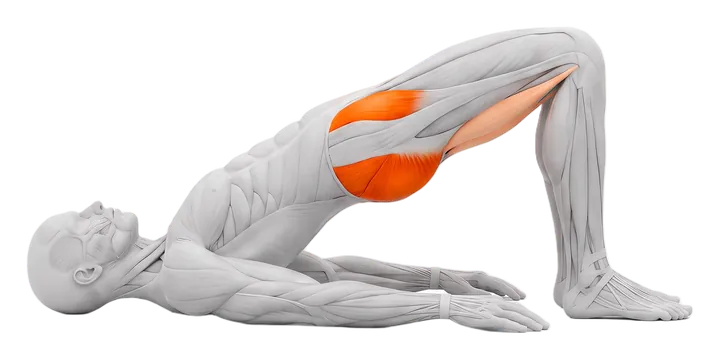
- Glute bridge with feet far out: a light hamstring and glute option at home.
- Swiss ball or slider curl: knee bending with no machine.
- Nordic curl: the hardest bodyweight hamstring exercise.
- Cable leg curl: standing with an ankle strap on a low pulley.
Similar exercises
 Seated leg curlHamstrings
 Glute bridgeGlutesGuide
 Nordic hamstring curlHamstringsGuide
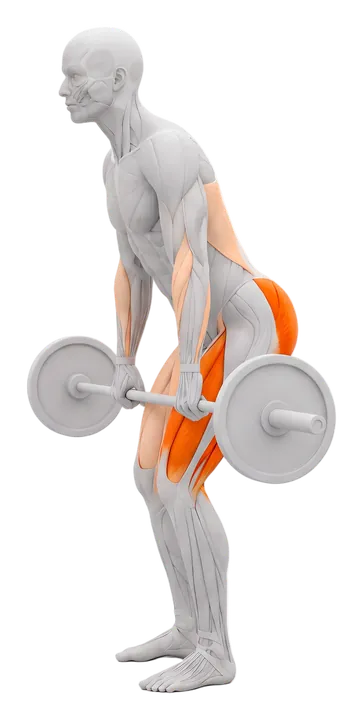 Romanian deadliftHamstrings and glutesGuide
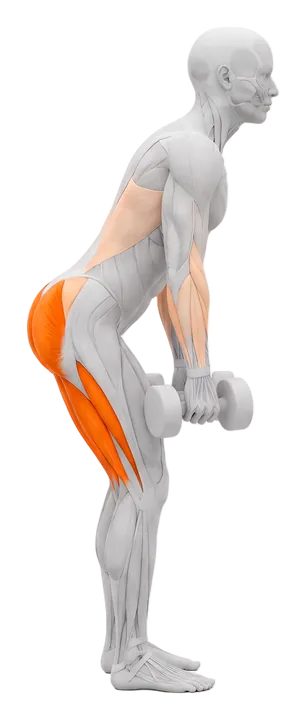 Dumbbell Romanian deadliftHamstrings and glutes
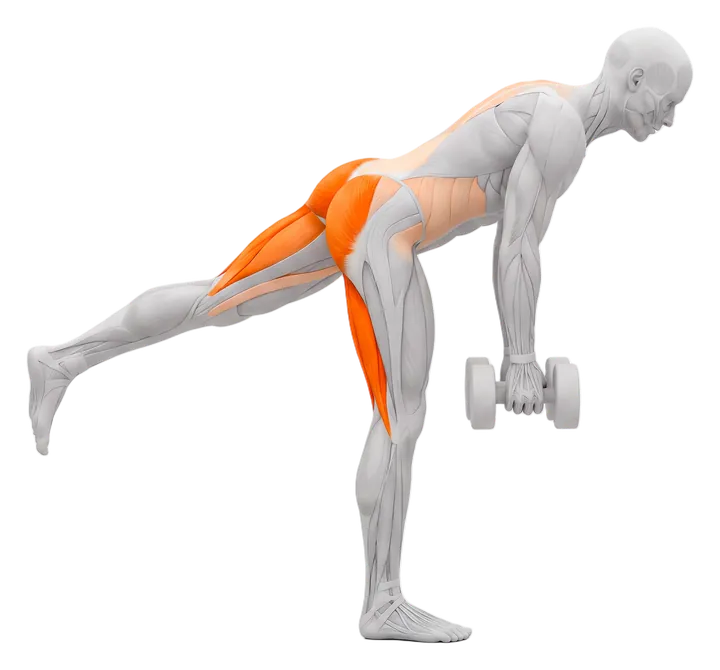 Single-leg Romanian deadliftHamstrings and glutesGuide