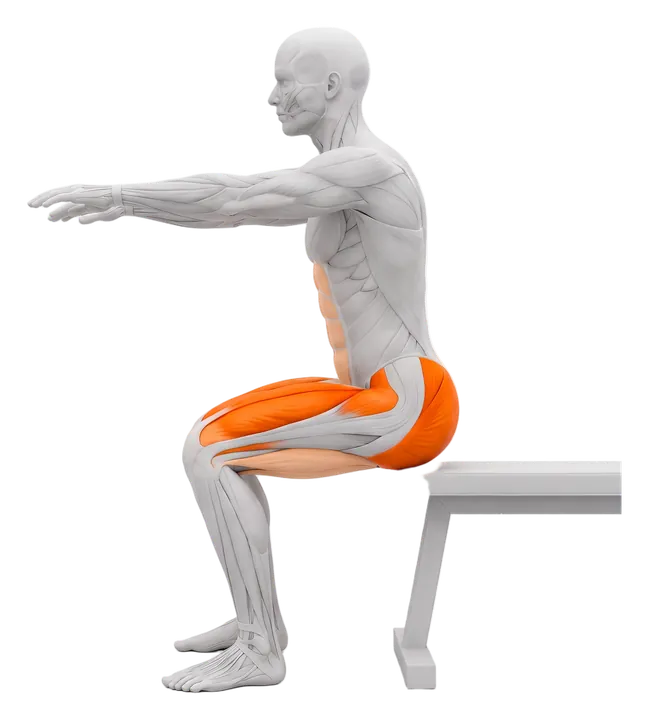
What is a box squat good for?
The box does three jobs. It tells you when you are deep enough, it removes the bounce at the bottom so you have to start the drive from a dead stop, and it gives you something to sit on if a rep feels wrong. Those three things explain most of the box squat benefits:
- Consistent depth. Every rep goes to the same height, so you can compare sets week to week honestly.
- Confidence for new lifters. Knowing there is a seat behind you makes it easier to sit back and down without fear of falling.
- Strength from a dead stop. The pause kills the stretch reflex, so the hips and legs must create force from zero.
- Adjustable range for sore knees. A higher box means less knee bend. You can lower it a little at a time as the knee tolerates more.
- A hip-dominant option. A wider stance and a more vertical shin load the glutes, hamstrings and adductors more than a knees forward squat.
The barbell version was popularised in powerlifting, where lifters use it to build hip strength for a wide stance squat. For most gym-goers the bodyweight and goblet versions are the bigger win: they turn a scary movement into a repeatable one.
Box squat muscles worked
| Muscle | Role | How much |
|---|---|---|
| Quadriceps | Straighten the knee as you stand | Primary |
| Glutes | Extend the hip off the box, more with a wide stance | Primary |
| Adductors | Help drive up from the seated position | Secondary |
| Hamstrings | Hold tension as you sit back | Secondary |
| Abs and lower back | Stay braced through the pause | Stabiliser |
How to do a box squat
- Set up the boxPlace a stable box or flat bench behind you. Stand close enough that the back of your thighs touch the edge when you sit. Feet a little wider than for a normal squat, toes out slightly.
- BraceTake a breath into the belly and tighten your trunk. If you use a barbell, unrack it in a squat rack and walk back to the box.
- Sit back and downPush the hips back, keep the shins close to vertical and lower under control until you touch the box. Do not drop onto it.
- Pause without relaxingSit for about one second. Keep your trunk braced and your feet active; only the hips relax a little onto the box.
- Drive upPush your feet into the floor, spread the knees and stand up. Do not rock forward to gain momentum.
Box squat box height
The right box squat box height is the one that puts you at the depth you actually want to train. Measure it by where the crease of your hip sits relative to the top of your knee when you are seated.
| Box height | Depth it gives | Use it for |
|---|---|---|
| High, above knee level | Shallow squat | Knee rehab, first squat sessions, older beginners |
| Parallel, hip crease level with knee | Standard powerlifting depth | Strength work, most barbell box squats |
| Below parallel | Deep squat | Mobility and hip strength once parallel is easy |
An ordinary gym bench is around 40 to 45 cm (16 to 18 in) high, which puts many people of average height close to parallel. Taller lifters can stack a plate or a thick mat on top; shorter lifters may need a lower step. Adjustable boxes with stacking pads exist, but a bench and some bumper plates do the same job. Whatever you use, it must not slide or tip.
Box squat cues
- "Reach back with your hips." The first movement is the hips going back, not the knees going forward.
- "Touch, don't crash." Land as softly as if the box were made of glass.
- "Stay tight on the seat." Keep the brace through the pause; going fully loose and then tensing again is how backs get tweaked.
- "Knees out." Push the knees towards your little toes as you stand.
- "Chest and hips together." Your torso angle should be the same leaving the box as it was arriving.
Box squat mistakes
- Plopping onto the box. Dropping the last few centimetres compresses the spine under load. Control the whole way down.
- Rocking forward to stand. Using a swing from the torso to get off the box hides weak legs and turns the lift into something else.
- Box too far away. If you have to reach for it, you lose balance and lean back. Put the box where your hips naturally land.
- Box too high forever. A high box is a starting point. Lower it once the movement is easy and pain free.
- Soft or wobbly surface. Gym boxes with foam tops or stacked steps can shift. Test the box with bodyweight first.
Box squat variations
| Variation | Load | Who it suits |
|---|---|---|
| Bodyweight box squat | None, arms forward for balance | Beginners, rehab, older adults |
| Goblet box squat | Dumbbell or kettlebell at the chest | Learning to stay upright with load |
| Dumbbell box squat | Dumbbells at the sides | Home training, easy to bail |
| Barbell box squat | Bar on the upper back in a rack | Strength, powerlifters |
| Front box squat | Bar in the front rack | Quad focus with depth control |
| Single leg box squat | Bodyweight, one leg | Balance, single leg strength, rehab progressions |
| Smith machine box squat | Bar on a fixed track | Training alone without a spotter |
Single leg box squat
Stand on one leg in front of a box, the other leg held out in front, and sit down slowly until you touch. Stand back up on the same leg. Start with a high box and lower it over the weeks. It is a stepping stone to a full pistol squat, and a test of whether both legs are equally strong.
Box squat jumps
Sit to the box, pause, then jump up explosively. Land softly, reset and repeat. Keep sets short, 3 to 5 jumps, and do them early in the session while you are fresh.
Box squat vs regular squat
A regular back squat uses the bounce out of the bottom and lets depth vary a little from rep to rep. The box squat removes both. That makes it a great teaching and strength tool, but the regular squat is still the lift that carries over most directly to heavy squatting. If you want a variation that hits the quads harder instead, try the front squat.
| Box squat | Regular squat | |
|---|---|---|
| Depth | Fixed by the box | Set by you each rep |
| Bottom position | Pause, no bounce | Continuous, uses the stretch |
| Shin angle | More vertical | Knees travel further forward |
| Load | Usually lighter for the same reps | Heavier |
| Best use | Learning, depth control, bottom strength, rehab | Main strength and size lift |
If the regular squat already feels good, use the box squat as a variation for a training block. If you cannot yet squat to a consistent depth without pain or fear, start with the box and move to a free squat or a goblet squat when the box no longer feels necessary.
Sets and reps for the box squat
| Goal | Sets x reps | Rest | Notes |
|---|---|---|---|
| Beginner, bodyweight | 2 to 3 x 10 to 15 | 60 to 90 s | Lower the box when 15 reps feel easy |
| Rehab | 2 to 3 x 8 to 15 | 60 to 90 s | High box, slow lowering, pain free range only |
| Muscle growth | 3 to 4 x 8 to 12 | 90 s to 2 min | Goblet or barbell |
| Strength | 5 to 8 x 2 to 3 | 1 to 2 min | Barbell, parallel box, crisp reps |
The bodyweight box squat follows a reps first approach: add reps until you reach the top of the range, then make it harder by lowering the box, adding a dumbbell or slowing the lowering. That is double progression applied to a box, and it works just as well for loaded versions. A box squat fits into any leg workout as the main squat for beginners or as a second squat for experienced lifters.
Gripp knows when to make the box squat harder
Log your reps on the box and Gripp tells you what to aim for next time. Once you top the rep range in every set, it moves you on to a harder version. Rehab can be your goal in Gripp, and every rep you log shows up on your progress chart.
Join the waitlistBox squat alternatives
- Wall sit: a static hold at a fixed knee angle, very gentle on sore knees.
- Glute bridge: trains hip extension lying down; see the glute bridge guide.
- Goblet squat: the next step once you no longer need the box.
- Leg press: load the legs with depth set by the machine stops.
- Step-up: single leg work with a box you already have. See step ups.
Similar exercises
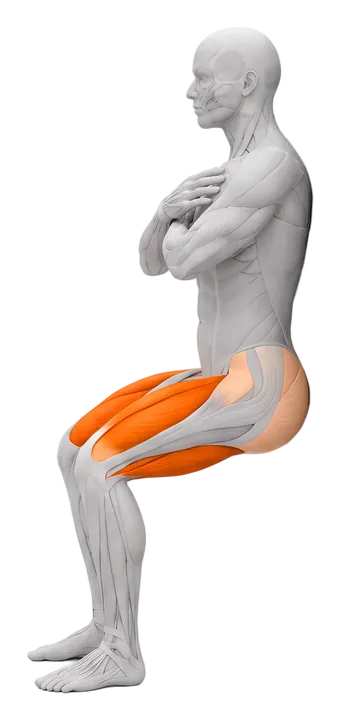 Wall sitQuads
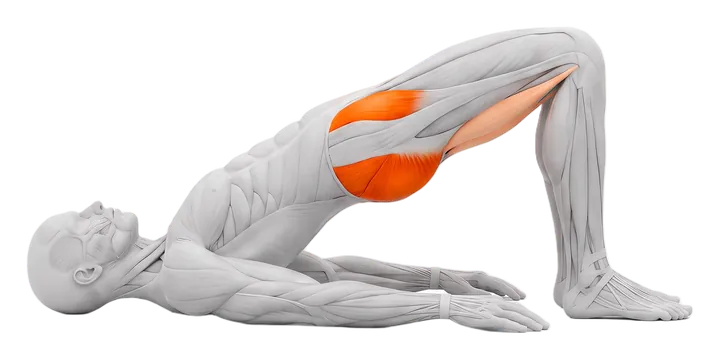 Glute bridgeGlutesGuide
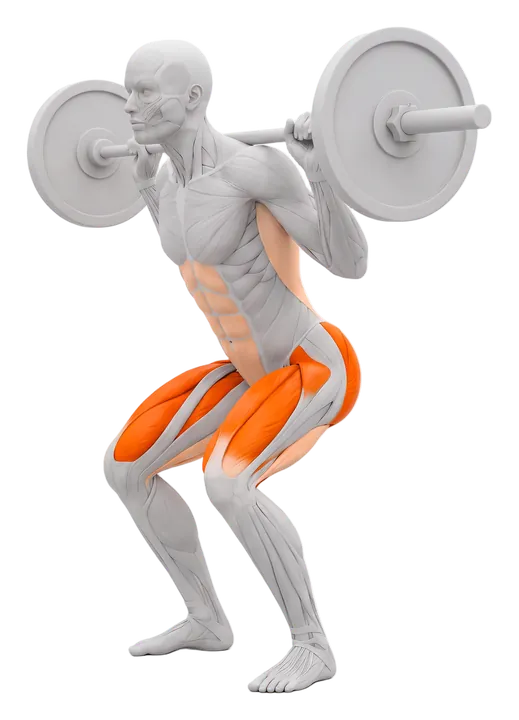 Barbell back squatQuads and glutesGuide
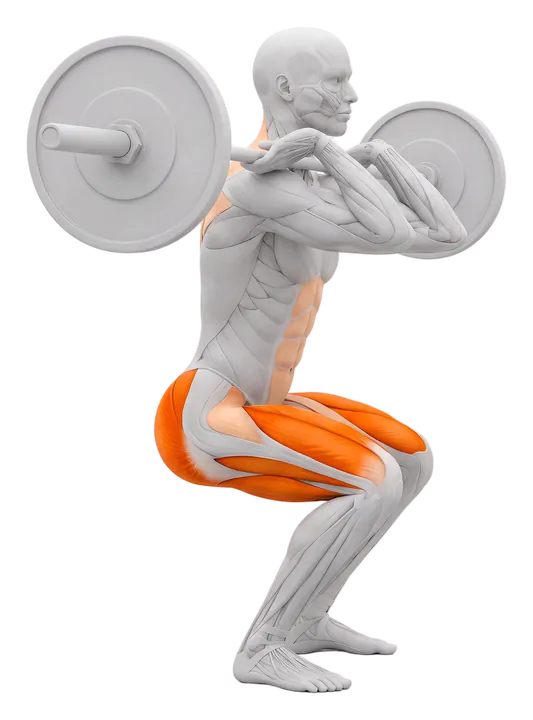 Barbell front squatQuads and glutesGuide
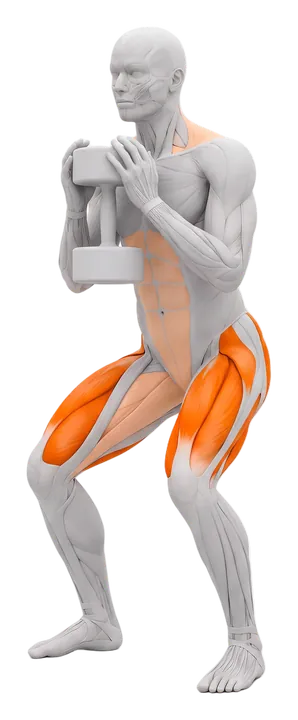 Goblet squatQuads and glutesGuide
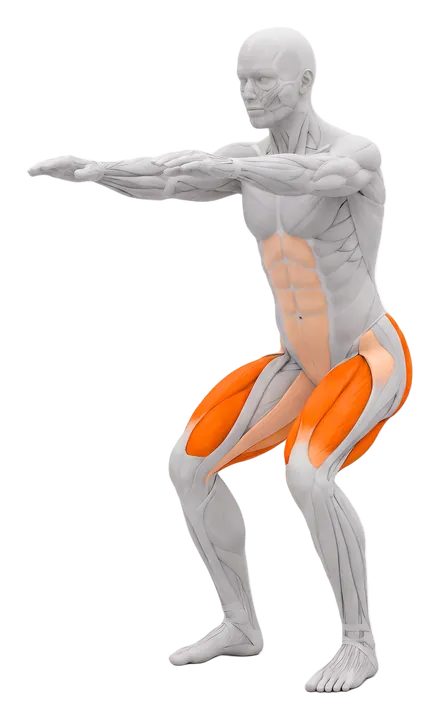 Bodyweight squatQuads and glutes