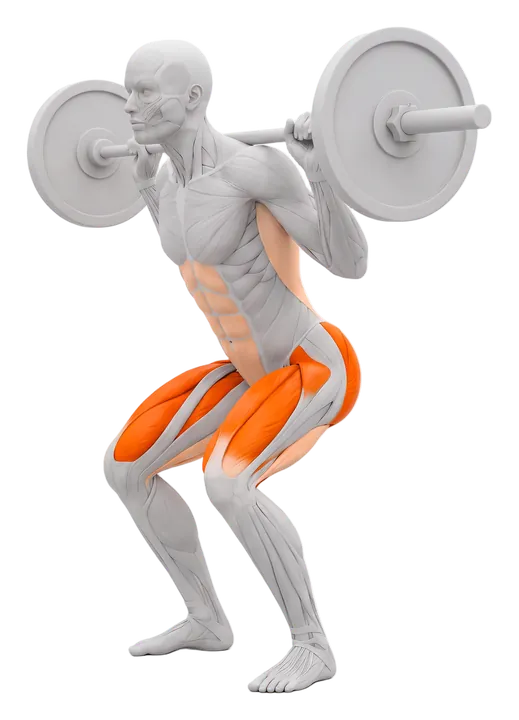
Back squat muscles worked
| Muscle | What it does in the squat | Role |
|---|---|---|
| Quadriceps | Straighten the knee on the way up, hardest out of the bottom | Primary |
| Gluteus maximus | Extends the hip, works most in the deep part of the rep | Primary |
| Adductors | Help extend the hip from deep positions and keep the knees tracking | Primary |
| Hamstrings | Stabilise the knee and hip, assist a little | Secondary |
| Lower back (erectors) | Hold the spine neutral under the bar | Secondary |
| Abs and obliques | Create the brace that keeps the torso stiff | Secondary |
Because the squat loads the whole lower body at once, it is usually the first exercise of a leg workout, done while you are fresh. Smaller exercises such as the leg extension or the Bulgarian split squat come after it.
How to squat with a barbell
- Set the rack heightPut the J-hooks at about the height of your armpit or lower chest, so you unrack with a slight knee bend and never have to stand on your toes. Set the safety pins just below the bottom of your squat.
- Get under the barGrip the bar a little wider than your shoulders, step under it and squeeze your shoulder blades together so the upper back forms a shelf. Place the bar on that shelf (see high bar and low bar below), with your elbows pointing down and back.
- Unrack and walk outStand up with the bar, take two or three short steps back and stop. Feet about shoulder width or slightly wider, toes turned out somewhere between 15 and 30 degrees.
- Breathe and braceTake a big breath into your belly, then tense your midsection as if someone were about to push you in the stomach. Hold that breath through the hardest part of the rep.
- Sit downBend hips and knees at the same time. Push your knees out over your toes and keep the bar over the middle of your foot. Go down under control until your hip crease is at or below the top of your knee, or as deep as you can keep a neutral back.
- Stand upDrive the floor away with your whole foot and lead with your chest, so hips and shoulders rise at the same speed. Breathe out near the top, take a new breath and brace again before the next rep.
How deep should you squat?
For most people the target is parallel or slightly below: the crease of your hip ends up level with or lower than the top of your knee. That is the depth required in powerlifting, and it trains the glutes and adductors through a longer range than a half squat. Going deeper is fine as long as your lower back stays neutral and you can control the bottom.
If your lower back rounds and your pelvis tucks under at the bottom (often called butt wink), stop a few centimetres higher for now. A slightly wider stance, more toe angle or shoes with a raised heel help many people reach depth. Film a set from the side at hip height, since depth almost always feels deeper than it is.
High bar vs low bar squat
| High bar | Low bar | |
|---|---|---|
| Bar position | On top of the upper traps, below the neck bone | Lower, across the rear delts on the shoulder blades |
| Torso | More upright | Leans further forward |
| Knees | Travel further forward | Stay further back |
| Muscles | More quads | More hips and back, often slightly heavier loads |
| Shoulders and wrists | Easier for most people | Needs more shoulder mobility, wrists can get sore |
| Typical users | Weightlifters, general strength and muscle training | Many powerlifters and strength programs |
Neither is the correct one. If you are new, start with the high bar position: it is easier to learn, feels natural and transfers well to the goblet squat and front squat. Try low bar if you want to compete or follow a program that asks for it. Pick one and stick with it, because the numbers are not directly comparable.
Back squat form cues
- "Big breath, then brace." Breathe in before you move, not halfway down.
- "Whole foot." Big toe, little toe and heel all stay on the floor. If your heels lift, your weight is too far forward.
- "Knees out." Knees follow the line of your toes, on the way down and on the way up.
- "Chest up out of the hole." Hips and shoulders rise together, so the squat does not turn into a good morning.
Common squat mistakes
- Knees caving in. Common on the way up when the weight is heavy. Reduce the load and think about pushing the floor apart with your feet.
- Hips shooting up first. The chest drops and the lower back takes over. Usually a sign that the quads are the weak link or the weight is too heavy.
- Cutting depth as the weight goes up. If your squat gets higher every week, the weight is ahead of you. Keep the same depth on every rep you log.
- Losing the brace at the bottom. Relaxing in the hole lets the spine move. Hold your breath until you are past the hardest point.
How to find your working weight
Start with the empty bar, usually 20 kg (45 lb), and do a set of 5. Add weight in steps of 10 to 20 kg (25 to 45 lb), doing 3 to 5 reps per step, until a set of 5 feels like you have 2 to 3 more reps left. That is your first working weight. It should feel easy enough that every rep looks the same.
If you already know a recent heavy set, type it into the 1RM calculator to estimate your max, then work with about 75 to 85 percent of it for sets of 5 to 8. The squat calculator does the same for squat specifically. Want to know how much you should be able to squat? That depends on bodyweight, age and sex, and the squat strength standards page shows typical levels from beginner to elite.
Back squat sets and reps
| Goal | Sets x reps | Rest | Effort |
|---|---|---|---|
| Strength | 3 to 5 x 3 to 6 | 3 to 5 min | 1 to 3 reps in reserve |
| Muscle growth | 3 to 4 x 6 to 10 | 2 to 3 min | 1 to 2 reps in reserve |
| General fitness | 2 to 3 x 6 to 10 | 2 min | 2 to 3 reps in reserve |
| Learning the lift | 3 to 5 x 5 with light weight | 2 min | Every rep identical |
Squat two or three times a week as a beginner, once or twice when you are more advanced. A full body workout or StrongLifts 5x5 puts the squat in almost every session, while an upper lower split gives it the first slot on each lower day.
Front squat vs back squat and other alternatives
The front squat holds the bar on the front of your shoulders. It forces a more upright torso, works the quads and upper back harder and loads the lower back less, but most people front squat noticeably less weight. Use the back squat to move the heaviest loads and the front squat as a second leg exercise or a swap when your back needs a break.
- Goblet squat: one dumbbell held at the chest. The best way to learn the squat pattern.
- Leg press: heavy quad work without a bar on your back.
- Box squat: sit back to a box at a set depth, useful for consistent depth and for sore knees.
- Bulgarian split squat: one leg at a time, light load, hard on the quads and glutes.
How to progress the squat
The squat responds well to small, regular steps. Use double progression: pick a rep range, for example 3 sets of 5 to 8, and add reps each session at the same weight. When every set reaches 8 with good depth, add 2.5 to 5 kg (5 to 10 lb) and start again at 5. The progressive overload guide explains why this works for years, not weeks.
Gripp tells you what to squat next
Log every squat set in Gripp and it shows the target for next session: "last time 7 reps at 105 kg, today go for 8." Hit the top of your range in every set and the weight goes up. Your estimated 1RM is charted over time, and your leg strength is rated against people of your age and bodyweight.
Join the waitlistSimilar exercises
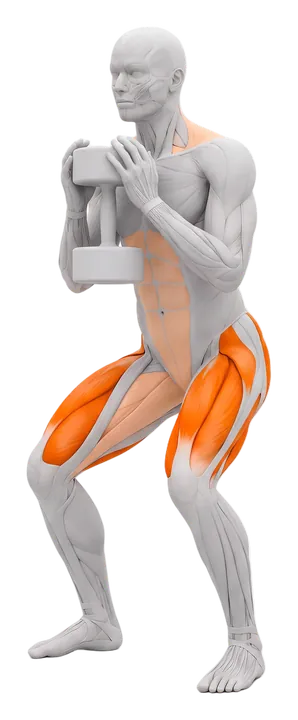 Goblet squatQuads and glutesGuide
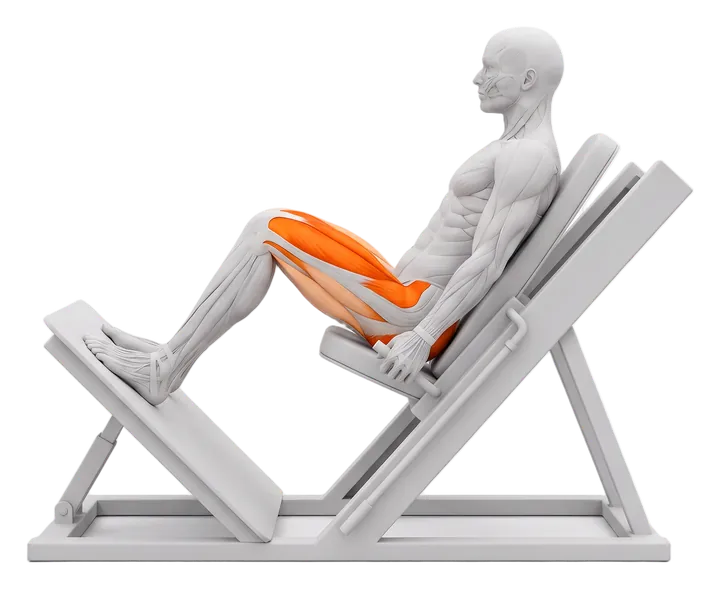 Leg pressQuads and glutesGuide
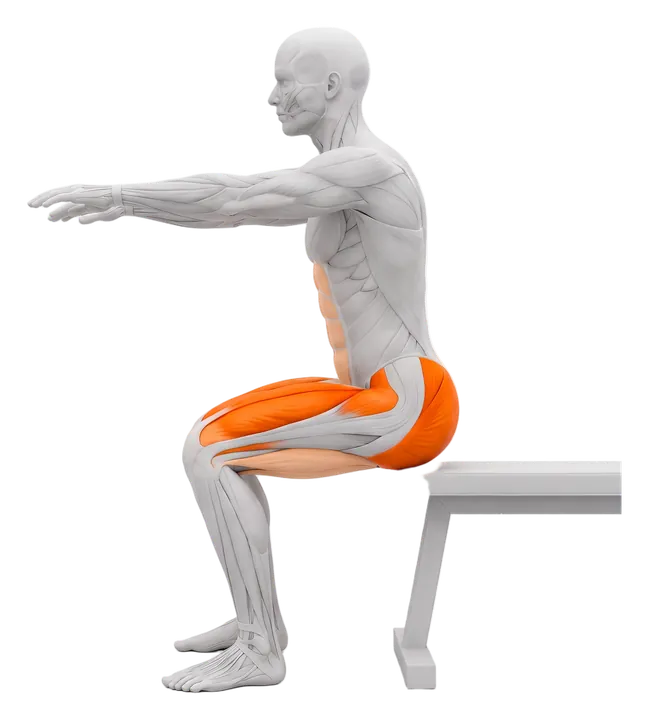 Box squat to benchQuads and glutesGuide
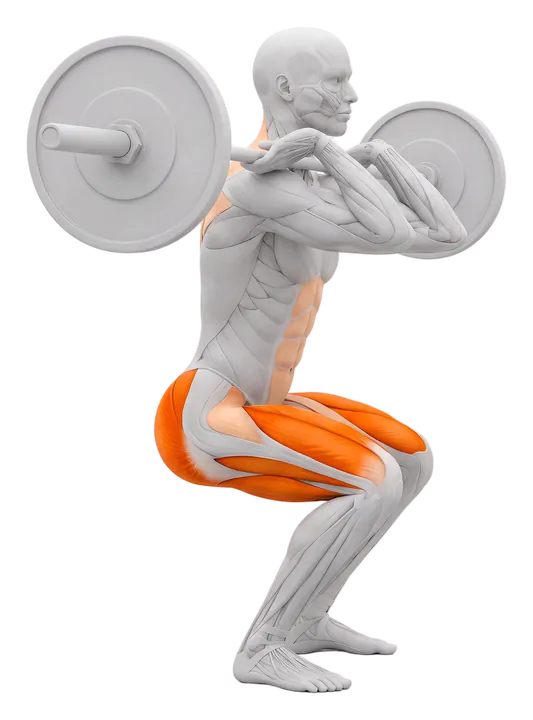 Barbell front squatQuads and glutesGuide
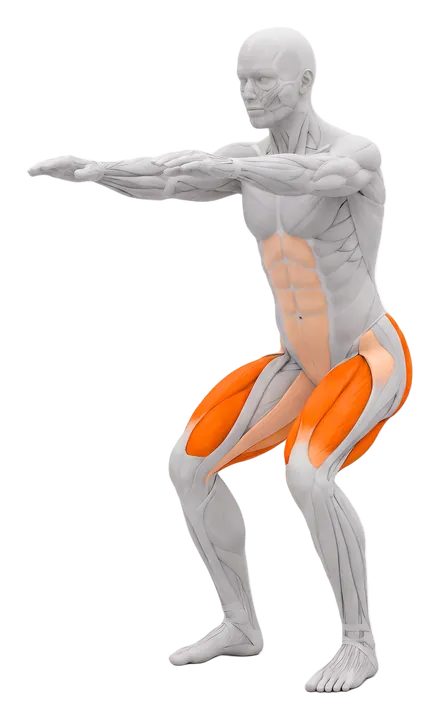 Bodyweight squatQuads and glutes
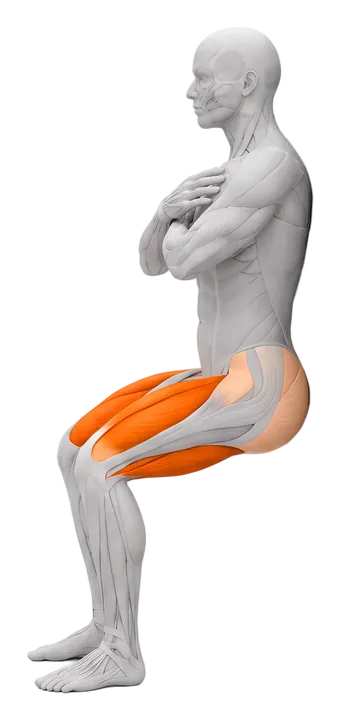 Wall sitQuads