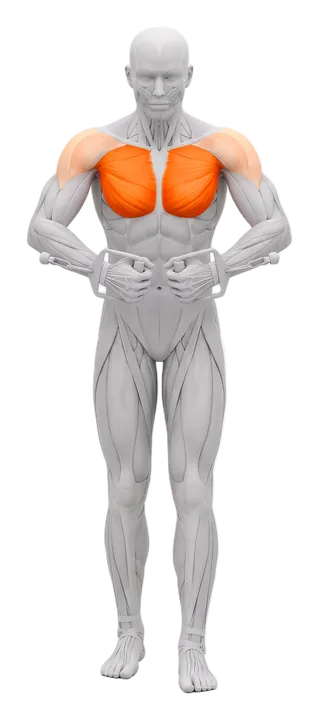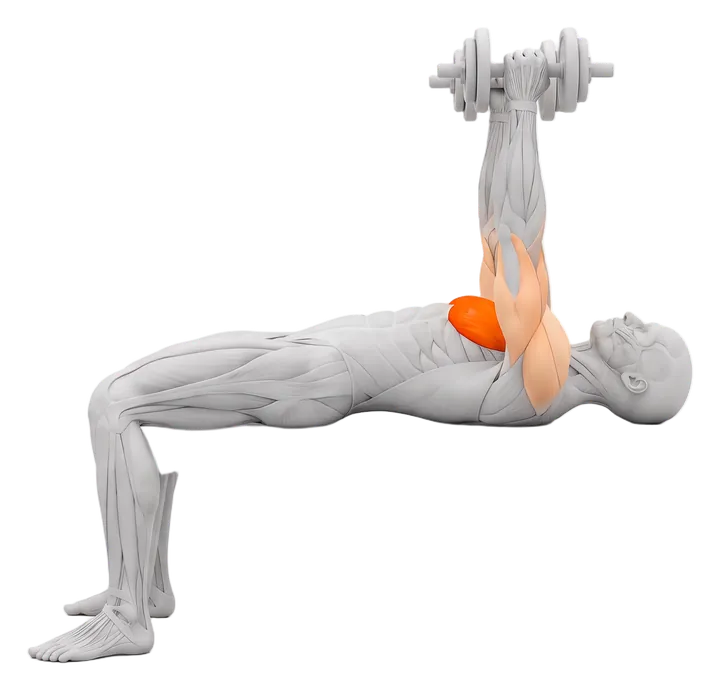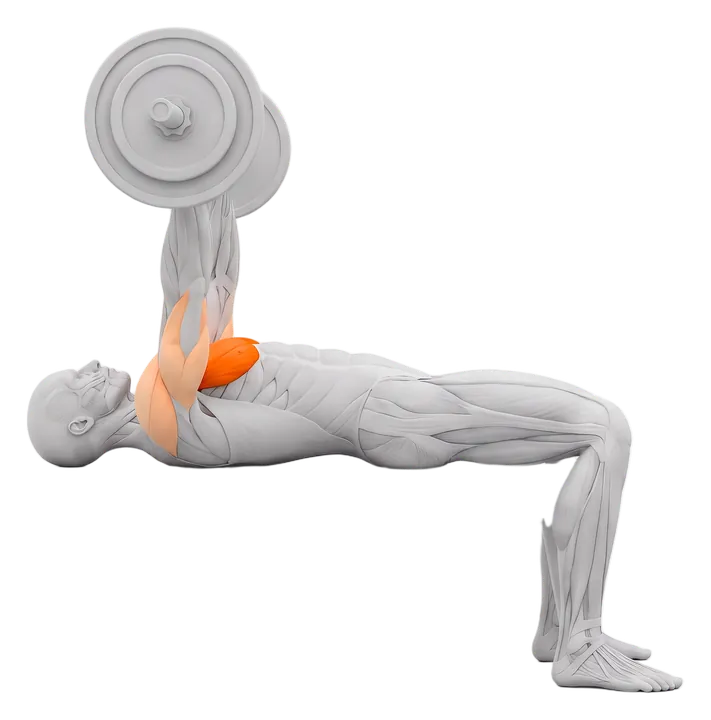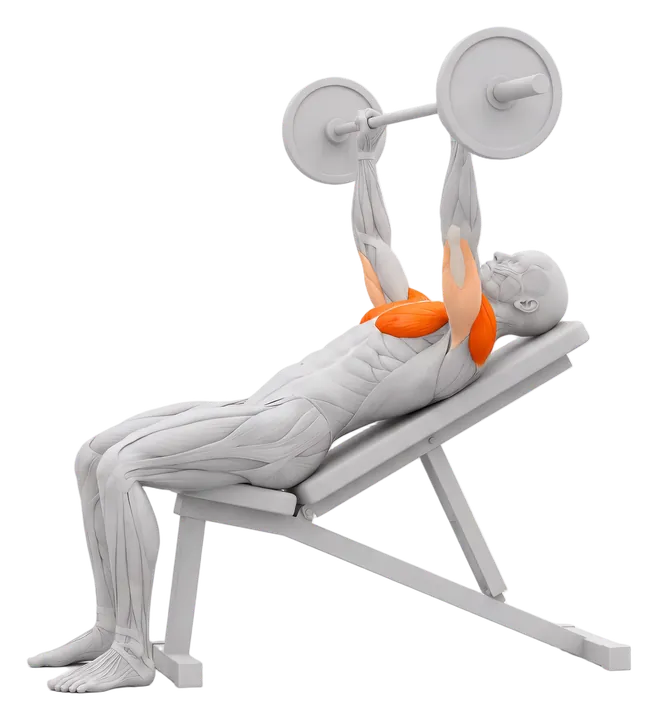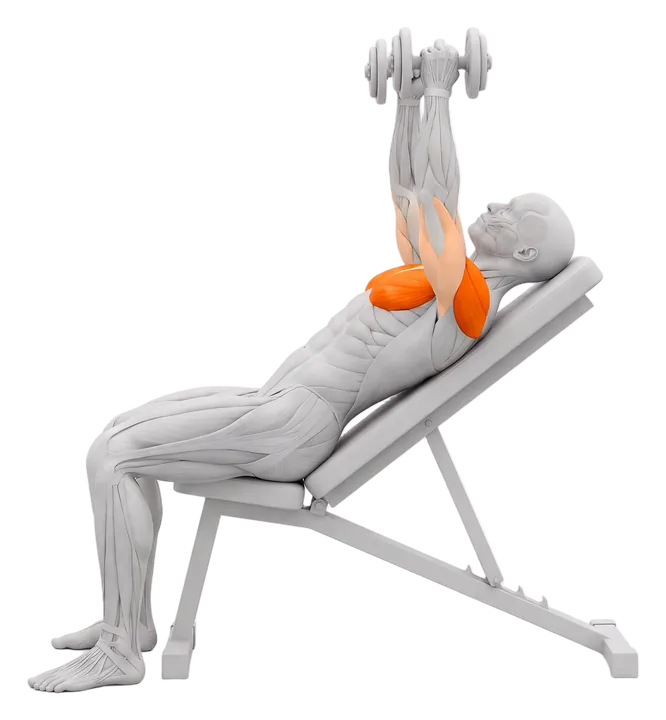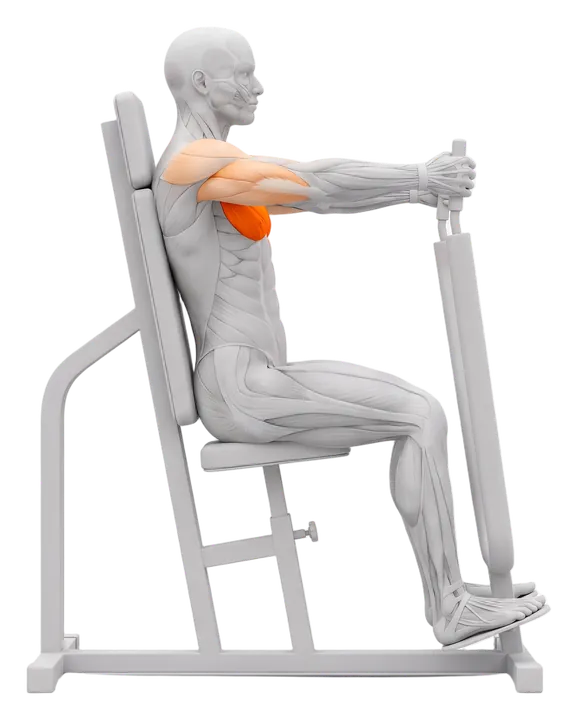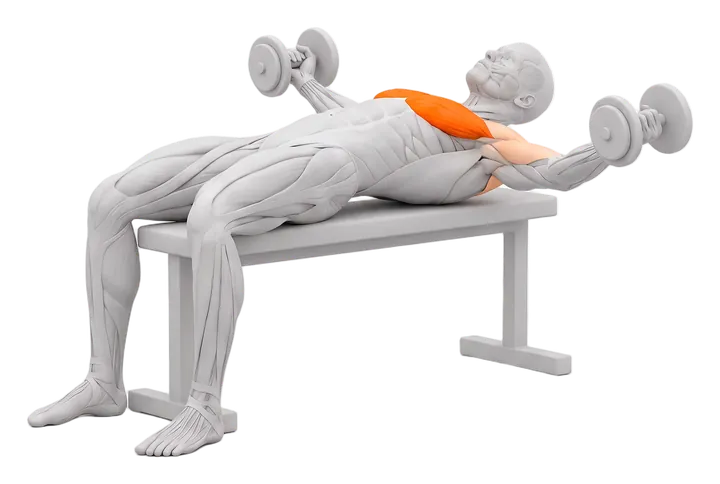
Chest fly muscles worked
| Muscle | Job in the fly | Role |
|---|---|---|
| Pectoralis major | Brings the upper arms in across the body, hardest at the bottom | Primary |
| Front delts | Assist the arm movement, more on an incline | Secondary |
| Biceps | Hold the fixed bend in the elbows | Stabiliser |
| Rotator cuff | Keeps the upper arm centred in the socket in the stretch | Stabiliser |
A press moves the elbow and the shoulder; a fly moves only the shoulder. That takes the triceps out of the job, which is why flyes are useful after a press, when the arms are tired but the chest still has work left in it. The pec fly also loads the chest most where it is stretched. At the top, with the dumbbells above you, gravity pulls almost straight down through your arms and the chest barely works, so the bottom half of each rep is where the exercise does its job.
How to do a dumbbell chest fly
- Start like a pressLie on a flat bench, kick the dumbbells up and hold them above your chest with palms facing each other. Shoulder blades back and down, feet planted.
- Lock in a soft bendBend the elbows slightly, as if hugging a large tree. This angle stays the same for the whole set.
- Open in an arcLower the dumbbells out to the sides in a wide semicircle. The hands travel out, not down towards your shoulders, and the elbows point at the walls.
- Stop at a stretch, not a strainStop when you feel a clear stretch across the chest. For most people the elbows end level with the bench or a little above it.
- Hug back togetherBring the dumbbells back up along the same arc. Stop when they are a hand width apart above the chest, where tension is still on the pecs.
Shoulder-safe range on the dumbbell fly
The fly gets its reputation for sore shoulders from one thing: heavy dumbbells at the end of long arms, pulling the shoulder further back than it wants to go. The longer the lever and the deeper the stretch, the larger the load on the front of the shoulder. Four simple rules keep it in check.
- Elbows stop around bench height. Going further back adds strain on the shoulder joint without adding much more stretch to the chest.
- Keep the bend in the elbows. Straightening the arms on the way down lengthens the lever and multiplies the load on the shoulder.
- Pick a weight you can stop. If the dumbbells pull you into the bottom rather than you lowering them, they are too heavy.
- Pause, do not bounce. A one second pause in the stretch is safer and more effective than bouncing out of it.
Dumbbell fly form cues
- "Wide hands, not low hands." Think about moving the dumbbells away from each other, not dropping them to the floor.
- "Elbows lead, hands follow." The elbows stay slightly below the hands and point outwards.
- "Chest proud." Keep the upper back arched slightly, so the shoulders do not roll forward at the top.
- "Three seconds down." A slow lowering keeps you in control of the stretch.
- "Squeeze the biceps together." At the top, think of bringing the upper arms in, not the dumbbells.
Common dumbbell fly mistakes
- Turning it into a press. If the elbows bend more on the way down and straighten on the way up, you are doing a wide dumbbell press. Lighten the weight.
- Going too heavy. Flyes are not a strength test. Expect to use far less than on your dumbbell press.
- Clanging the dumbbells at the top. No tension there, and it shakes the shoulders loose.
- Shoulders shrugging up. Keep the shoulder blades down and back on the pad.
- Straight arms. Locked elbows put the stress on the elbow and shoulder joints.
Flat, incline and floor dumbbell flyes
| Variation | Setup | Notes |
|---|---|---|
| Flat dumbbell fly | Flat bench | The standard version, whole chest |
| Incline dumbbell fly | Bench at about 30 degrees | More upper chest; dumbbells finish over the upper chest |
| Decline dumbbell fly | Slight decline, feet secured | Lower chest; less common |
| Floor fly | Lying on the floor | The floor stops the elbows, a built in safe range for home training |
| Fly to press | Fly down, press up | Lets you use a little more weight; a good finisher |
The floor fly deserves more use than it gets. The floor stops your elbows at a range most shoulders handle well, and you can pause each rep there. It is a natural fit for a chest workout at home with only a pair of dumbbells.
Chest fly exercises compared
| Exercise | Where it is hardest | Best for |
|---|---|---|
| Dumbbell fly | In the stretch at the bottom | Loaded stretch, home gyms |
| Cable fly | Even through the whole rep | Squeeze at the end, angle options |
| Pec deck machine | Fairly even, fixed path | Beginners, failure sets |
| Band fly | At the end, where the band is longest | Travel and warm ups |
A useful pairing is dumbbell flyes for the stretch and cables for the squeeze. If you only have dumbbells, the dumbbell chest workout shows where the fly fits after the presses.
Sets and reps for the dumbbell fly
| Goal | Sets x reps | Rest | Notes |
|---|---|---|---|
| Muscle growth | 3 x 10 to 15 | 60 to 90 s | After your presses, 1 to 2 reps short of failure |
| Beginner | 2 x 12 to 15 | 60 s | Light dumbbells, learn the arc first |
| Finisher | 2 x 15 to 20 | 60 s | Floor fly or a pause in the stretch |
| Rehab | 2 to 3 x 12 to 20 | 60 s | Short, pain free range, with professional guidance |
Place the fly after one or two presses such as the dumbbell bench press. Two to three sets per session is enough for most people, since the presses already train the chest hard. For why higher reps suit isolation work, see rep ranges.
How to progress the dumbbell fly
Progress the fly with reps first and weight last. Small exercises with long levers turn a 2 kg (5 lb) jump per hand into a big change, so work up to the top of your rep range in every set before you pick up the next pair. Slower lowering and a pause in the stretch are also progress, as long as you note them in your log.
Gripp knows when to add weight to the fly
Gripp logs every set and tells you what to aim for next session: one more rep at the same weight, or the next pair of dumbbells once all your sets hit the top of the range. Your chest gets a strength rating against people of your age and bodyweight, built from your presses and flyes.
Join the waitlistDumbbell fly alternatives
- Cable fly: constant tension and easier on the shoulders for many lifters.
- Pec deck: the machine version, simple to take to failure.
- Deep push-up on handles: a stretch for the chest at home.
- Dumbbell bench press: when you want load rather than isolation.
All of them are on the list of chest exercises, together with the main presses.