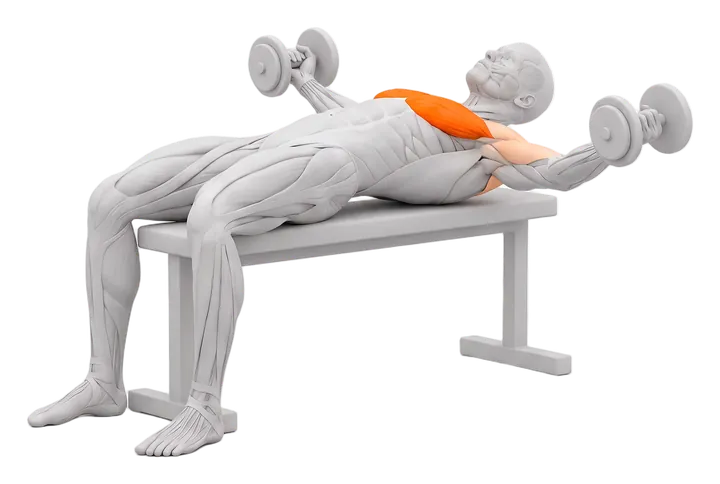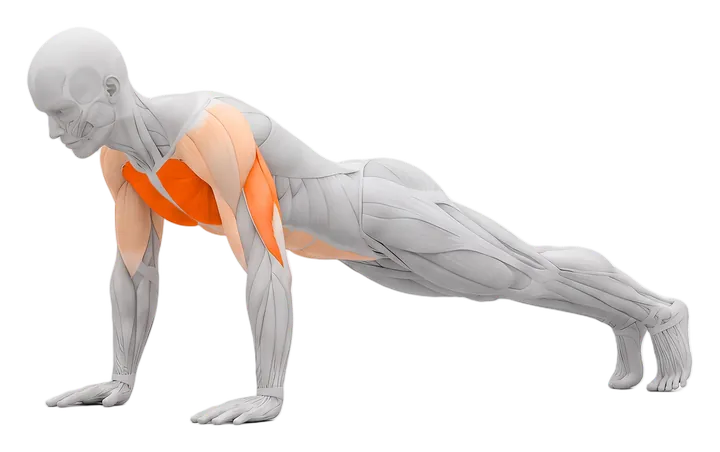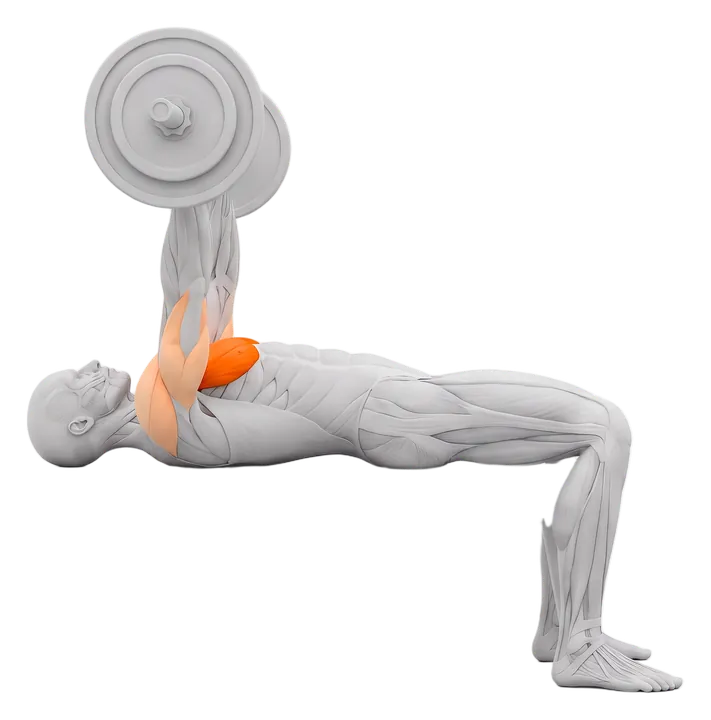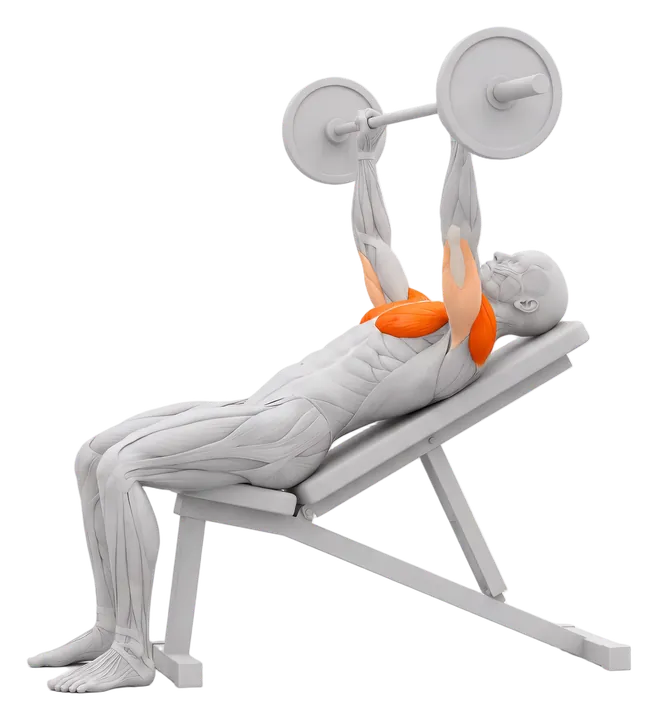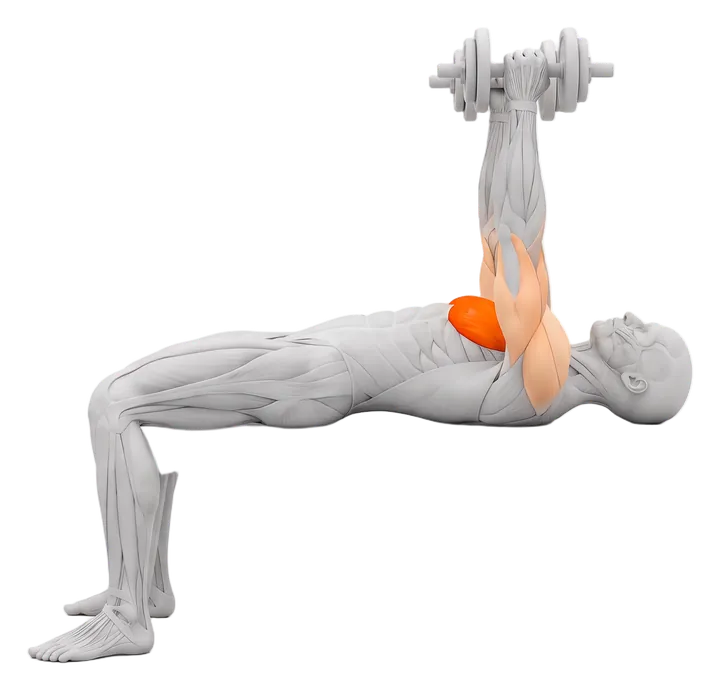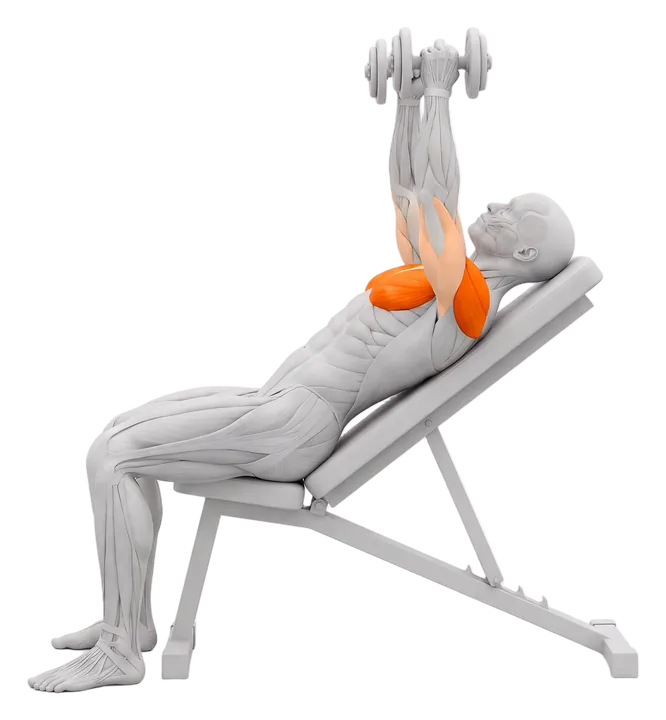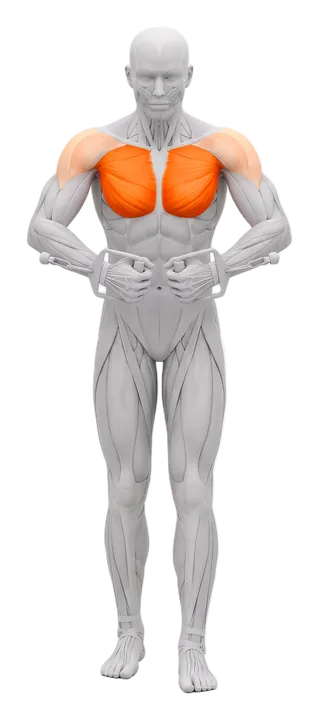
Cable fly muscles worked
| Muscle | Role | How much |
|---|---|---|
| Pectoralis major | Pulls the upper arm across the body | Primary |
| Front deltoids | Assist, more in the low to high version | Secondary |
| Biceps | Hold the slight bend in the elbow | Stabiliser |
| Serratus anterior | Keeps the shoulder blades on the ribcage | Stabiliser |
| Core | Keeps you from being pulled backwards | Stabiliser |
The pec major has fibres running in different directions. The upper (clavicular) fibres run up towards the collarbone, the lower (sternal) fibres run across and down. You get the most from a fly when your arms travel roughly in line with the fibres you want to train, which is the whole point of changing the pulley height. Pressing still does the heavy lifting for chest size and strength, so think of the cable fly as the finisher after a bench press or an incline dumbbell press, not a replacement.
How to do a cable fly
- Set both pulleysPut both pulleys at the same height and attach single handles. For the standard mid cable fly, set them around shoulder height. Start light: the weight on each stack is what one arm moves.
- Take a split stanceGrab a handle in each hand and step forward until the stacks lift and your arms are pulled slightly behind your body. Stand with one foot in front of the other and lean your torso a little forward.
- Lock in the arm shapeBend your elbows slightly, about 10 to 20 degrees, and keep that angle for the whole set. Chest up, shoulder blades gently pulled back and down.
- Hug the handles togetherSweep your hands forward and inwards in a wide arc until they meet in front of your chest. Think about squeezing your upper arms towards each other, not about pushing the handles.
- Open back to a stretchLet the handles travel back slowly until you feel a stretch across the chest, with your hands roughly in line with your body. Stop before the front of the shoulder feels pinched, then start the next rep.
High to low, low to high and mid cable fly
These are the three pulley heights most people use. The movement is the same in all of them; only the direction of the arc changes.
| Variation | Pulley height | Hands finish | Biases |
|---|---|---|---|
| High to low cable fly | Above head height | In front of the hips or lower belly | Lower chest |
| Mid cable fly | Around shoulder height | In front of the chest | Middle chest, the whole muscle |
| Low to high cable fly | Near the floor | In front of the face or upper chest | Upper chest, plus front delts |
High to low cable fly
Set the pulleys high and pull the handles down and together, finishing around your belly button. This follows the lower fibres of the pec, and it is the variation most people can load the heaviest. Lean forward a bit more and keep the shoulders down: if your shoulders shrug up towards your ears, the weight is too heavy.
Low to high cable fly
Set the pulleys near the floor and scoop the handles up and together, finishing around chin height with the palms facing up or each other. This is the upper chest cable fly and it pairs well with incline pressing. The front delts help more here, so use a lighter weight and finish the rep with your chest, not by lifting your arms over your head.
Single arm cable fly
Working one side at a time lets you cross the hand slightly past the midline for a harder squeeze, and makes it easy to notice if one side is weaker. Hold onto the frame with your free hand for balance. It takes twice as long, so it suits a finishing set more than the main fly work.
Cable fly form cues
- "Hug a big tree." The arms move as one stiff unit from the shoulder, as if wrapping around a trunk.
- "Elbows stay soft and fixed." If the elbows bend and straighten, the rep turns into a press.
- "Chest proud." A slight arch in the upper back keeps the shoulders out of the way and the pecs working.
- "Pause where the hands meet." One second of squeezing at the end beats racing through extra reps.
- "Slow on the way back." Take about two to three seconds to open up into the stretch.
Common cable fly mistakes
- Turning it into a press. Bending the elbows more as the weight gets heavy shifts the work to the triceps. Lower the load and keep the arm angle.
- Stretching too far back. A deep stretch is useful, but hands far behind the body put the front of the shoulder under strain. Stop where the stretch is in the chest.
- Getting pulled out of position. Standing too far forward or with feet together means you fight for balance. A staggered stance fixes it.
- Rolling the shoulders forward at the end. The hands meet, but the shoulders round and the front delts take over. Keep the chest up as the hands close.
- Going too heavy for the stack. Flies are a light, controlled exercise. Chasing weight here rarely pays off.
Cable fly vs dumbbell fly
Both train the chest with the same arm path. The difference is where the load is felt.
| Cable fly | Dumbbell fly | |
|---|---|---|
| Hardest point | Fairly even through the rep | At the bottom, almost nothing at the top |
| Angle options | High, mid, low pulley, standing or seated | Flat, incline or decline bench |
| Setup | Needs a cable station with two pulleys | Needs dumbbells and a bench |
| Stretch risk | Easy to control | Heavy weights can pull the shoulders too deep |
| Best for | Squeeze at the end, chest finisher | Loaded stretch, home gyms |
If you have a cable station, the cable chest fly is usually the more comfortable choice and easier to adjust. With only dumbbells at home, the dumbbell fly or a dumbbell chest workout covers the same job.
Sets and reps for the cable fly
| Goal | Sets x reps | Rest | Notes |
|---|---|---|---|
| Chest growth | 3 x 10 to 15 | 60 to 90 s | 1 to 2 reps short of failure |
| Upper chest focus | 2 to 3 x 12 to 15 | 60 to 90 s | Low to high, after incline pressing |
| Finisher | 2 x 15 to 20 | 45 to 60 s | Light, slow, pause at the squeeze |
| Beginner | 2 x 12 to 15 | 60 s | Mid pulley, learn the arm shape |
Place the fly after your main pressing work, once or twice a week. On the push day of a push pull legs split, a solid order is bench press, incline press, then two or three sets of cable flies before shoulders and triceps. If you want more ideas for the rest of the session, see the full list of chest exercises. For a whole session built on cables, see the cable chest workout.
How to progress the cable fly
Cable stacks often jump in steps that are large for a small movement, so add reps before you add weight. Use a range such as 10 to 15: when you reach 15 clean reps on every set with the same arm shape, move up one plate on the stack and start again near 10. If the next plate is too big, try a slower lowering or a one second pause first. The method is explained in progressive overload.
Gripp remembers the stack setting for you
Log the weight and reps of every cable fly set and Gripp tells you what to aim for next session: more reps, or the next plate when you have hit the top of the range in all sets. It keeps an estimated max per exercise on a chart and rates your chest against people of your age and bodyweight.
Join the waitlistCable fly alternatives
- Dumbbell fly: the free weight version, flat or incline.
- Pec deck machine: the same movement with a fixed path, easy to push close to failure.
- Push-up: a bodyweight press that also works the chest, triceps and core.
- Dips: a heavier compound option for the lower chest. See the dips guide.
- Resistance band fly: anchor a band behind you for a cable fly at home.