Why dumbbells build a chest as well as a barbell
A barbell stops when it touches your sternum. Dumbbells can travel a few centimetres lower, so the pecs work through a longer stretch, and your hands can move together at the top. Each arm also has to carry its own load, which shows you quickly if one side is doing less.
The trade-off is load. You will press less in total with two dumbbells than with a bar, and balancing them takes practice. For building muscle that matters little: the chest responds to hard sets taken close to failure, and dumbbells let you take them there with no bar over your throat. The chest exercises hub covers the barbell, cable and machine options if you have them too.
Dumbbell chest exercises in this workout
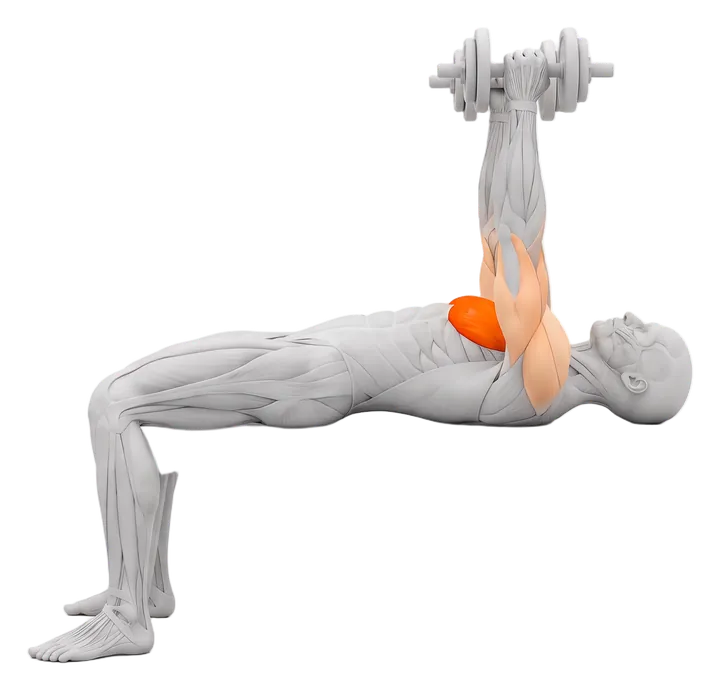
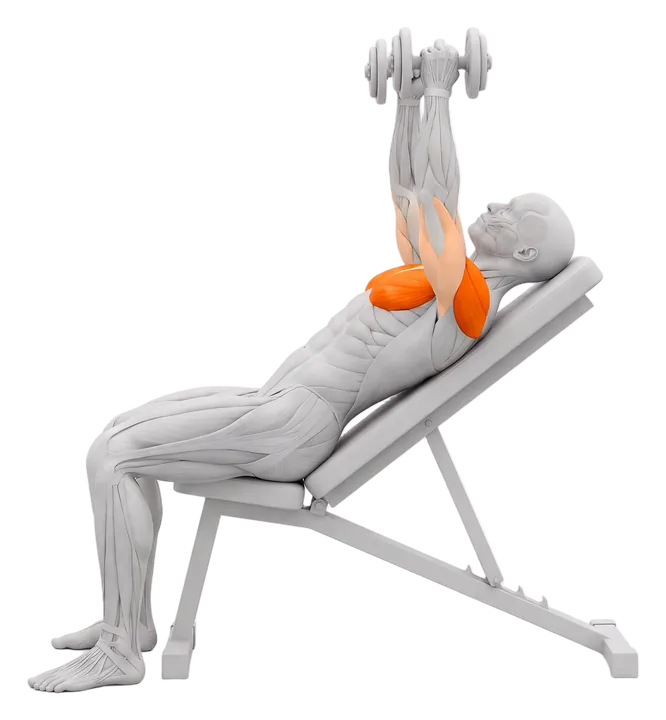
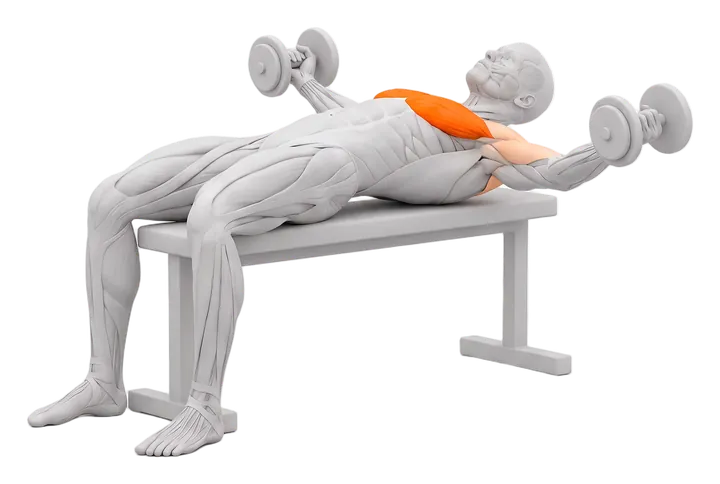
The dumbbell chest workout
| Exercise | Sets x reps | Rest | Why it is here |
|---|---|---|---|
| Dumbbell bench press | 4 x 6 to 10 | 2 to 3 min | Your heaviest chest work, whole pec |
| Incline dumbbell press, bench at 30 degrees | 3 x 8 to 12 | 2 min | Upper chest (clavicular head) |
| Dumbbell fly | 3 x 10 to 15 | 60 to 90 s | Loaded stretch with little triceps help |
| Push-up with hands on two dumbbells | 2 x as many as possible, stop 1 rep short | 60 s | Extra volume once the dumbbells feel heavy |
Flat press first because it is the one you want to load hardest while fresh. Incline second: a bench angle of about 30 degrees shifts work to the upper fibres without turning it into a shoulder press, and the incline dumbbell press guide covers the setup. The fly trains the chest in its lengthened position with the triceps mostly out of the way, so the pecs keep working after your arms are tired. The push-up holding dumbbell handles lets the chest drop below the hands for a deeper bottom position.
Want the triceps in the same session? Add two triceps exercises after the push-ups, and you have the push day from push pull legs without a single machine.
Beginner and advanced versions
Beginner: twice a week
| Exercise | Sets x reps | Rest |
|---|---|---|
| Dumbbell bench press | 3 x 8 to 12 | 2 min |
| Incline dumbbell press | 2 x 10 to 12 | 90 s |
| Incline push-up, hands on the bench | 2 x 10 to 15 | 60 s |
Start with a weight you could press for about 14 reps and stop at 12. The first weeks are about grooving the path of the dumbbells, and the weight will rise fast anyway.
Advanced: heavy day and pump day
| Day | Exercise | Sets x reps | Rest |
|---|---|---|---|
| Heavy | Dumbbell bench press | 4 x 5 to 8 | 3 min |
| Heavy | Incline dumbbell press | 3 x 6 to 10 | 2 to 3 min |
| Heavy | Dumbbell fly | 2 x 10 to 12 | 90 s |
| Pump | Incline dumbbell press, 3 second lowering | 3 x 10 to 12 | 2 min |
| Pump | Hip-raised dumbbell press (lower chest) | 3 x 10 to 15 | 90 s |
| Pump | Dumbbell fly, 1 second pause in the stretch | 3 x 12 to 15 | 60 s |
| Pump | Deficit push-up on dumbbells | 2 x as many as possible | 60 s |
Heavy dumbbells without a spotter
The hard part of pressing heavy dumbbells is not the press, it is getting them into position and out again. Once that is solved, dumbbells are one of the safest ways to train to near failure alone.
- Sit with the dumbbells on your thighsSit on the end of the bench, dumbbells standing on end on your knees, close to your hips.
- Kick them up as you lie backRoll back and drive one knee up at a time so each thigh pops a dumbbell to your chest. Hold them close to the body on the way down, never with straight arms.
- Leave a rep in the tankOn flat and incline presses, end the set when you think one more rep would be slow. A failed rep with a dumbbell is easy to dump, but a grinder at the bottom is how shoulders get tweaked.
- Get out the same wayBring the dumbbells to your chest, tuck your knees and rock forward to sit up with them on your thighs. If a set goes wrong, lower the dumbbells to your sides and let them roll off to the floor, away from your body.
Chest workout with dumbbells, no bench
Without a bench the floor becomes your bench. The dumbbell floor press stops each rep when your upper arms touch the floor, which takes away the bottom stretch but lets you handle heavy dumbbells with almost no shoulder stress. Add a floor fly with a soft pause where the elbows touch down, and push-ups on dumbbells to get the depth back.
| Exercise | Sets x reps | Rest |
|---|---|---|
| Dumbbell floor press | 4 x 8 to 12 | 2 min |
| Feet-elevated push-up (feet on a sofa or chair) | 3 x 8 to 15 | 90 s |
| Dumbbell floor fly | 3 x 12 to 15 | 60 s |
| Push-up on dumbbells | 2 x as many as possible | 60 s |
Standing chest exercises with dumbbells are a weak option. Gravity pulls the weight straight down, so a standing press or fly mostly loads the shoulders. If you cannot lie down, push-ups or a resistance band anchored behind you will train the chest better than any standing dumbbell move.
Upper and lower chest with dumbbells
- Upper chest: incline press and incline fly at 30 to 45 degrees. Go steeper and the front delts take over.
- Lower chest: a decline press is the classic, but most home benches do not decline. Lie on a flat bench, plant your feet and hold your hips high in a bridge while you press: the torso tilts and the press becomes a slight decline.
- Inner chest: there is no separate muscle to isolate. A full range fly and a press with the dumbbells touching lightly at the top train the area near the breastbone along with the rest.
- Dumbbell pullover: lying across a bench, lower one dumbbell behind your head with slightly bent arms. It stretches the lower chest and lats; use it as an extra if you like it, not as a main lift.
With access to a dip station or cables, dips and the cable fly are strong lower chest additions to this plan.
Progression when dumbbells jump in fixed steps
Gym dumbbells usually go up 2 or 2.5 kg (5 lb) per hand. On a 30 kg dumbbell that is a small step, on a 10 kg dumbbell it is 20 to 25 percent heavier. That is why double progression suits dumbbells: you stay on one weight and add reps until you hit the top of the range in every set, then take the next pair and start again at the bottom.
| Session | Dumbbells | Reps per set | Next time |
|---|---|---|---|
| 1 | 22 kg (50 lb) | 10, 9, 8 | Same weight, beat one set |
| 2 | 22 kg (50 lb) | 11, 10, 9 | Same weight |
| 3 | 22 kg (50 lb) | 12, 11, 10 | Same weight |
| 4 | 22 kg (50 lb) | 12, 12, 12 | Next pair up |
| 5 | 24 kg (55 lb) | 9, 8, 8 | Build to 12, 12, 12 again |
If the next pair drops you below 8 reps, stay on the lighter pair and slow the lowering to 3 seconds, or add a fourth set, until the jump fits. The full method is in the progressive overload guide, and the 1RM calculator turns any set into an estimated max so you can compare a 22 kg set of 12 with a 24 kg set of 9.
Gripp knows which dumbbell comes next
Gripp is coming to iPhone. Log the weight and reps of every set and it tells you what to do next session: last time 11 reps with 22 kg, today go for 12. Hit the top of the range in every set and it moves you to the next dumbbell. It keeps an estimated 1RM for each press on a chart and rates your chest strength against people of your age and bodyweight.
Join the waitlist