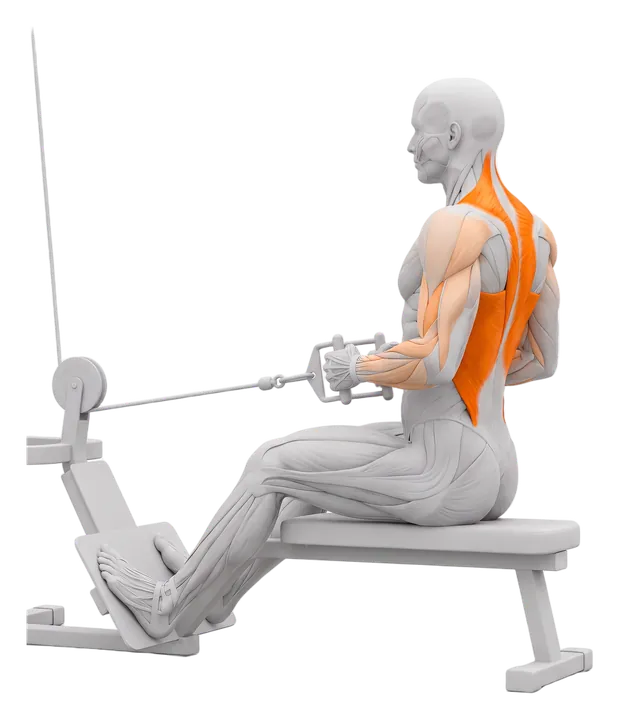
Seated cable row muscles worked
| Muscle | Role | How much |
|---|---|---|
| Upper back (rhomboids, middle traps) | Pull the shoulder blades together | Primary |
| Lats | Pull the upper arms back to the body | Primary |
| Rear delts | Help pull the arms back, more with a wide grip | Secondary |
| Biceps and forearms | Bend the elbows and hold the handle | Secondary |
| Lower back (erectors) | Hold the torso upright, without moving it | Stabiliser |
The cable keeps tension on the back through the whole rep, including the stretched position where a dumbbell or barbell row gets easier. That makes the cable row a good choice for building muscle and an easy exercise to learn. It is one of the core movements on the back exercises hub and in any cable back workout.
How to do a seated cable row
- Set upAttach a handle to the low pulley. Sit on the bench and put your feet on the platform with knees slightly bent. Grab the handle and slide back until your arms are straight and you are sitting tall.
- Find the start positionSit upright, chest up, with your hips stacked under your shoulders. Let the weight pull your shoulder blades forward a little so you feel the stretch in your upper back.
- RowPull the handle towards your stomach, between your belly button and lower ribs. Lead with the elbows and squeeze the shoulder blades together at the end. Your torso stays where it is.
- ReturnLet the arms straighten under control, then let the shoulder blades glide forward again. Do not fold forward at the hips to chase the stretch.
Handles and grips for the cable row
The cable row attachment changes the width of your grip and the angle of your hands, and that changes which part of your back works most. All of them build the back; choose by goal and comfort.
| Handle | Grip | Emphasis | Notes |
|---|---|---|---|
| V-bar (double D) | Close, neutral | Lats and middle back | The standard close grip cable row |
| Wide straight bar or lat bar | Wide, overhand | Upper back and rear delts | Elbows travel out, finish at the lower chest |
| Neutral grip bar (parallel handles) | Shoulder width, neutral | Lats and upper back, balanced | Comfortable for most shoulders and wrists |
| Straight bar, underhand | Shoulder width, palms up | Lats and biceps | Elbows stay close to the body |
| Single D-handle | One arm, neutral or rotating | Each side alone, long range | Allows a little torso rotation at the end |
| Rope | Neutral, hands spread at the end | Upper back and rear delts | Lighter loads, good for high reps |
Close grip cable row
The V-bar is the default for good reason: the narrow neutral grip keeps the elbows close and lets you pull the heaviest weight. Pull to the belly button and think about putting your elbows into your back pockets.
Seated cable row wide grip
With a wide overhand grip, the elbows move out and the row finishes higher, near the lower chest. The weight will be lighter, but the rear delts and the muscles between the shoulder blades get more work. A good second row in a session that already has a lat focused pull.
Single-arm cable row
Using one D-handle lets you reach forward further and rotate slightly at the end of the pull. It is useful if one side lags behind or if you want a longer stretch for the lats. Keep the hips facing forward so the rotation comes from the upper back, not the pelvis.
Keeping the lower back still
The most common seated cable row form mistake is turning it into a rowing machine stroke: leaning far forward to reach, then swinging back to pull. It lets you move more weight, but the lower back starts doing the job, the upper back gets less work, and the swinging repeated under load is what many people feel in the back afterwards.
- Set a fixed torso angle. Sit upright or with a very slight lean back, and keep that angle for the whole set.
- Move the shoulder blades, not the hips. The stretch comes from the shoulder blades sliding forward, not from bending at the waist.
- Brace your midsection before each rep, as you would on a squat or deadlift.
- Bend the knees a little more if tight hamstrings round your lower back in the start position.
- Drop the weight if the last reps only happen with a swing. A small lean on the final rep or two is fine; a lean on every rep is not.
Cable row vs barbell row
| Seated cable row | Barbell row | |
|---|---|---|
| Position | Seated, torso upright, feet on a platform | Standing, hinged forward at the hips |
| Lower back load | Low | High, it holds the hinge |
| Tension | Constant through the rep, also in the stretch | Hardest at the top, easier at the bottom |
| Grip options | Many handles | Overhand or underhand bar |
| Learning curve | Easy | Takes practice to keep the back flat |
| Best for | Muscle growth, beginners, high volume | Heavy loads and general strength |
If you want a lot of back volume without tiring your lower back, the cable row wins. If you want a heavy free weight row that also trains your hinge, the barbell row is the better choice. Many programs use one as the main row and the other, or a dumbbell row, as a second movement.
Seated cable row sets and reps
| Goal | Sets x reps | Rest | Handle |
|---|---|---|---|
| Strength | 3 to 4 x 5 to 8 | 2 min | V-bar |
| Muscle growth | 3 to 4 x 8 to 12 | 90 s | V-bar or neutral grip bar |
| Upper back and rear delts | 3 x 12 to 15 | 60 to 90 s | Wide bar or rope |
| Rehab or light days | 2 to 3 x 10 to 15 | 60 s | Any, light and controlled |
The seated cable row usually comes after a vertical pull such as the lat pulldown or pull ups. On a pull day of push pull legs or the upper day of an upper lower split, two rows (one close, one wide) cover the whole back.
How to progress the cable row
Cable stacks often move in steps of 5 kg (10 lb) or more, which is a big jump on a row. Use double progression: add reps within your range until every set reaches the top, then move one plate up and start again at the bottom of the range. If the stack steps feel too big, widen the range, for example 8 to 15, so you have more reps to add before each jump. More about this in the progressive overload guide.
Gripp remembers your stack and your reps
Log the weight and reps for every cable row set, and Gripp tells you what to aim for next session. Hit your reps in every set and it moves you up. Your estimated 1RM is charted over time, and your back strength is rated against people of your age and bodyweight.
Join the waitlistSeated cable row alternatives
- Chest-supported row: machine or dumbbells on an incline bench, no lower back load.
- Single arm dumbbell row: long range, works each side alone.
- Inverted row: a bodyweight row under a bar, works at home.
- Barbell row: heavier free weight option.
- Resistance band row: the band anchored at foot height mimics the cable at home.
Similar exercises
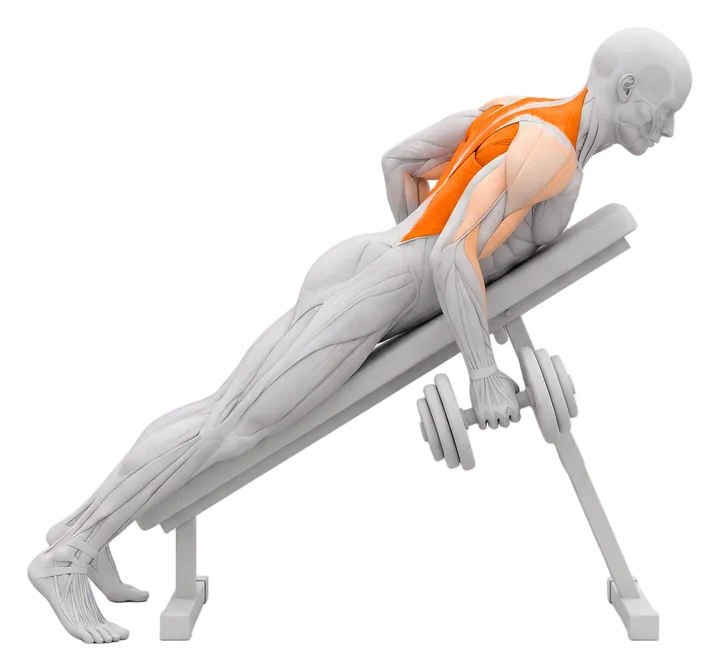 Chest-supported dumbbell rowUpper back and latsGuide
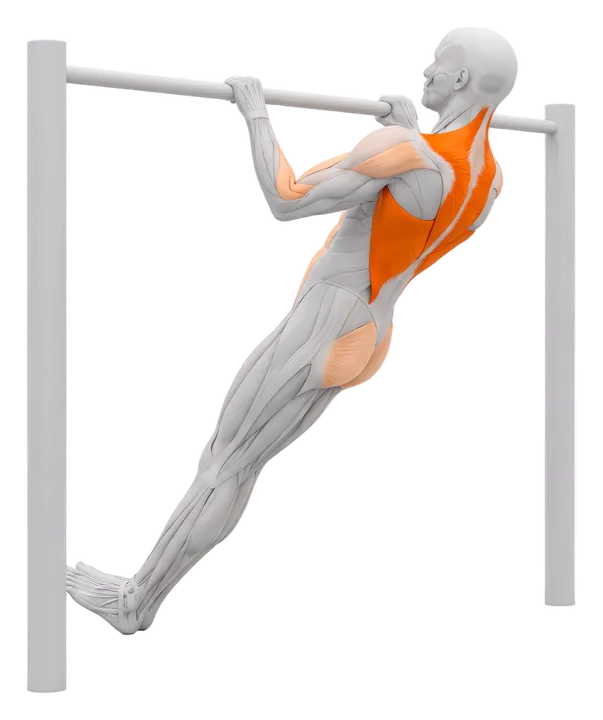 Inverted rowUpper back and latsGuide
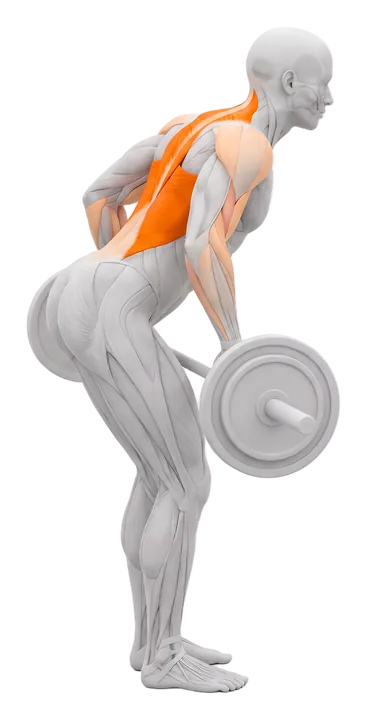 Barbell bent-over rowUpper back and lats
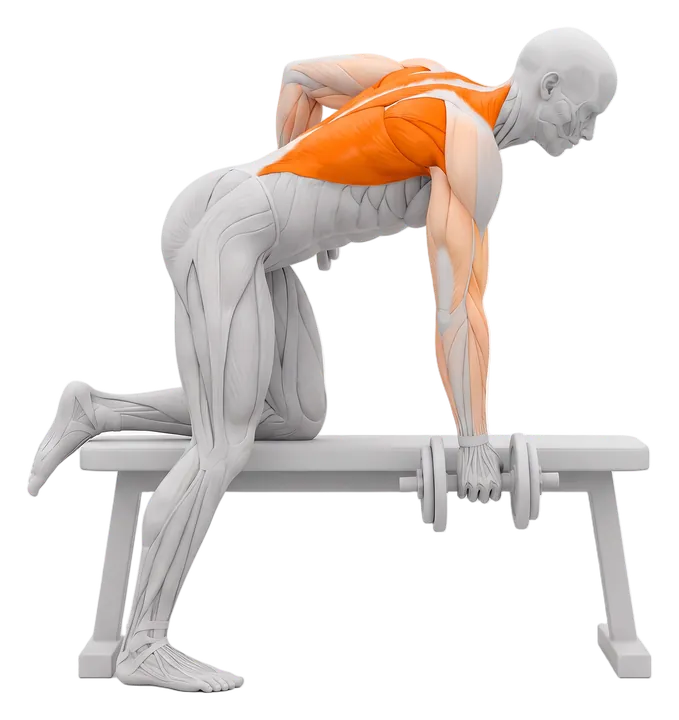 One-arm dumbbell rowLats and upper backGuide