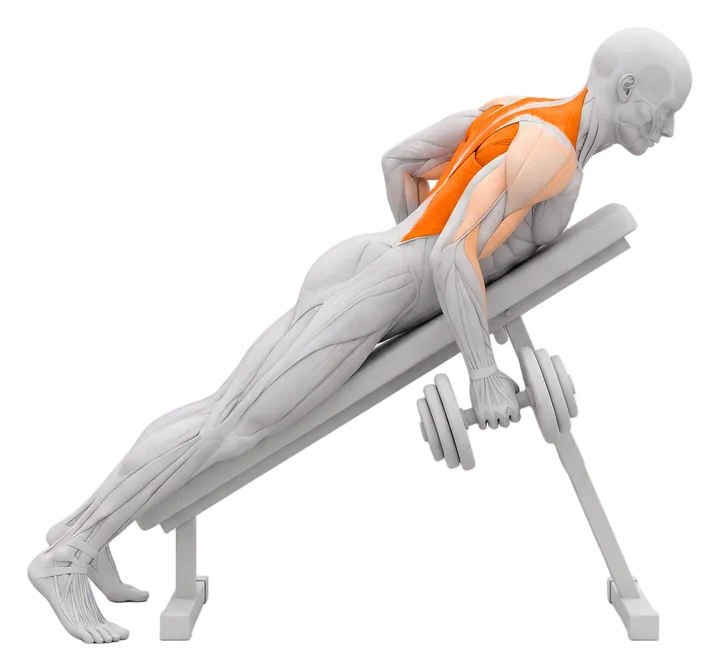
Chest-supported row muscles worked
| Muscle | What it does here | Role |
|---|---|---|
| Rhomboids and middle traps | Squeeze the shoulder blades together at the top | Primary |
| Lats | Pull the upper arms back, most with elbows close | Primary |
| Rear delts | Draw the arms back, most with elbows wide | Secondary |
| Lower traps | Keep the shoulder blades down while they retract | Secondary |
| Biceps and brachialis | Bend the elbows | Secondary |
| Forearms | Hold the handles | Stabiliser |
| Lower back | Almost nothing, the pad supports you | Minimal |
The last row of that table is the point of the exercise. In a standing bent over row the spinal erectors hold a hinge for the whole set, and in a single arm dumbbell row you still brace against a bench with one hand and knee. With your chest on a pad, the only way to move the weight is with the muscles between and around the shoulder blades. That makes it one of the cleanest picks on any list of back exercises for upper back thickness.
How to do a chest supported dumbbell row
- Set the bench to 30 to 45 degreesA lower angle makes the pull more horizontal and harder on the upper back. A steeper angle feels easier to breathe in and suits beginners. Pick one and write it down, so the numbers stay comparable from week to week.
- Lie face downChest on the pad with the top of the pad just below your collarbones, so your shoulders hang free over the edge. Feet on the floor or on the bench frame, legs pushing you lightly into the pad.
- Let the arms hangTake a dumbbell in each hand and let the arms hang straight down. Allow the shoulder blades to slide apart and forward. That stretch is part of the rep.
- Pull the elbows backStart the rep by drawing the shoulder blades together, then bend the elbows and pull the dumbbells up until they are beside your lower ribs. Your chest stays glued to the pad.
- Pause and lowerHold the top for one second, then lower over two to three seconds until the arms are straight and the shoulder blades are spread again.
Strict form cues
- "Chest stays on the pad." If your chest lifts at the top, you are using your lower back to finish the rep, which is exactly what this row is meant to avoid. Go lighter.
- "Shoulder blades first, elbows second." Think of a small retraction before the arms bend. It keeps the rhomboids and middle traps in charge.
- "Chin neutral." Do not crane your neck up to look in the mirror. Look at the floor a little ahead of the bench.
- "Do not shrug." The shoulders move back, not up towards the ears. Shrugging shifts the work to the upper traps.
- "Full hang at the bottom." Partial reps that stop halfway down skip the stretch that makes this row so useful for growth.
Elbow angle: lats or upper back
With the elbows tucked close and the dumbbells travelling towards the hips, the lats do more. With the elbows flared out to about 60 to 75 degrees and the dumbbells finishing beside the chest, the rear delts and rhomboids take over. Both are useful. Many people use a neutral grip and a 45 degree elbow as a middle ground that loads the whole upper back.
Mistakes that turn it into a cheat row
- Bench too steep. At 60 degrees or more the row becomes half a shrug. Lower the bench.
- Bouncing off the pad. Pushing the chest into the pad and lifting off it at the top creates momentum. A pause at the top reveals it at once.
- Too heavy to pause. If you cannot hold the top for a second, the weight is above what your upper back can control.
- Curling the dumbbells. If the elbows bend before the shoulder blades move, the biceps lead. Keep your forearms close to vertical.
- Grip giving out first. On heavy sets the grip can fail before the back. Straps solve it without changing the movement.
Seal row, prone row and machine versions
The search terms seal row and prone row describe the same family: you lie face down and pull. The difference is the support and the tool.
| Variation | Setup | Best for |
|---|---|---|
| Incline dumbbell row | Incline bench at 30 to 45 degrees, a dumbbell in each hand | Most gyms, easiest to learn |
| Seal row | Flat bench raised on boxes or a rack, barbell or dumbbells below | Strictest version, full horizontal pull |
| Prone row on a flat bench | Flat bench, dumbbells, limited range because the floor is close | Lighter work, rear delt focus |
| Chest supported T-bar row | Plate loaded T-bar machine with a chest pad | Heavy loads with handles of different widths |
| Chest supported row machine | Selectorised or plate loaded machine with a pad | Fast setup, small jumps, drop sets |
| Single arm chest supported row | Incline bench, one dumbbell, other hand on the bench | Fixing a weaker side |
Seal row
The seal row uses a flat bench set high enough that a barbell or dumbbells can hang at arm's length without touching the floor. It is the most horizontal pull you can do, so the upper back cannot get help from the angle. Gyms rarely have a dedicated seal row bench, but a flat bench on two sturdy plyo boxes or the safety pins of a rack works. Check that the setup cannot tip before loading it.
Chest supported T-bar row and machines
Plate loaded T-bar rows and row machines let you load far more than dumbbells. Starting weights on these machines differ between brands, because the lever arm itself has weight and the leverage varies. Treat the number on one machine as your own reference and do not compare it with a different model.
Sets and reps for the chest supported row
| Goal | Sets x reps | Rest | Notes |
|---|---|---|---|
| Strength | 3 to 4 x 5 to 8 | 2 min | Machine or seal row, straps allowed |
| Upper back growth | 3 to 4 x 8 to 12 | 90 s | One second pause at the top |
| Rear delts and posture | 2 to 3 x 12 to 15 | 60 to 90 s | Elbows wide, light dumbbells |
| Rehab or back friendly | 2 to 3 x 10 to 15 | 60 s | Incline bench, slow lowering |
Because it costs the lower back nothing, the chest supported row fits well on the same day as a heavy deadlift or squat. On a pull day, do it after a vertical pull like the lat pulldown or pull-ups. On an upper lower split it can be the main horizontal pull of the second upper day, while a seated cable row covers the first.
How to progress
Strict rows move slowly. Keep the same bench angle, the same grip and the same pause, then add reps within a range such as 8 to 12. When every set reaches 12 with the chest on the pad, take the next dumbbell, usually 2 to 2.5 kg (5 lb) heavier per hand, and start near 8 again. This is the double progression method, and it suits dumbbell steps well. The progressive overload guide covers what to do when you stall.
Gripp keeps your rows honest
Log each set with weight and reps and Gripp tells you what to go for next session, based on last time. When every set hits the top of your range, it moves you to the next dumbbell. Your estimated 1RM for the row is charted, and your back strength is rated against people of your age and bodyweight.
Join the waitlistAlternatives
- Seated cable row: upright, constant tension, very little lower back work when done still.
- Inverted row: a bodyweight horizontal pull that also loads very little on the spine. See the inverted row guide.
- Rear delt fly: the same face down position with straight arms, for the rear delts alone.
- Single arm dumbbell row: heavier per arm and a longer range, but needs some bracing.
- Face pull: a high cable pull for rear delts and shoulder health.
Similar exercises
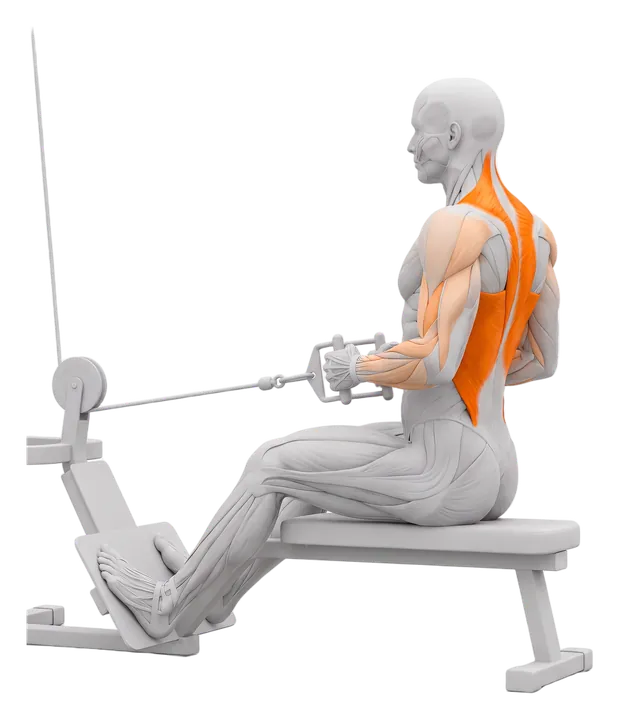 Seated cable rowUpper back and latsGuide
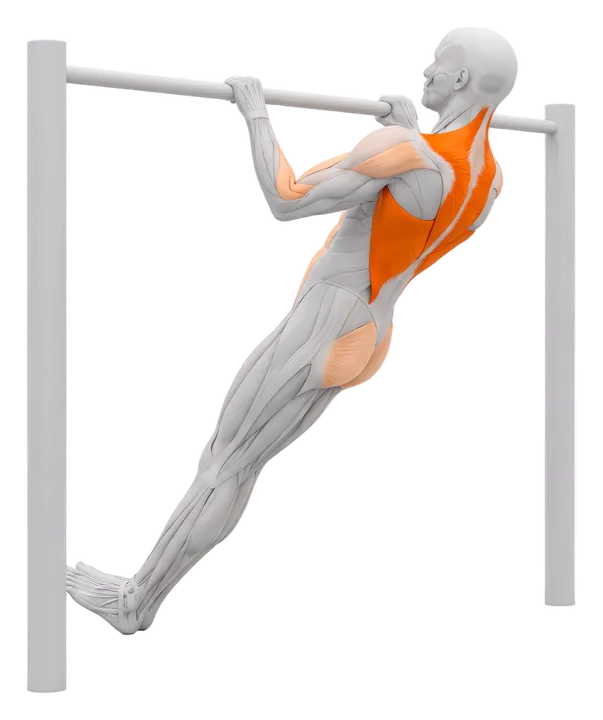 Inverted rowUpper back and latsGuide
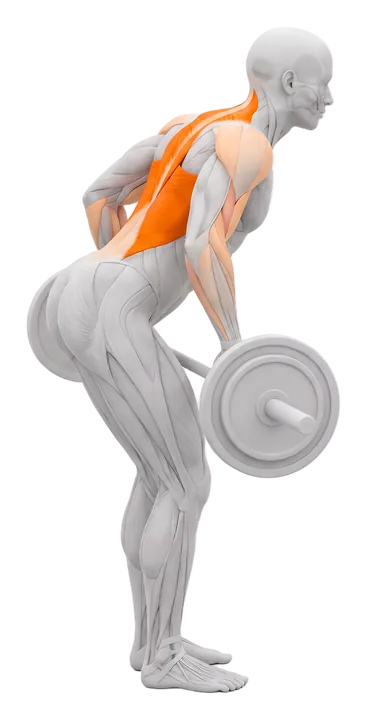 Barbell bent-over rowUpper back and lats
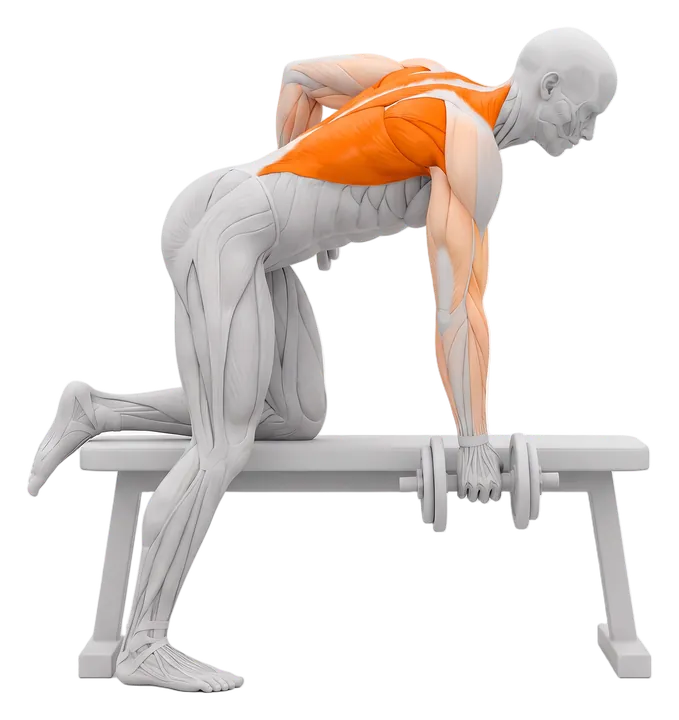 One-arm dumbbell rowLats and upper backGuide