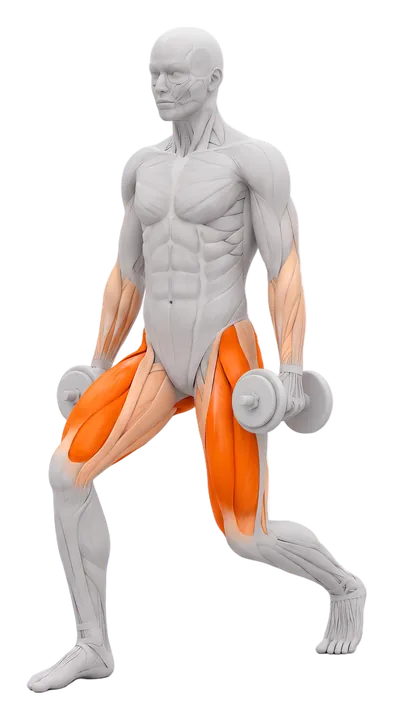
What muscles do lunges work?
| Muscle | Role | How much |
|---|---|---|
| Quadriceps | Straighten the front knee | Primary |
| Gluteus maximus | Extends the front hip, more with a longer step | Primary |
| Adductors | Help extend the hip and keep the knee steady | Secondary |
| Hamstrings | Assist hip extension | Secondary |
| Gluteus medius | Keeps the pelvis level and the knee from caving in | Stabiliser |
| Calves and core | Balance and posture | Stabiliser |
How you lunge moves the work around. A short step with an upright torso keeps more of the load on the quads. A longer step with a slight forward lean puts more on the glutes. That makes lunges useful both in a quad focused leg workout and in a plan built from glute exercises or glute exercises with dumbbells.
Walking, reverse and forward lunges compared
| Lunge | Movement | Biases | Knee friendliness |
|---|---|---|---|
| Reverse lunge | Step back, then return | Glutes and quads, easy to balance | Usually the most comfortable |
| Forward lunge | Step forward, then push back | Quads, more braking at the front knee | More demanding on the knees |
| Walking lunge | Step forward into the next rep | Quads and glutes, plus conditioning | Moderate, needs space |
| Lateral lunge | Step to the side, sit into one hip | Adductors and glutes, side to side strength | Usually comfortable, needs hip mobility |
| Split squat | Feet stay in place, move straight down | Quads and glutes with no stepping | Easiest to control |
Reverse lunges
Stepping back means the front foot stays planted and you lower into the lunge instead of braking a step forward. Most people find this easier on the knees and easier to balance, which makes reverse lunges the best place to start. A slight forward lean of the torso brings in more glutes.
Forward lunges
You step forward and the front leg has to stop your body and then push it back. That braking makes the forward lunge more demanding for the quads and the knee. Use it when reverse lunges feel easy and your knees are happy.
Walking lunges
Instead of pushing back, you drive through the front foot and bring the back leg forward into the next step. Walking lunges with dumbbells are a hard leg exercise with a real conditioning effect, because you cannot rest between reps. You need a clear lane of 10 to 20 metres, or turn around halfway.
Lateral lunges
Step wide to one side, sit back into that hip with the knee over the foot, and keep the other leg straight. Lateral lunges train the adductors and glutes in a direction most leg exercises ignore. Use bodyweight or a light goblet hold.
How to do a reverse lunge
- Stand tallFeet hip width apart, weights at your sides if you use them. Brace your core.
- Step backTake a long step back with one foot and land on the ball of that foot. Keep your feet about hip width apart side to side, like standing on train tracks, not a tightrope.
- Lower straight downDrop your back knee until it is just above the floor. The front shin can lean forward a little; that is normal. Most of your weight stays on the front foot.
- Drive back upPush through the whole front foot, mainly the heel and midfoot, and bring the back foot forward to the start.
- Switch or repeatAlternate legs, or do all reps on one side before switching. One side at a time is easier to keep steady and easier to count.
Balance tips for lunges
Wobbling is the most common complaint with lunges. It is almost always a stance problem, not a strength problem.
- Widen the tracks. Feet in one line make balance hard. Keep them hip width apart side to side.
- Look at a fixed point on the floor a few metres ahead.
- Slow the lowering. Two seconds down gives you time to stay centred.
- Hold onto something. A rack or wall with one hand while you learn the movement is fine, and you can hold one dumbbell on the opposite side.
- Start with split squats. Keeping the feet planted removes the stepping, which is where most people lose balance.
Common lunge mistakes
- Steps that are too short. The front heel lifts and the knee takes all the load. Lengthen the step.
- Front knee caving inwards. Keep it pointing over your middle toes. Lighter weights help.
- Slamming the back knee. Stop just above the floor or use a pad.
- Pushing off the back leg. The front leg should do most of the work. The back foot is mostly for balance.
- Leaning far forward with a rounded back. A slight lean is fine; collapsing over the front leg is not.
Weighted lunges: dumbbell, barbell and more
- Dumbbell lunges: a dumbbell in each hand. The easiest way to load lunges, and grip often limits you before the legs do.
- Goblet lunge: one dumbbell or kettlebell held at the chest. Good for the upright, quad focused style.
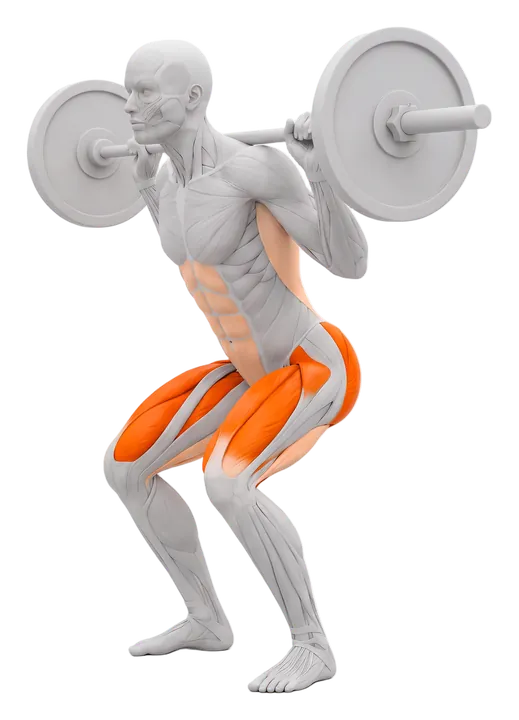
- Barbell lunge: bar on the back as in a squat. Heavier, but balance matters more, so build up from dumbbells first.
- Deficit reverse lunge: front foot on a low step for a deeper range and more glute work.
- Jumping lunges: switch legs in the air. A bodyweight conditioning drill, not a strength exercise.
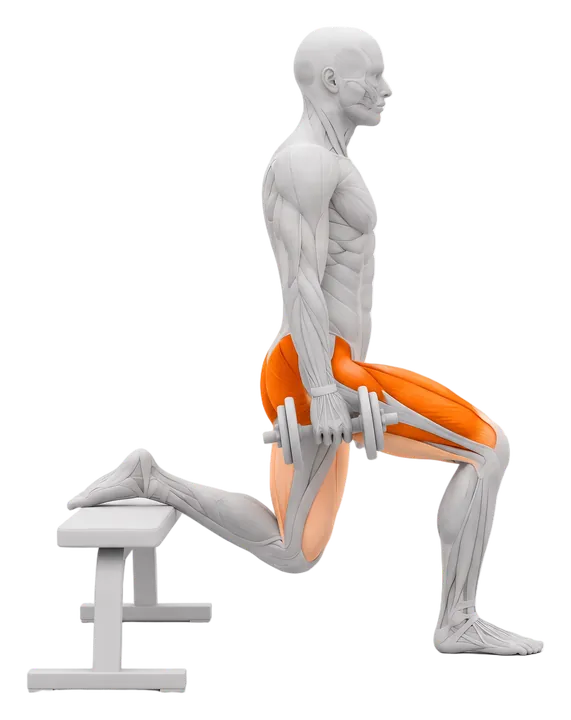
The Bulgarian split squat is the next step for loading one leg hard, with the back foot raised on a bench. For a full plan without machines, see the dumbbell leg workout.
Sets and reps for lunges
| Goal | Sets x reps | Rest | Notes |
|---|---|---|---|
| Strength | 3 to 4 x 6 to 8 per leg | 2 min | Dumbbell or barbell reverse lunge |
| Muscle growth | 3 x 8 to 12 per leg | 90 s to 2 min | 1 to 2 reps short of failure |
| Conditioning | 2 to 3 x 20 to 30 steps | 90 s | Walking lunges |
| Beginner | 2 to 3 x 8 to 10 per leg | 90 s | Bodyweight reverse lunge or split squat |
Put lunges after your main squat or hinge, once or twice a week. They fit on the lower days of an upper lower split and at the end of a full body workout.
How to progress lunges
Start with bodyweight and add reps until you can do about 12 to 15 clean reps per leg. Then pick up dumbbells and work back up from 8. Dumbbells usually go up in 2 kg (about 5 lb) steps, which is a big jump for one leg, so add reps before load. The full system is in progressive overload.
Gripp counts every lunge for you
Log your lunges with weight and reps and Gripp shows what you did last time and what to try today. When you reach the top of the rep range in every set, it tells you to go up a dumbbell. It also rates your leg strength against people of your age and bodyweight.
Join the waitlistLunge alternatives
- Split squat: the same position with no stepping, easier to balance.
- Step-up: step onto a box or bench, low impact for the knees.
- Bulgarian split squat: back foot on a bench, harder and more glute heavy.
- Goblet squat: both legs, simple and quad heavy. See the goblet squat guide.
- Leg press, one leg at a time: a machine option with no balance demand.
Similar exercises
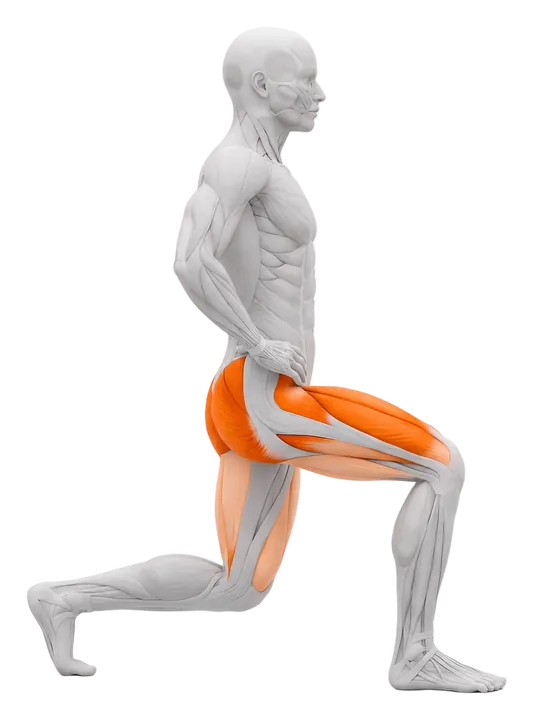 Reverse lungeQuads and glutes
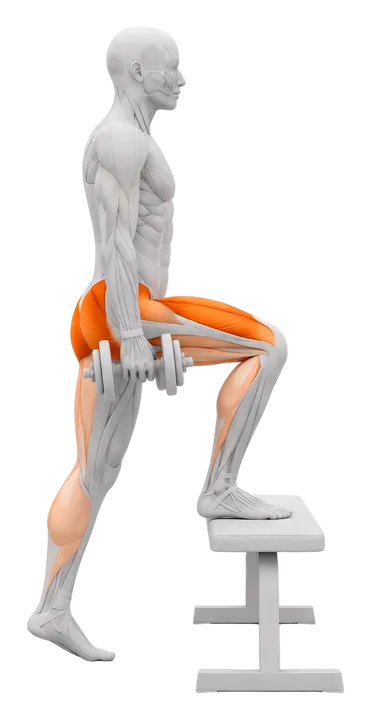 Dumbbell step-upQuads and glutesGuide
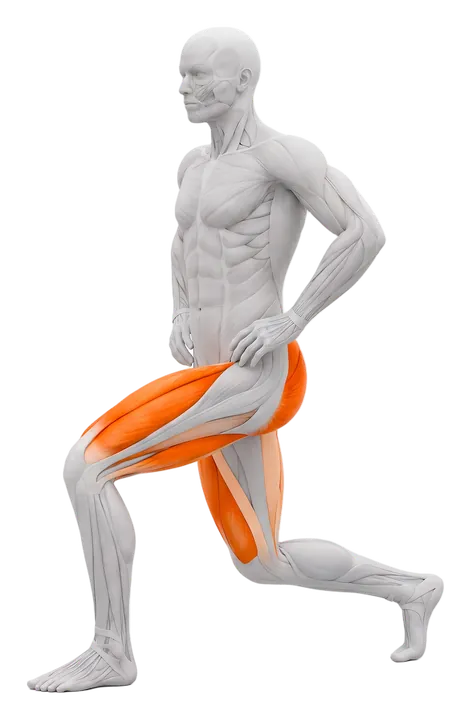 Split squatQuads and glutes
 Bulgarian split squatQuads and glutesGuide
 Barbell back squatQuads and glutesGuide
 Barbell front squatQuads and glutesGuide