What is the PHAT workout?
Norton built PHAT to get the strength of a powerlifting program and the muscle of a bodybuilding split in one week. The two power days drive strength on a few big lifts. The three hypertrophy days add a lot of volume per body part, and each starts with speed work on a main lift so you keep practising it fast without adding much fatigue.
- Frequency: each muscle group twice per week, once heavy and once for volume.
- Power days: the main lift for 3 x 3 to 5, then assistance for 6 to 10 reps.
- Hypertrophy days: speed sets of 6 x 3 at 65 to 70 % of your 3 to 5 rep max, then exercises for 8 to 20 reps.
- Volume: Norton suggests roughly 50 to 75 % more volume on hypertrophy days than on power days.
The PHAT workout split
| Day 1 | Day 2 | Day 3 | Day 4 | Day 5 | Day 6 | Day 7 |
|---|---|---|---|---|---|---|
| Upper body power | Lower body power | Rest | Back and shoulders hypertrophy | Lower body hypertrophy | Chest and arms hypertrophy | Rest |
Run it Monday to Saturday with Wednesday and Sunday off, or any order that keeps the rest day between the power block and the hypertrophy block. The rest day matters: the lower body power day and the lower body hypertrophy day are the hardest sessions of the week and should not land back to back.
The full PHAT workout program: all 5 days
These are the exercises, sets and reps from Norton's own write-up of the program on his site. "Power" marks the main lift of each power day.
Day 1: upper body power
| Exercise | Sets x reps |
|---|---|
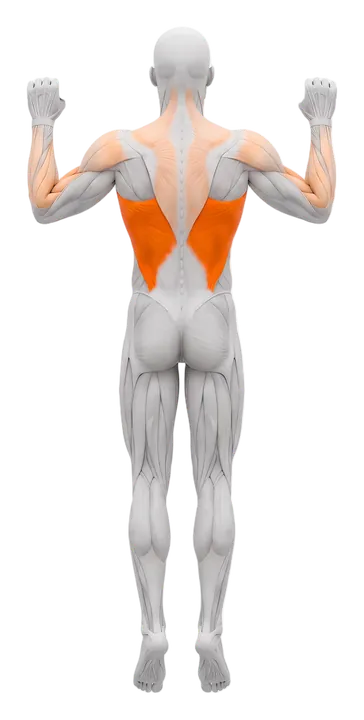
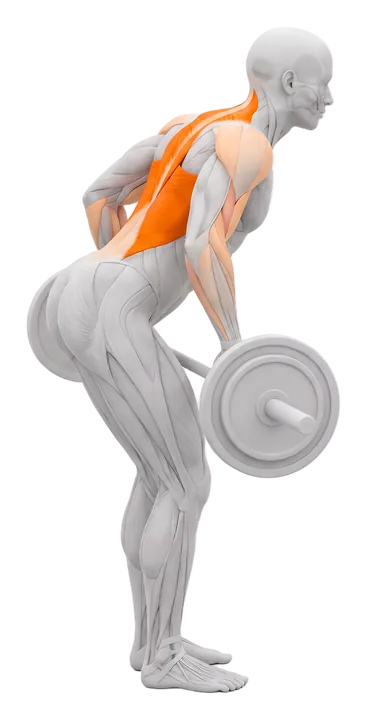
| Bent-over or Pendlay row (power) | 3 x 3 to 5 |
| Weighted pull-up | 2 x 6 to 10 |
| Rack chin | 2 x 6 to 10 |
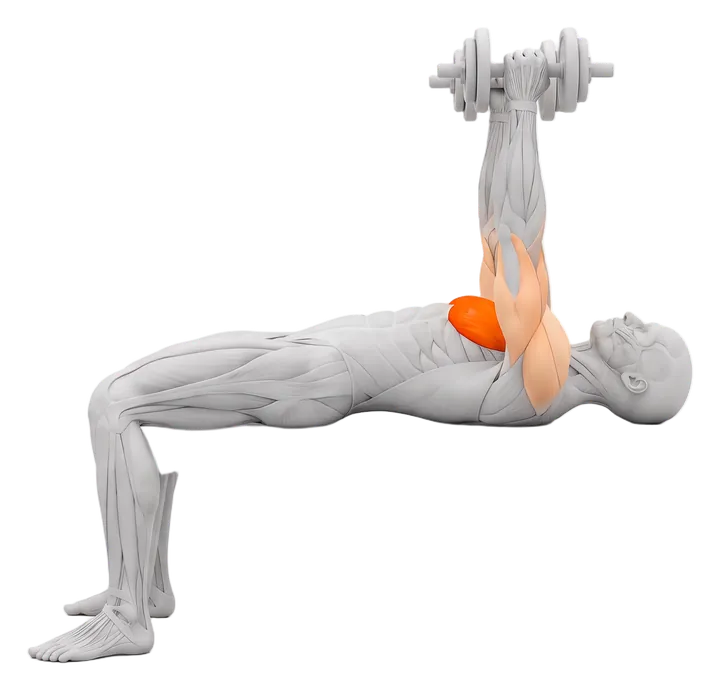
| Flat dumbbell press (power) | 3 x 3 to 5 |
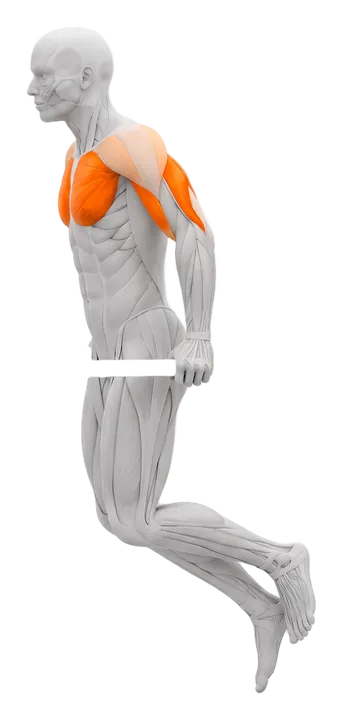
| Weighted dip | 2 x 6 to 10 |
| Seated dumbbell shoulder press | 3 x 6 to 10 |
| Cambered bar curl | 3 x 6 to 10 |
| Skull crusher | 3 x 6 to 10 |
Day 2: lower body power
| Exercise | Sets x reps |
|---|---|
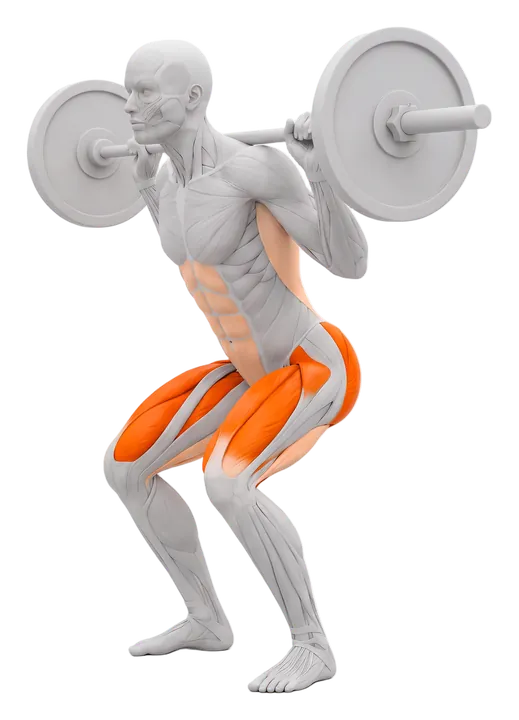
| Squat (power) | 3 x 3 to 5 |
| Hack squat | 2 x 6 to 10 |
| Leg extension | 2 x 6 to 10 |
| Stiff-legged deadlift | 3 x 5 to 8 |
| Glute-ham raise or lying leg curl | 2 x 6 to 10 |
| Standing calf raise | 3 x 6 to 10 |
| Seated calf raise | 2 x 6 to 10 |
Day 4: back and shoulders hypertrophy
| Exercise | Sets x reps |
|---|---|
| Speed rows (65 to 70 % of 3 to 5 RM) | 6 x 3 |
| Rack chin | 3 x 8 to 12 |
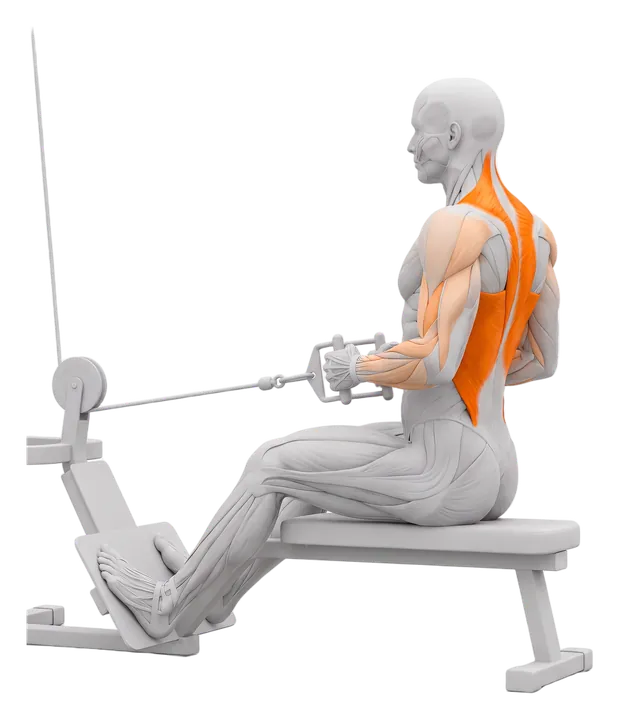
| Seated cable row | 3 x 8 to 12 |
| Dumbbell row or shrug, braced on an incline bench | 2 x 12 to 15 |
| Close-grip pulldown | 2 x 15 to 20 |
| Seated dumbbell press | 3 x 8 to 12 |
| Upright row | 2 x 12 to 15 |
| Side lateral raise, dumbbell or cable | 3 x 12 to 20 |
Day 5: lower body hypertrophy
| Exercise | Sets x reps |
|---|---|
| Speed squats (65 to 70 % of 3 to 5 RM) | 6 x 3 |
| Hack squat | 3 x 8 to 12 |
| Leg press | 2 x 12 to 15 |
| Leg extension | 3 x 15 to 20 |
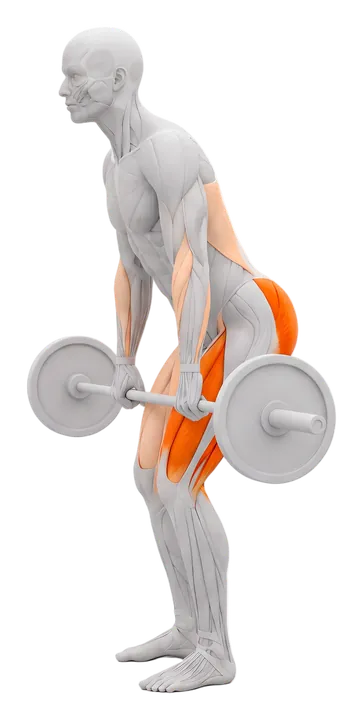
| Romanian deadlift | 3 x 8 to 12 |
| Lying leg curl | 2 x 12 to 15 |
| Seated leg curl | 2 x 15 to 20 |
| Donkey calf raise | 4 x 10 to 15 |
| Seated calf raise | 3 x 15 to 20 |
Day 6: chest and arms hypertrophy
| Exercise | Sets x reps |
|---|---|
| Speed flat dumbbell press (65 to 70 % of 3 to 5 RM) | 6 x 3 |
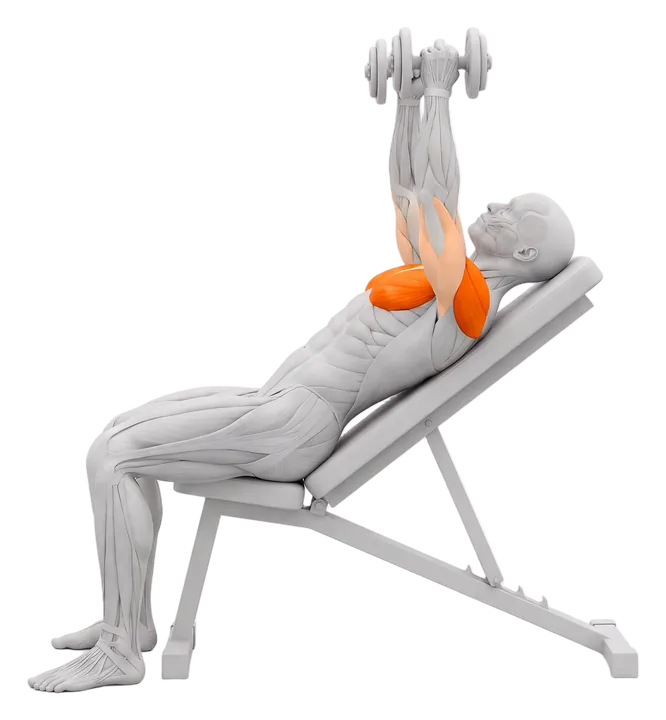
| Incline dumbbell press | 3 x 8 to 12 |
| Hammer Strength or machine chest press | 3 x 12 to 15 |
| Incline cable fly | 2 x 15 to 20 |
| Cambered bar preacher curl | 3 x 8 to 12 |
| Dumbbell concentration curl | 2 x 12 to 15 |
| Spider curl | 2 x 15 to 20 |
| Seated cambered bar triceps extension | 3 x 8 to 12 |
| Rope pressdown | 2 x 12 to 15 |
| Cable kickback | 2 x 15 to 20 |
Most gyms have everything here except perhaps a cambered bar (use an EZ bar) and a glute-ham raise (use a leg curl). Hack squats can be swapped for the leg press or a front squat, and the flat dumbbell press for the bench press if you prefer a barbell.
Speed work, rest times and effort
- Speed setsUse 65 to 70 % of the weight you lift for 3 to 5 reps on the power day and do 6 sets of 3, each rep as fast as you can with control. Rest no more than 90 seconds. Norton's test is simple: if the bar does not move explosively, it is too heavy.
- Power setsRest as long as you need to be fully recovered, which can mean 5 to 6 minutes between heavy sets on rows, presses and squats.
- Hypertrophy setsRest 1 to 2 minutes. Stop 1 to 2 reps short of failure on the early sets of each exercise, and only take the last 1 to 2 sets to failure once you have adapted to the program.
- The first weeksNorton advises no training to failure for the first 2 to 4 weeks, and expects soreness and fatigue to drop after about 4 to 6 weeks. If the frequency is new to you, remove one assistance exercise per day until you adjust.
How to progress on PHAT
Norton's write-up gives rep ranges, not a fixed rule for adding weight. It does give three guidelines:
- Rotate the power movements every 2 to 3 weeks, for example swapping the Pendlay row for a different row, or the dumbbell press for a barbell press.
- Deload every 6 to 12 weeks: 1 to 3 weeks at 60 to 70 % of your normal weights. The deload week guide covers how to set one up.
- Base the speed weights on your current 3 to 5 rep max, so they move up as your power day numbers climb.
To decide when to add weight inside those ranges, double progression fits PHAT well (this is our suggestion, not part of Norton's text). On a 3 x 3 to 5 power lift, add reps until all three sets reach 5, then add 2.5 to 5 kg (5 to 10 lb) and start again at 3. On an 8 to 12 exercise, work up to 12 in every set before adding the smallest step you can.
Run PHAT in Gripp
PHAT has around 40 exercises across the week, each with its own rep range. Log your sets and Gripp tells you what to lift next session on every one of them, keeps an estimated 1RM chart for your power lifts, and rates your strength per muscle group. If a lift does not fit your gym, ask the coach for a swap and approve it before it changes your plan.
Join the waitlistPHAT vs PHUL
PHUL by Brandon Campbell takes a similar idea and fits it into four days. The PHUL workout uses two upper and lower power days and two upper and lower hypertrophy days, with no speed work and fewer exercises per session.
| PHAT | PHUL | |
|---|---|---|
| Created by | Layne Norton | Brandon Campbell |
| Days per week | 5 | 4 |
| Hypertrophy days | Split by body part: back and shoulders, legs, chest and arms | Upper and lower |
| Speed work | 6 x 3 at 65 to 70 % of 3 to 5 RM | None |
| Session length | Longer, many exercises | Shorter |
| Best for | Intermediates with time and good recovery | Intermediates on a 4 day week |
Searching for a "PHAT workout 4 day split"? Norton's program is 5 days. If you only have four, PHUL or a regular upper lower split is a better choice than squeezing PHAT, because merging two hypertrophy days makes sessions very long. For a five day schedule organised differently, see the 5 day split.
Who the PHAT workout plan suits
- Good fit: intermediate lifters who want size and strength at once and can train five days a week.
- Good fit: people who enjoy bodybuilding style volume but want to keep a few heavy lifts.
- Less ideal: beginners. The volume and number of exercises are more than you need; start with a full body workout and add complexity later.
- Less ideal: anyone with limited time or poor sleep. Hypertrophy days with 8 to 10 exercises take a while.