What the nSuns program is
u/nSuns posted the program on Reddit's r/Fitness around the end of 2016, with a spreadsheet in 4, 5 and 6 day versions. It spread fast and got its own community, r/nSuns. The structure borrows the 5/3/1 wave for the opening sets and then stacks a long run of back-off sets after it.
- T1: the main lift of the day, 9 sets, with a 1+ AMRAP at 95 % of training max and a second AMRAP at the end.
- T2: a related lift, 8 sets at 50 to 70 % (or lower for some lifts) of the parent lift's training max.
- Assistance: the spreadsheet only names body parts per day and says to use bodybuilding sets and reps.
- Progression: weekly, not monthly as in Wendler's 5/3/1. The 1+ set result sets the size of the jump.
That is a lot of work. A typical day has 17 sets of barbell work before any accessories, and sessions often take 75 to 90 minutes. It suits lifters who have finished a beginner program and still want to add weight often.
Step 1: set your training max
The original spreadsheet takes your 1RM for squat, bench press, deadlift and overhead press and sets each training max (TM) at 90 % of it. Every percentage in the program comes from these four numbers. If you do not have recent maxes, estimate them from a hard set of 3 to 5 reps with the 1RM calculator, and round the TM down rather than up.
Example: a 1RM bench press of 110 kg (243 lb) gives a TM of 99 kg, rounded to 97.5 kg. The 95 % set on bench day is then about 92.5 kg.
The nSuns 5 day template
The 5 day version is the standard layout. The spreadsheet runs it Monday to Friday, but any five days work if the heavy squat and deadlift days are not back to back.
| Day | T1 (9 sets) | T2 (8 sets) | Assistance (spreadsheet) |
|---|---|---|---|
| 1 | Bench press (volume) | Overhead press | Chest, arms, back |
| 2 | Squat | Sumo deadlift | Legs, abs |
| 3 | Overhead press | Incline bench press | Shoulders, chest |
| 4 | Deadlift | Front squat | Back, abs |
| 5 | Bench press (heavy) | Close-grip bench press | Arms, other |
T1 sets: percentage of that lift's training max x reps
| Set | Day 1 bench | Squat and overhead press | Deadlift | Day 5 bench |
|---|---|---|---|---|
| 1 | 65 % x 8 | 75 % x 5 | 75 % x 5 | 75 % x 5 |
| 2 | 75 % x 6 | 85 % x 3 | 85 % x 3 | 85 % x 3 |
| 3 | 85 % x 4 | 95 % x 1+ | 95 % x 1+ | 95 % x 1+ |
| 4 | 85 % x 4 | 90 % x 3 | 90 % x 3 | 90 % x 3 |
| 5 | 85 % x 4 | 85 % x 3 | 85 % x 3 | 85 % x 5 |
| 6 | 80 % x 5 | 80 % x 3 | 80 % x 3 | 80 % x 3 |
| 7 | 75 % x 6 | 75 % x 5 | 75 % x 3 | 75 % x 5 |
| 8 | 70 % x 7 | 70 % x 5 | 70 % x 3 | 70 % x 3 |
| 9 | 65 % x 8+ | 65 % x 5+ | 65 % x 3+ | 65 % x 5+ |
T2 sets
| T2 lift | Based on | Sets 1 to 3 | Sets 4 to 8 |
|---|---|---|---|
| Overhead press (day 1) | Press TM | 50 % x 6, 60 % x 5, 70 % x 3 | 70 % x 5, 7, 4, 6, 8 |
| Sumo deadlift | Deadlift TM | 50 % x 5, 60 % x 5, 70 % x 3 | 70 % x 5, 7, 4, 6, 8 |
| Incline bench press | Bench TM | 40 % x 6, 50 % x 5, 60 % x 3 | 60 % x 5, 7, 4, 6, 8 |
| Front squat | Squat TM | 35 % x 5, 45 % x 5, 55 % x 3 | 55 % x 5, 7, 4, 6, 8 |
| Close-grip bench press | Bench TM | 40 % x 6, 50 % x 5, 60 % x 3 | 60 % x 5, 7, 4, 6, 8 |
The T2 sets are not AMRAPs. They look light on paper, but 8 sets right after a heavy T1 are where most of the fatigue in nSuns comes from. Rest about 2 to 3 minutes on T1 sets and 1.5 to 2 minutes on T2 sets as a rule of thumb; the spreadsheet does not set rest times.
nSuns 4 day and 6 day versions
nSuns 4 day
The 4 day sheet drops the overhead press day. You keep day 1 (bench volume with overhead press T2), day 2 (squat with sumo deadlift), the heavy bench day with close-grip bench, and the deadlift day with front squat, usually on Monday, Tuesday, Thursday and Friday. It is the best choice if you cannot recover from five long sessions, and it pairs well with a job or sport. Because the press has no 1+ set in this version, a common approach is to add 2.5 kg (5 lb) to its TM when you complete all of its T2 sets; the sheet itself does not spell this out.
nSuns 6 day
The 6 day deadlift version runs the 5 days and adds a Saturday with deadlifts for 8 sets of 3 at about 72 % of TM (the third set is a 3+) and front squats for 6 sets of 3 at about 55 % of squat TM. The weekday order also changes so deadlifts come on Tuesday and squats on Thursday. A squat focused 6 day version also exists in the community, with the extra day built around squats instead. Six days is for experienced lifters who sleep and eat well; most people progress just as well on 4 or 5.
nSuns progression: the 1+ set table
Progress happens every week, based on the 1+ set at 95 % of training max on each T1 day. The spreadsheet gives these rules for how much to raise the TM of that lift for next week:
| Reps on the 1+ set | TM increase (spreadsheet) | In kg (rounded) |
|---|---|---|
| 0 to 1 | No increase | No increase |
| 2 to 3 | 5 lb | 2.5 kg |
| 4 to 5 | 5 to 10 lb | 2.5 to 5 kg |
| More than 5 | 10 to 15 lb | 5 to 7.5 kg |
A sensible way to apply the ranges is the lower number for bench press and overhead press and the higher one for squat and deadlift. Bench press progresses from the 1+ set on the heavy bench day, since the volume day has no 1+ set at 95 %. T2 lifts follow their parent lift, so the front squat goes up when the squat TM goes up.
- Stop the 1+ set with good formIt is an AMRAP, but a grinding, ugly rep costs more than it gives. One rep left in reserve is a good default.
- Treat 0 to 1 reps as a warningOne week at 1 rep means hold the TM. If it happens two or three weeks in a row on the same lift, lower that TM by about 10 % and build back up, a common reset in the nSuns community.
- Watch the last AMRAPIf the 65 % AMRAP at the end of a T1 drops sharply from week to week, fatigue is building faster than you recover. Cut one T2 set or an assistance exercise before it turns into a stall.
Weekly jumps of 2.5 to 7.5 kg are fast for anyone past the beginner stage, which is why nSuns tends to run for a few months rather than years. When progress stops on most lifts, a monthly program like 5/3/1 or a powerbuilding split such as PHUL or PHAT is a natural next step.
nSuns accessories
The spreadsheet lists body parts, not exercises, so you choose. Keep it to two or three exercises per day for 3 to 4 sets of 8 to 15 reps. Pulling deserves priority, because the barbell work is mostly pressing, squatting and hinging.
| Day | Focus | Example exercises |
|---|---|---|
| 1 | Chest, arms, back | Lat pulldown, dumbbell row, hammer curl |
| 2 | Legs, abs | Leg curl, leg press, hanging leg raise |
| 3 | Shoulders, chest | Lateral raise, face pull, dips |
| 4 | Back, abs | Pull-ups, seated cable row, ab wheel |
| 5 | Arms, other | Tricep pushdown, curl, rear delt fly |
Progress accessories with rep ranges rather than percentages: add reps until you hit the top of the range in every set, then add weight. If an exercise does not fit your body, swap it; nothing in nSuns depends on a specific accessory.
Who nSuns suits
- Good fit: lifters coming off a novice program such as GZCLP or Starting Strength who want to keep adding weight weekly.
- Good fit: people who like volume and have 75 to 90 minutes per session.
- Less ideal: complete beginners. The volume is too much to learn technique well, and simpler programs progress just as fast early on.
- Less ideal: anyone short on sleep, food or time. nSuns punishes poor recovery quickly.
Running nSuns in an app
The "nsuns app" search is common because the program has many sets with different percentages, and nobody wants to do the math between sets. Some apps, including Boostcamp and Liftosaur, offer nSuns as a ready template. A spreadsheet works too, as long as you update the four TMs each week.
Log nSuns in Gripp
Enter the weights from your sheet and log the reps of every set. Gripp keeps an estimated 1RM per lift on a progress chart, so you can see whether your training max still matches your real strength, and on accessories it tells you what to lift next session. Gripp does not calculate nSuns percentages for you.
Join the waitlistThe exercises
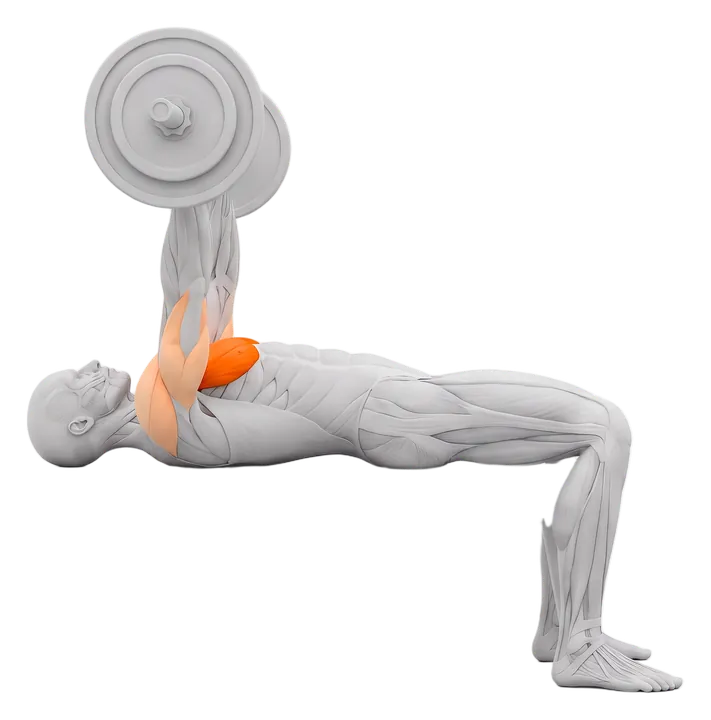 Barbell bench pressChestGuide
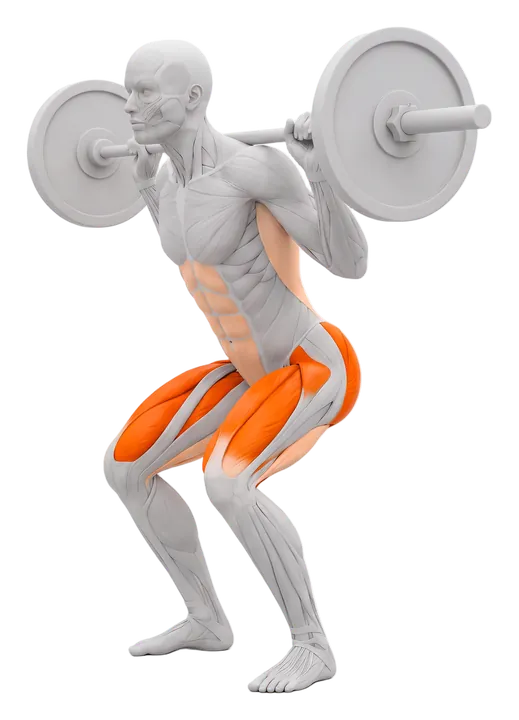 Barbell back squatQuads and glutesGuide
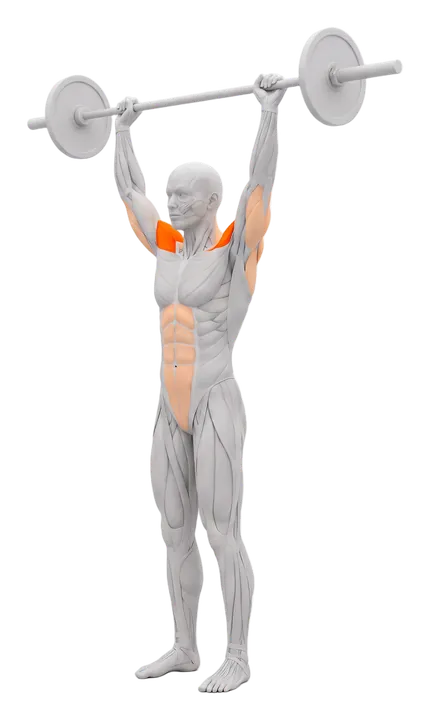 Barbell overhead pressFront deltsGuide
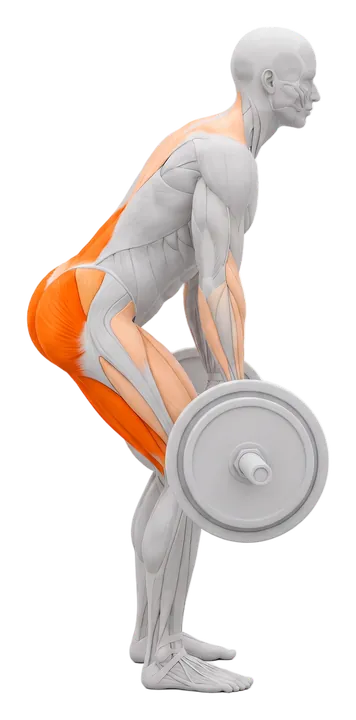 Barbell deadliftGlutes and hamstringsGuide
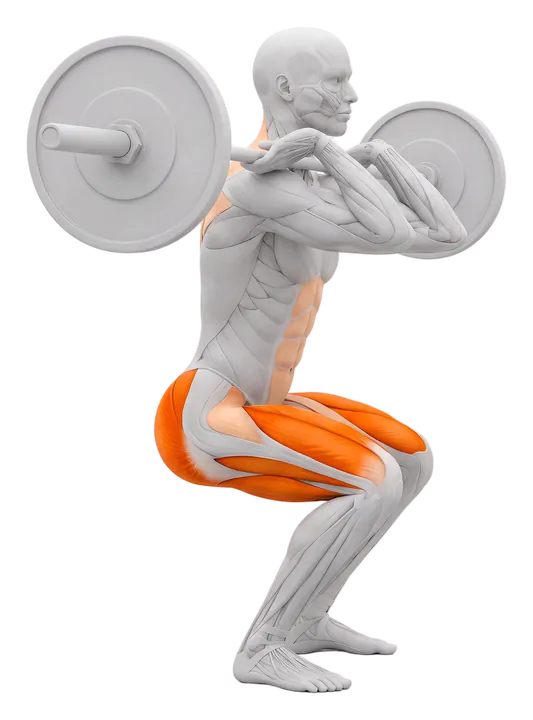 Barbell front squatQuads and glutesGuide
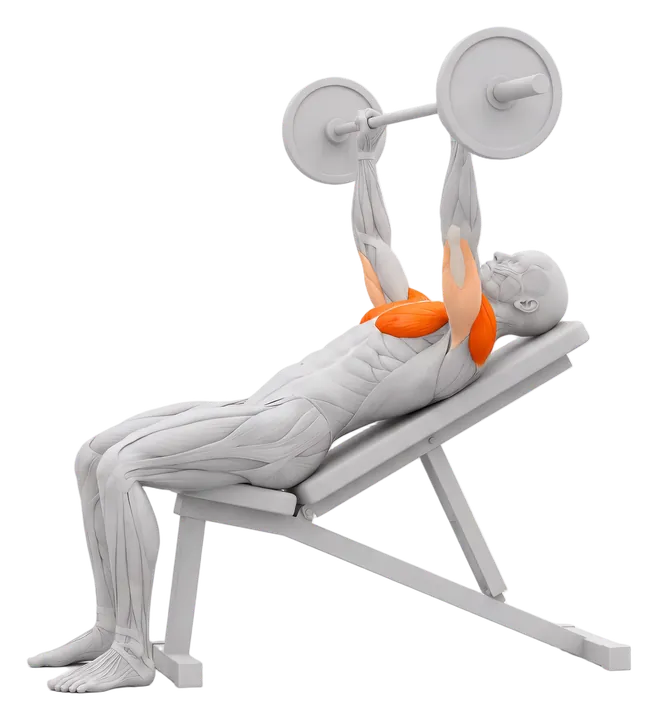 Incline barbell bench pressChest and front deltsGuide
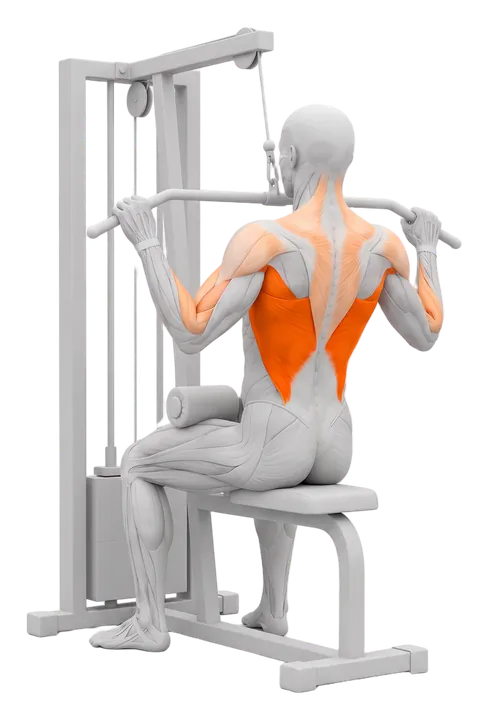 Lat pulldownLatsGuide
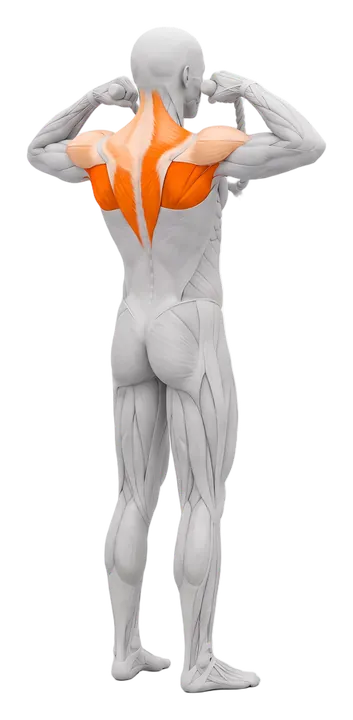 Cable face pullRear delts and upper backGuide