The three heads of the shoulder
The round muscle that caps your shoulder is the deltoid. It has three heads that start at different points on the collarbone and shoulder blade and meet on the upper arm. Each one lifts the arm in a different direction, which is why a shoulder workout built only from presses leaves gaps.
| Head | Main job | What it adds to your look | Trains best with |
|---|---|---|---|
| Front delt (anterior) | Lifts the arm forward and overhead | The front of the shoulder | Overhead press, dumbbell shoulder press, incline presses |
| Side delt (lateral) | Lifts the arm out to the side | Width, the capped look from the front | Lateral raise, cable lateral raise, wide upright pulls |
| Rear delt (posterior) | Pulls the arm back and turns it outwards | The back of the shoulder, posture | Face pull, rear delt fly, wide rows |
The front delts already get plenty of work on every chest press, so most lifters need fewer direct sets for them than for the side and rear heads.
All shoulder exercises
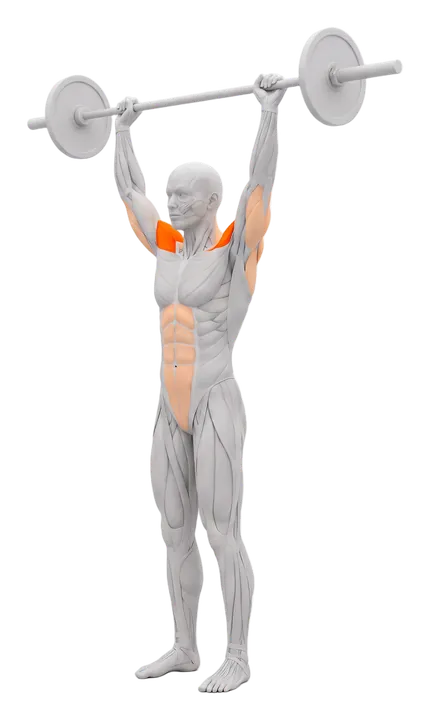 Barbell overhead pressFront deltsGuide
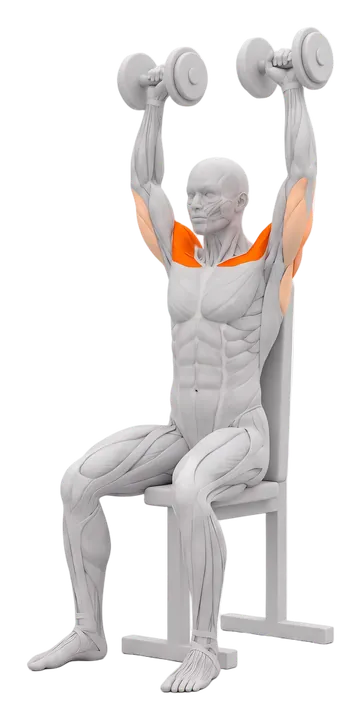 Seated dumbbell shoulder pressFront deltsGuide
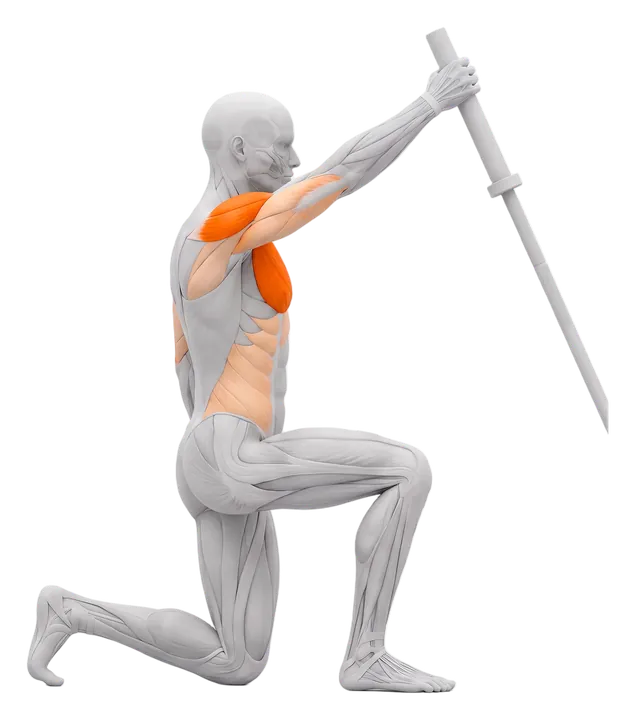 Half-kneeling landmine pressFront delts and chestGuide
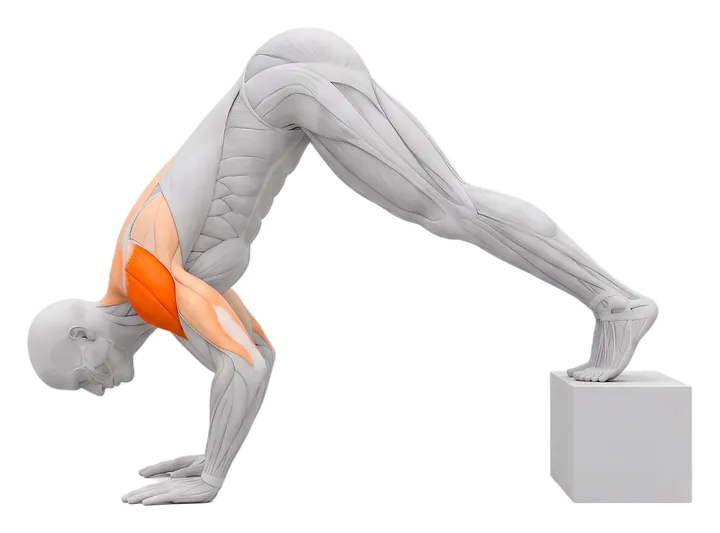 Pike push-upFront delts
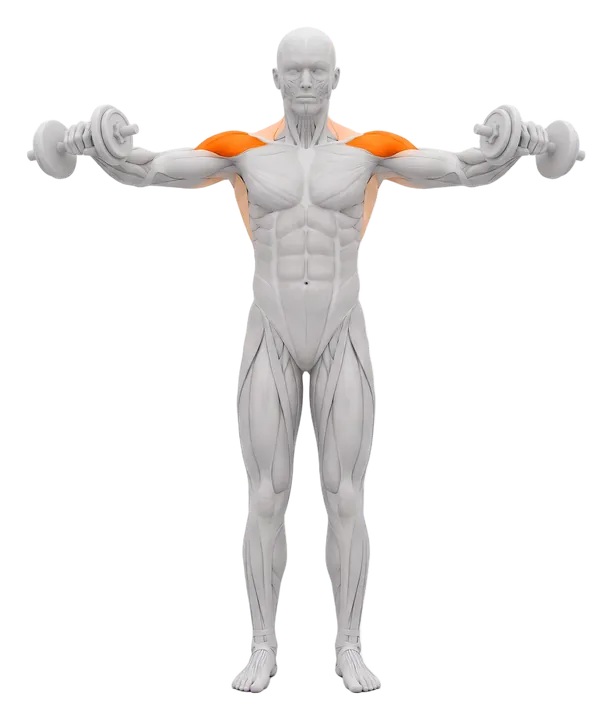 Dumbbell lateral raiseSide deltsGuide
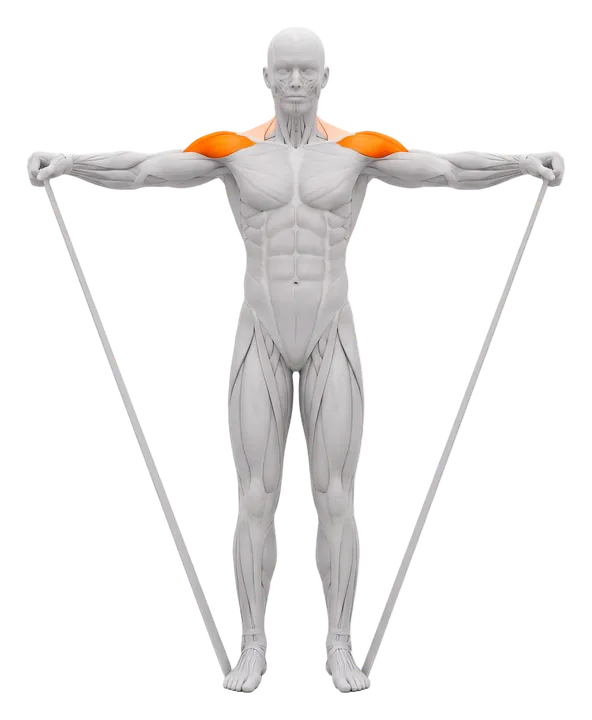 Band lateral raiseSide delts
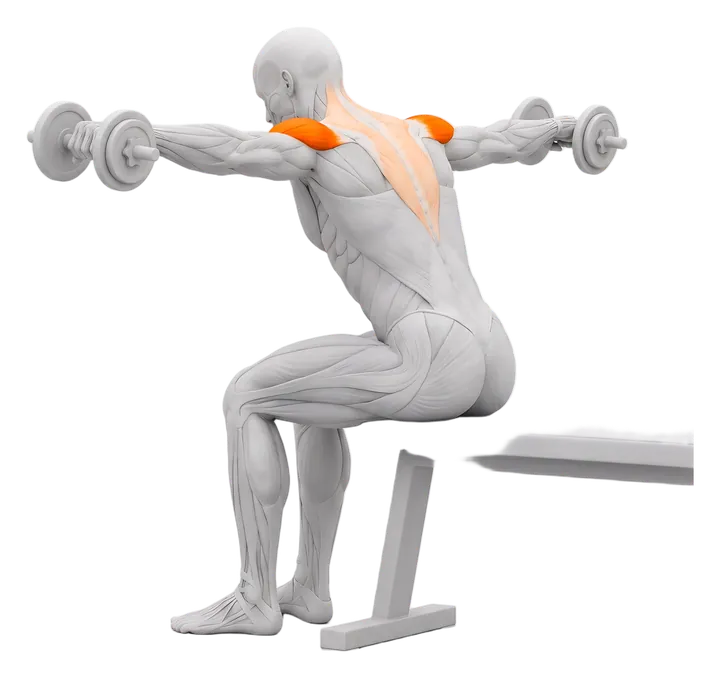 Bent-over rear delt flyRear deltsGuide
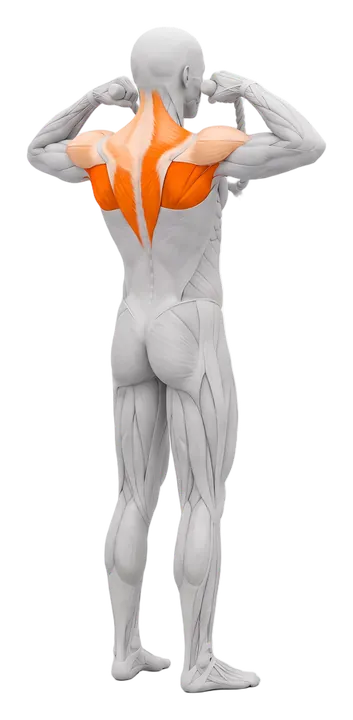 Cable face pullRear delts and upper backGuide
 Band pull-apartRear delts and upper back
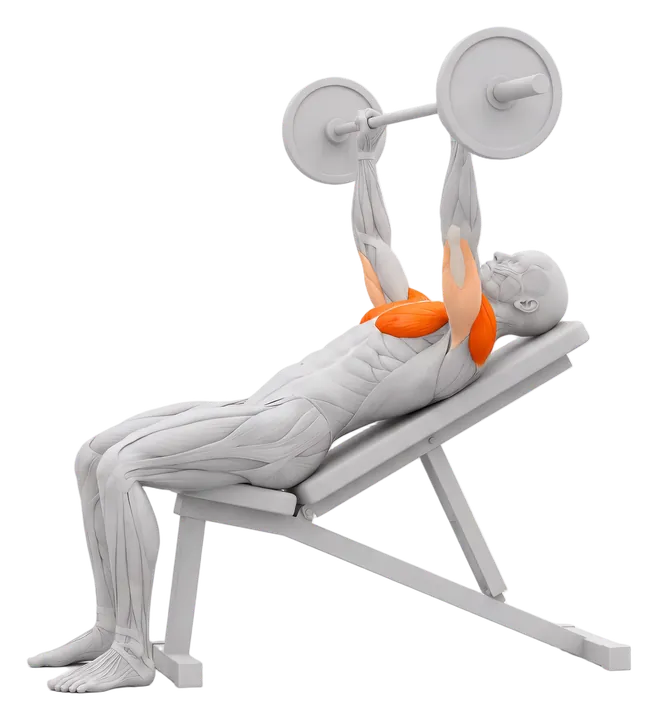 Incline barbell bench pressChest and front deltsGuide
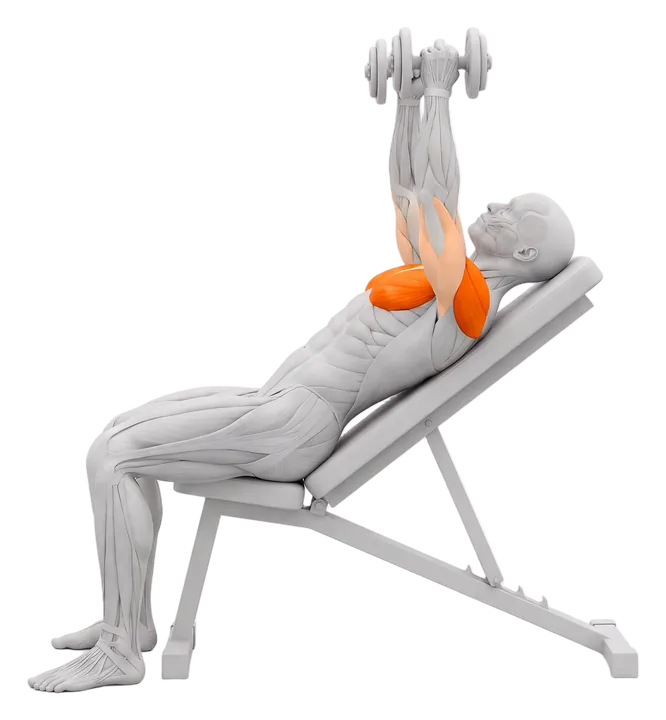 Incline dumbbell pressChest and front deltsGuide
Best shoulder exercises
- Barbell overhead press: the heaviest way to train the front delts and triceps, and a full body brace at the same time. Grip, bar path and lockout are covered in the overhead press guide. To see how your press compares, check the overhead press standards.
- Seated dumbbell shoulder press: each arm moves on its own path, which many people find kinder to the shoulder joint than a fixed bar. See the dumbbell shoulder press for bench angle and depth.
- Dumbbell lateral raise: the main side delt builder. Light weight, strict reps, lead with the elbows. Form details are in the lateral raise guide.
- Cable face pull: trains the rear delts and the muscles between the shoulder blades in one move. Learn the rope setup in the face pull guide.
- Bent-over rear delt fly: a dumbbell option for the back of the shoulder when there is no cable station free.
- Half-kneeling landmine press: the bar moves up and forward in an arc, a useful press for people who cannot press straight overhead without discomfort.
- Pike push-up: the bodyweight overhead press. Raise the feet on a box to make it harder.
A full shoulder workout for the gym
This session trains all three heads in about 45 minutes. Start with the press while you are fresh, then move to lighter isolation work where strict form matters more than load.
| Exercise | Sets x reps | Rest | Head |
|---|---|---|---|
| Barbell overhead press | 4 x 5 to 8 | 2 to 3 min | Front delts, triceps |
| Seated dumbbell shoulder press | 2 x 8 to 12 | 2 min | Front delts |
| Dumbbell lateral raise | 4 x 10 to 15 | 60 to 90 s | Side delts |
| Cable face pull | 3 x 12 to 15 | 60 s | Rear delts, upper back |
| Bent-over rear delt fly | 2 x 12 to 20 | 60 s | Rear delts |
Shoulder workout with dumbbells or at home
A pair of dumbbells is enough to train shoulders properly: a seated or standing press, lateral raises and rear delt flys. At home without dumbbells, pike push-ups and slow lateral raises with filled water bottles or a band will get a beginner going. For a complete session with sets, reps and a beginner and advanced version, use the dumbbell shoulder workout.
Back shoulder exercises: do not skip the rear delts
Most gym programs are heavy on pressing and light on the back of the shoulder. Rear delt work balances the front of the body, and it is the head that makes shoulders look full from the side and from behind.
- Face pull: pull the rope towards your eyes and split the hands apart, so the upper arms end up out to the sides.
- Rear delt fly: hinge forward with a flat back and sweep light dumbbells out, thumbs slightly down. Stop when the arms are in line with the body.
- Band pull-apart: an easy rear delt warm-up, or extra volume at home between sets of something else.
- Wide-grip rows: elbows flared out to about 60 to 80 degrees from the body turn a row into a rear delt and upper back exercise. The back exercises guide has more rows to choose from.
Rear delts respond well to higher reps: 12 to 20 with a weight that feels light at first and burns by the end. If your traps take over and the shoulders shrug up, the weight is too heavy. Train the traps on purpose with shrugs instead.
How to train shoulders without hurting them
- Warm up the joint first. Two light sets of face pulls or band pull-aparts, then one or two light sets of your first press, before any heavy work.
- Press in a slight scapular plane. Let the elbows sit a little in front of the body instead of straight out to the sides. Most people find this more comfortable than flaring them wide.
- Raise to about shoulder height. That is enough for the side delt. Going higher is fine only if it feels smooth.
- Control the lowering. Two seconds down on raises and presses. Swinging puts the load on momentum and on the joint, not on the muscle.
- Balance pressing with pulling. Do at least as many sets of rows, pulldowns and face pulls per week as you do presses.
- Add load in small steps. Shoulders progress slower than legs. One kilo per dumbbell (2 lb) or 2.5 kg (5 lb) on the bar at a time is plenty.
Shoulders with chest, triceps or arms
Many people search for a chest, shoulder and tricep workout because that is exactly the push day of a push pull legs split. On that day, do your chest press first, then the overhead press, then lateral raises, then two triceps moves from the tricep workout. Rear delts fit better on pull day next to your rows.
A shoulder and arm workout also works well on an upper body day: overhead press, lateral raise, curls and pushdowns, supersetted to save time. Whatever you pair them with, keep the hard shoulder work early in the session. Chest and tricep pressing tires the front delts, so pressing overhead after a heavy chest exercises block will feel weaker than usual, and that is normal.
Sets, reps and frequency for shoulders
| Level | Sessions per week | Press sets | Side and rear delt sets | Reps |
|---|---|---|---|---|
| Beginner | 2 | 3 to 6 | 4 to 8 | Press 6 to 10, raises 10 to 15 |
| Intermediate | 2 | 4 to 8 | 8 to 14 | Press 5 to 10, raises 10 to 20 |
| Advanced | 2 to 3 | 6 to 10 | 12 to 20 | Press 3 to 10, raises 10 to 25 |
Treat these as starting points. If you bench and do incline presses, count some of that as front delt work and put the extra sets into lateral raises and face pulls. Progress the press with double progression: work up to the top of the rep range in every set, then add weight. For raises, small jumps are hard to find, so add reps first and move up a dumbbell size only when 15 strict reps feel easy. The progressive overload guide explains the method.
Gripp tracks every head of your shoulders
Gripp is coming to iPhone. Log your sets and Gripp tells you what to lift next time: last session 8 reps at 40 kg (90 lb) on the overhead press, today go for 9. It keeps an estimated 1RM for every press on a progress chart and rates your shoulder strength against people of your age and bodyweight.
Join the waitlistCommon shoulder workout mistakes
- Only pressing. Presses build the front delts. Without lateral raises and rear delt work, the shoulder looks narrow and flat from the side.
- Heavy, swinging lateral raises. Using your hips and traps to throw the weight up takes the side delt out of the movement. Go lighter.
- Arching hard on the overhead press. Squeeze glutes and abs so the ribs stay down. A big lean back turns it into an incline press and loads the lower back.
Want to see every press, raise and pull with its muscle map? Browse the full exercise library.